Hardware Acceleration for Multimodal Generative AI: GPUs, NPUs, and Edge Devices

- Mark Chomiczewski
- 10 August 2026
- 0 Comments
Imagine asking your phone to describe a video, translate the audio in real-time, and generate a summary text-all while you’re walking down the street with no Wi-Fi. That is the promise of multimodal generative AI. But here is the catch: these models are hungry beasts. They don’t just process text; they chew through pixels, sound waves, and sensor data simultaneously. To make this happen without melting your device or draining your battery in minutes, we need serious hardware help. This isn't just about faster processors; it’s about specialized architectures like GPUs, NPUs, and clever edge optimizations.
We are moving past the era where AI lived exclusively in massive server farms. The future is hybrid, distributed, and incredibly fast. If you are building or deploying multimodal systems in 2026, understanding how hardware accelerates these complex tasks is not optional-it’s survival.
The Computational Weight of Multimodal AI
Let’s get one thing straight: multimodal AI is exponentially harder than single-modal AI. A standard Large Language Model (LLM) processes tokens-chunks of text. A multimodal model has to align those tokens with visual features from images, spectral data from audio, and temporal sequences from video. This requires what experts call cross-modal attention.
Think of it like trying to listen to a conversation, read a book, and watch a movie at the same time, then writing an essay that connects all three. Your brain struggles; a computer’s processor screams. Current estimates suggest that truly unified multimodal systems require 10 to 100 times more FLOPs (floating-point operations) than current text-only LLMs. Why? Because every pixel in a video frame needs to be checked against every word in the prompt to ensure context alignment.
This computational load creates two major bottlenecks:
- Memory Bandwidth: You need massive high-bandwidth memory (HBM) to hold long sequences of multiple modalities in RAM simultaneously.
- Latency: Auto-regressive token generation becomes a nightmare when the model has to wait for image encoding to finish before it can start predicting the next word.
Without specialized hardware acceleration, these models would take hours to respond instead of seconds. That’s where GPUs come in first.
GPUs: The Workhorse of Training and Heavy Inference
Graphics Processing Units (GPUs) remain the undisputed kings of training multimodal models. Their parallel architecture allows them to handle the massive matrix multiplications required by Transformer-based models. However, inference-the actual running of the model-is where things get tricky.
For enterprise-grade deployment, companies rely on validated stacks from leaders like NVIDIA and Lenovo. NVIDIA’s NeMo platform has become the industry standard for end-to-end pipelines. It doesn’t just train models; it optimizes the entire lifecycle. For example, NeMo Curator can process petabytes of data, reducing video processing time by up to 7x compared to naive GPU implementations. This is crucial because garbage in equals garbage out, especially when dealing with unstructured multimodal data.
But raw power isn’t enough. Optimization is key. Research shows that using techniques like CUDA Graph, Flash Attention, and quantization can accelerate inference performance by up to 28x. Specifically, PyTorch’s Scaled Dot-Product Attention (SDPA) alone boosts inference speed by 1.43x in maximum-batch settings on NVIDIA A100 GPUs. These aren’t minor tweaks; they are the difference between a usable product and a science experiment.
| Technique | Primary Benefit | Performance Gain |
|---|---|---|
| CUDA Graph | Reduces kernel launch overhead | Up to 2x latency reduction |
| Flash Attention / SDPA | Memory-efficient attention computation | 1.43x - 2x speedup |
| Quantization (INT8/FP8) | Reduces memory footprint and compute cost | 2x - 4x throughput increase |
| LayerSkip | Algorithmic pruning of unnecessary layers | 1.58x inference speedup |
The takeaway? If you are running multimodal models on GPUs, you must optimize. Raw FLOPs are expensive. Smart algorithms make them affordable.

NPUs and the Rise of the AI PC
While GPUs dominate the cloud, the Neural Processing Unit (NPU) is winning the battle for local devices. NPUs are designed specifically for the low-precision, high-throughput math that neural networks use. They sip power compared to the gallons GPUs drink.
In 2026, the concept of the "AI PC" is no longer marketing fluff. Intel, AMD, and Apple have integrated powerful NPUs into their latest chips. These processors allow you to run lightweight multimodal models directly on your laptop or desktop. For instance, Intel’s OpenVINO toolkit enables developers to deploy models like Stable Diffusion and latent consistency models locally. This means you can generate images or analyze videos without sending data to the cloud-a huge win for privacy and bandwidth costs.
Why does this matter for multimodal AI? Because many multimodal tasks are interactive. Imagine a designer generating variations of an image based on voice commands. Sending that audio and image back and forth to a cloud server introduces lag. An NPU handles this locally, providing near-instant feedback. The trade-off is capability: NPUs currently struggle with the largest, most complex models. They excel at optimized, distilled versions of multimodal systems.
Edge Devices: Constraints and Innovations
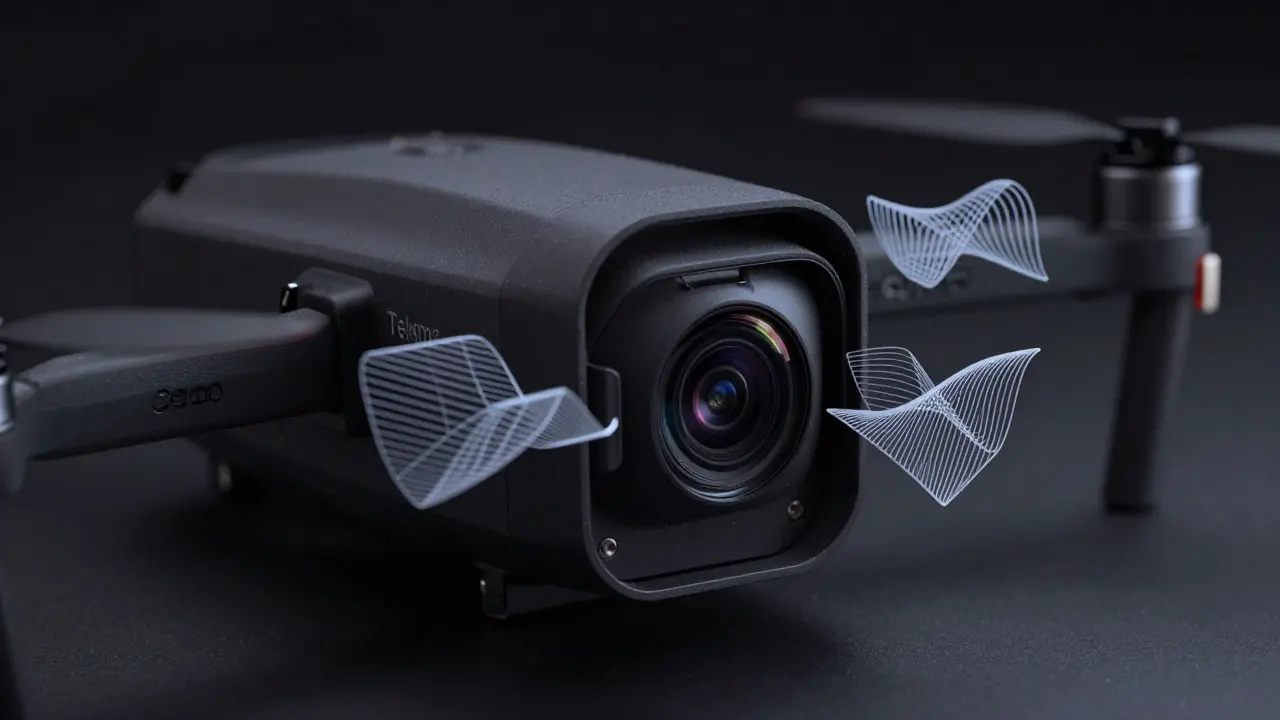
Now, let’s talk about the hardest environment: the edge. Smartphones, IoT sensors, and cameras have limited battery life, thermal constraints, and storage. Running a multimodal model here seems impossible. Yet, demand is skyrocketing. Think of autonomous drones that need to see, hear, and decide in milliseconds.
The challenge is fusing multiple data streams in real-time. Traditional edge devices choke on this. The solution lies in specialized tokenizers and efficient architectures. Enter Cosmos tokenizers. These use 3D wavelets to represent pixel information more efficiently. During inference, Cosmos tokenizers deliver up to 12x faster reconstruction compared to leading open-weight alternatives. They also use causal structures, ensuring the model only looks at past and present frames, which aligns perfectly with real-world physical systems.
Another breakthrough is native multimodal architecture. Older systems used separate pipelines for text, image, and audio, stitching results together at the end. This was slow and error-prone. Newer models, like GPT-4o, were trained on all modalities simultaneously. This creates a unified representational space. The result? Response times dropped from 2.8-5.4 seconds in older three-model pipelines to an average of 0.32 seconds in GPT-4o. While GPT-4o runs in the cloud, this architectural efficiency trickles down to edge devices, allowing smaller, optimized models to achieve similar responsiveness.
Choosing the Right Hardware Strategy
So, how do you decide where to run your multimodal AI? It depends on your use case. Here is a simple decision framework:
- Training and Heavy Customization: Use Cloud GPUs (e.g., NVIDIA A100/H100). You need the raw FLOPs and HBM for cross-modal attention complexity. Leverage tools like NeMo Curator for data prep.
- Interactive Enterprise Applications: Use Hybrid Cloud/Edge. Run heavy inference in the cloud but offload preprocessing and light generation to client-side NPUs via OpenVINO or similar toolkits.
- Privacy-Sensitive or Offline Scenarios: Use Edge Devices with Optimized Models. Deploy distilled models using efficient tokenizers (like Cosmos) and quantization. Accept lower resolution or shorter context windows in exchange for zero-latency and privacy.
Don’t try to force a massive cloud model onto a smartphone. Instead, distill the knowledge. Train big, deploy small. Use the GPU to teach, and the NPU/Edge chip to perform.
Future Outlook: Beyond Binary Chips
As we move further into 2026, the line between hardware and software continues to blur. We are seeing the rise of domain-specific architectures that go beyond general-purpose GPUs. Companies are designing chips that natively support multimodal fusion, handling the conversion of audio spectrograms and image patches in hardware rather than software.
Additionally, the focus is shifting from pure speed to energy efficiency. With carbon neutrality goals driving tech strategy, the "FLOPs per watt" metric is becoming as important as raw speed. NPUs and specialized edge accelerators lead this charge. The future of multimodal AI isn’t just about smarter models; it’s about smarter silicon that knows exactly how to process a whisper alongside a photograph.
What is the biggest bottleneck in multimodal AI hardware?
The primary bottleneck is memory bandwidth and cross-modal attention complexity. Processing multiple data types (text, image, audio) simultaneously requires massive amounts of high-bandwidth memory (HBM) to keep data close to the compute units. Additionally, the attention mechanism must check relationships across all modalities, leading to exponential increases in floating-point operations (FLOPs).
Can NPUs replace GPUs for multimodal AI?
Not entirely. GPUs are still superior for training large multimodal models due to their massive parallelism and memory capacity. However, NPUs are ideal for inference on edge devices and AI PCs, offering better power efficiency for running optimized, distilled models locally. They complement rather than replace GPUs in a full-stack deployment.
How does GPT-4o improve multimodal latency?
GPT-4o uses a native multimodal architecture where text, image, and audio are processed in a single neural network trained simultaneously. Unlike older systems that used separate pipelines for each modality, this unified approach reduces response times from several seconds to approximately 0.32 seconds, preserving nuance like tone and emotion.
What role do tokenizers play in edge AI performance?
Tokenizers convert raw data into a format the model can understand. Advanced tokenizers like Cosmos use 3D wavelets to represent visual data more efficiently, resulting in up to 12x faster reconstruction during inference. This efficiency is critical for edge devices with limited processing power and battery life.
Which optimization techniques provide the best ROI for GPU inference?
Combining algorithmic and system-level optimizations yields the best results. Using PyTorch SDPA, CUDA Graphs, and Flash Attention can accelerate inference by up to 28x. Quantization (reducing precision to INT8 or FP8) is also highly effective for reducing memory usage and increasing throughput without significant quality loss.