How Generative AI, Blockchain, and Cryptography Are Together Redefining Digital Trust

- Mark Chomiczewski
- 18 February 2026
- 7 Comments
Imagine an AI that generates a medical diagnosis - but you can prove every step of its reasoning happened exactly as claimed. Not just because someone said so, but because the whole process was recorded on a tamper-proof ledger, encrypted end-to-end, and verified without ever exposing private data. That’s not science fiction anymore. Since early 2024, the convergence of generative AI, blockchain, and cryptography has moved from research papers into real-world systems that are already changing how we handle trust, accountability, and privacy in digital systems.
Before this fusion, AI had a transparency problem. It made decisions, but no one could trace how. Blockchain had a scalability problem. It was slow, expensive, and couldn’t handle the data loads modern AI systems generate. Cryptography offered security, but often at the cost of usability. Together, they fix each other’s weaknesses. And the results? Systems that are faster, more secure, and far harder to cheat.
Why This Combo Works Better Than Any One Alone
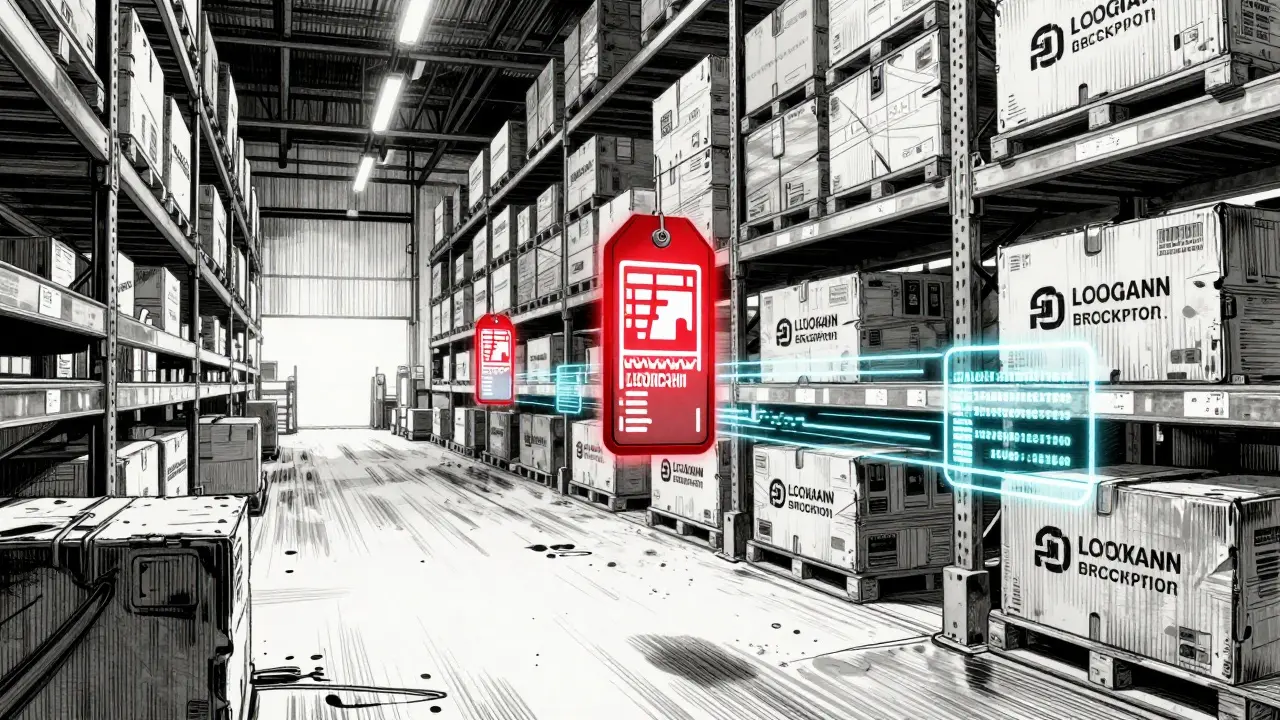
Generative AI can create text, images, code, even entire simulations. But if someone alters its output - say, a fake medical report or a forged contract - there’s no way to prove it’s fake unless you have a record of what was originally generated. That’s where blockchain comes in. It doesn’t store the AI’s output directly. Instead, it stores a cryptographic hash - a digital fingerprint - of that output, along with metadata like the model version, timestamp, and input prompt. Once that hash is on the blockchain, it’s permanent. No one can change it without breaking the entire chain.
Now add cryptography. Techniques like homomorphic encryption let AI models analyze encrypted data without ever decrypting it. That means your personal health records can be used to train an AI diagnostic tool - without ever leaving your device or being seen by anyone else. Federated learning takes this further: AI models are trained across thousands of devices, each keeping its own data private, while only sharing model updates. No central database. No single point of failure.
And then there’s Zero-Knowledge Proofs (ZKPs). These let you prove something is true - like “this AI-generated document matches its original input” - without revealing any details about the document itself. Imagine proving you’re over 21 without showing your ID. That’s ZKP in action. In 2025, this isn’t theoretical. AWS’s Prove AI service and MedChain AI’s healthcare platform both use ZKPs to verify AI outputs while protecting user privacy.
Real Systems Already Doing This
One of the clearest examples is Prove AI, built on AWS infrastructure and launched in December 2024. It doesn’t just store AI outputs on a blockchain. It logs everything: the training dataset used, the exact prompt given, the model’s confidence score, and even the hardware environment it ran on. Each piece is hashed and signed with cryptographic keys managed by AWS Key Management Service. If someone questions a generated contract or a financial forecast, they can trace it back to its origin - and verify it hasn’t been altered.
In healthcare, MedChain AI, launched in Q3 2024, reduced medical record fraud by 89% in its first year. How? Every patient record generated or updated by an AI assistant gets a blockchain-stamped signature. If a hospital tries to alter a diagnosis retroactively, the system flags it immediately. And because the system uses federated learning, patient data never leaves their local hospital servers - only encrypted model updates are shared.
Even supply chains are using it. A major logistics firm in Europe now tracks every AI-generated shipment label through a blockchain network. If a package is misrouted, they can replay the AI’s decision path - not just the result. Was the AI trained on outdated weather data? Did someone tamper with the input? The blockchain holds the answer.
Performance Gains Are Real - But So Are the Costs
This isn’t magic. It’s engineering. And it comes with trade-offs.
IBM’s research found that AI-enhanced blockchain networks process transactions 37% faster than traditional ones. Why? Because generative AI can predict and optimize transaction flows, reducing bottlenecks. It can even flag suspicious patterns before they happen - like a wallet sending small, rapid transactions to evade detection. AI agents analyzing smart contracts for vulnerabilities have cut detection time by 65%, according to AWS.
But there’s a price. Adding AI to blockchain increases computational load by 15-20%. That means higher energy use and slower performance on low-end devices. Tribe AI’s field tests in rural supply chains showed delays of up to 4 seconds per verification - enough to break real-time tracking in fast-moving logistics.
And then there’s data quality. If the AI is trained on biased or incomplete data, the blockchain just records the mistake permanently. A startup called VeriTrust lost $2.3 million in early 2024 when their AI model was tricked by an adversarial attack - a carefully crafted input that fooled the model into approving fraudulent transactions. The blockchain recorded it as legitimate. No one caught it until the fraud was widespread.
Security Gains - And New Risks
Yes, this combo makes systems more secure. But it also creates new attack surfaces.
Security researcher Elena Rodriguez warned at DEF CON 32 about a February 2024 incident where poorly implemented Generative Adversarial Networks (GANs) in a blockchain key management system created a side-channel vulnerability. It let attackers guess private keys by analyzing patterns in how the AI generated recovery phrases. Twelve thousand wallets were exposed.
That’s why cryptographic design matters more than ever. Simply putting AI on blockchain isn’t enough. You need:
- Proper key management - AWS KMS or similar
- Zero-Knowledge Proofs for privacy
- Permissioned blockchains for sensitive data (like Hyperledger Fabric)
- Regular adversarial testing - simulating attacks to find weak spots
On GitHub, developers report mixed results. One user said GAN-based key sharing cut their key recovery time from 72 hours to under 2 hours. Another spent months tuning parameters just to get stable results. The learning curve is steep. AWS’s certification program for this tech requires 120-150 hours of training.

Where It’s Being Used - And Where It’s Not
The biggest adopters? Finance, healthcare, and supply chain. Together, they make up 79% of current implementations. Why? Because they’re heavily regulated. The EU’s AI Act, effective February 2, 2025, now requires verifiable provenance for any AI-generated content used in commercial settings. That means if you’re selling a financial product based on AI, you must prove how it was trained and what data it used. Blockchain + cryptography is the only practical way to meet that requirement.
Individual users? Barely using it. Only 7% of deployments target consumers directly. Why? Because most people don’t need to prove they asked an AI to write an email. But if you’re a journalist, lawyer, or doctor - and you need to prove your AI-assisted work is authentic - this tech is essential.
Market data backs this up. The global market for AI-blockchain integration hit $1.7 billion in Q3 2024 and is projected to hit $8.9 billion by 2027. Forty-three percent of Fortune 500 companies are now piloting projects. The W3C is working on a formal standard for blockchain-based AI content authentication, due in Q2 2025. Ethereum’s Protocol Treasury just funded $4.2 million in research to build AI-enhanced consensus mechanisms.
What’s Next? The Road to Permissionless Verification
The future isn’t just about storing AI outputs on a blockchain. It’s about making verification automatic, decentralized, and invisible.
Imagine a world where every AI-generated image, document, or video carries a built-in cryptographic signature that anyone can check - without needing to log in, install software, or trust a central authority. That’s what Equilibrium calls “permissionless verification.” It’s already happening in niche use cases. Artists are using it to prove ownership of AI-generated art. Newsrooms are tagging AI-written summaries with blockchain hashes.
By 2028, Forrester predicts 65% of enterprises in regulated industries will rely on this convergence. But success won’t come from just slapping AI onto a blockchain. It’ll come from thoughtful integration: using cryptography to protect privacy, using AI to improve efficiency, and using blockchain to guarantee integrity.
The technology is here. The question isn’t whether it works. It’s whether you’re ready to use it - and to audit it.
Can generative AI and blockchain really prevent AI fraud?
Yes - but only if implemented correctly. Storing cryptographic hashes of AI outputs on a blockchain creates an immutable record. If someone alters the output, the hash won’t match. Systems like Prove AI and MedChain AI use this to verify authenticity. However, if the AI itself is fooled by adversarial inputs, the blockchain will still record the fake result. The system prevents tampering, not bad training data.
Do I need to be a developer to use this technology?
Not to benefit from it - but yes, to build it. Platforms like AWS’s Blockchain AI Verification Services let businesses use the technology without writing code. But if you’re designing your own system, you’ll need expertise in AI model training, blockchain architecture, and cryptographic protocols. AWS’s certification program requires 120-150 hours of training. Most enterprises hire specialized teams.
Is this technology only for big companies?
No, but it’s easier for them. Small businesses can use cloud-based services like Prove AI to verify AI outputs without building infrastructure. However, the cost of integration, training, and maintenance still makes it impractical for most solo creators. It’s currently most valuable in regulated industries - finance, healthcare, legal - where compliance demands proof of authenticity.
What’s the biggest risk of combining AI and blockchain?
The biggest risk is creating a false sense of security. Blockchain ensures data isn’t altered after the fact - but it doesn’t guarantee the original data was correct. If a generative AI model is trained on biased data or hacked via adversarial inputs, the blockchain will permanently record the error. This is why adversarial testing and model auditing are now as important as the blockchain itself.
How does this affect personal privacy?
It can protect it - if designed right. Techniques like federated learning and homomorphic encryption let AI learn from your data without ever seeing it. Zero-Knowledge Proofs let you prove something is true without revealing details. But if you use a centralized service that logs your prompts or inputs, your privacy could be compromised. Always check: Does the system store raw data? Or just cryptographic hashes?



Comments
Jack Gifford
This is actually kind of wild when you think about it. I’ve been using AWS Prove AI for my freelance legal docs, and the peace of mind is insane. No more ‘who edited this?’ drama with clients. I just drop the hash, they verify it on-chain, and boom - trust is automatic. It’s not perfect, but it’s the closest we’ve gotten to digital ink that can’t be wiped off. Seriously, if you’re in any regulated field, this isn’t optional anymore. It’s baseline.
February 18, 2026 AT 17:40
Sarah Meadows
Let’s be real - this ‘AI + blockchain’ hype is just corporate FUD dressed up as innovation. We’re building Byzantine systems to solve problems created by bad policy and lazy engineering. The real issue? People trust machines too much. You don’t need a blockchain to prove an AI didn’t hallucinate - you need accountability. And accountability means humans, not hashes. This whole thing feels like a tax write-off disguised as a revolution.
February 19, 2026 AT 12:21
Nathan Pena
The fundamental flaw in this entire paradigm is the conflation of immutability with veracity. Blockchain ensures that a hash persists - not that the underlying data is accurate. To claim this system ‘prevents fraud’ is either grossly misleading or demonstrates a profound misunderstanding of cryptographic provenance. Furthermore, the operational overhead of ZKP-integrated federated learning on edge devices is nontrivial. The 4-second latency in rural logistics isn’t a bug - it’s a structural inevitability of layered cryptographic verification. The market projections? Inflated. The adoption curve? Asymptotic. And don’t get me started on the energy cost per verification cycle. This isn’t innovation. It’s computational overengineering with regulatory veneer.
February 20, 2026 AT 04:42
Mike Marciniak
They’re not just recording AI outputs - they’re building a global surveillance ledger. Every hash, every prompt, every model version - all stored permanently. Who owns that chain? Who controls the keys? AWS? The government? Some shadowy consortium of tech giants? If this is the future, we’re not getting transparency - we’re getting permanent, unchallengeable records of every thought we ever outsourced to a machine. And when they come for your private data? It won’t matter that you ‘never gave it up.’ It’s already on the chain.
February 21, 2026 AT 15:46
Victoria Kingsbury
I work in med tech, and honestly? MedChain AI saved our ass last year. We had a patient file get flagged as tampered - turned out, a nurse accidentally overwrote a note in the EHR. But because the AI-generated summary had a blockchain hash tied to the original input, we could prove the original diagnosis was valid. No lawsuit. No audit nightmare. Just… clarity. Yeah, it’s not perfect. Yeah, the training data had some gaps. But this tech? It’s not magic. It’s just the first time we’ve had a way to say ‘this is what happened’ without screaming into the void.
February 23, 2026 AT 12:21
Tonya Trottman
Oh wow. A blockchain that logs AI outputs. Groundbreaking. Next up: a toaster that tweets its toast level on Ethereum. You know what’s funny? You spend 120 hours on AWS certification to ‘verify’ an AI-generated contract… but the AI itself was trained on scraped Reddit threads and Wikipedia edits from 2019. So we’re now using a $200k system to prove that a hallucination made from 4chan data is… unaltered. Brilliant. Truly. And don’t even get me started on ZKPs - it’s like saying ‘I’m not lying, but I won’t tell you what I’m saying.’ Thanks, crypto bros. You’ve made trust… complicated.
February 24, 2026 AT 05:23
Ray Htoo
I’ve been tinkering with this stack for months - federated learning on Raspberry Pis, ZKP proofs via SnarkJS, hashes pinned to IPFS. It’s messy. It’s slow. It’s way too many moving parts. But when it works? It feels like magic. I built a little tool for indie artists to prove their AI-generated art is original - no central server, no login, just a QR code that anyone can scan and verify. No one’s paying me. No one’s funding me. But I’ve got 87 artists using it. This isn’t about enterprise. It’s about giving people back control. The system’s ugly, yeah. But it’s theirs now. And that’s worth something.
February 25, 2026 AT 04:39