Logistics and Generative AI: Route Plans, Exception Handling, and Status Updates

- Mark Chomiczewski
- 9 August 2026
- 5 Comments
Imagine a delivery truck stuck in unexpected gridlock near the port. In the past, your operations team would spend hours on the phone with drivers, checking maps, and guessing when the package would arrive. Today, Generative AI is a transformative technology that automates route planning, handles exceptions in real-time, and generates personalized customer status updates without human intervention. It doesn't just analyze data; it creates solutions. According to industry analysis from early 2023, 77% of logistics professionals agree this shift is highly impactful. Early adopters have seen logistics costs drop by 15% and service levels jump by 65%. This isn't science fiction anymore-it’s how modern supply chains operate in 2026.
Dynamic Route Planning Beyond Traditional Algorithms
Traditional routing software relies on static algorithms. They calculate the shortest path based on fixed rules. But roads change. Weather changes. Traffic jams happen. Dynamic route planning is the continuous adjustment of delivery paths using real-time data streams including GPS traffic, weather forecasts, and fuel costs. Generative AI takes this further by simulating thousands of scenarios instantly.
Consider UPS's ORION system, which is a legacy optimization platform that has been enhanced with generative AI layers to solve specific everyday routing problems. While ORION handles the baseline math, the generative layer adds context. It looks at a driver’s remaining hours, a sudden rainstorm predicted for the next hour, and a surge in local deliveries. It then generates a new, optimized route that balances speed, fuel efficiency, and compliance. Companies like Maersk, a global shipping giant, use similar tools to adjust plans swiftly, cutting fuel use and delivery times by 10-15%. The result? You aren't just finding the shortest distance; you're finding the most resilient path.
Intelligent Exception Handling and Scenario Simulation
Disruptions are inevitable. A bridge closes. A supplier goes bankrupt. A storm hits a distribution hub. This is where Exception handling becomes the process of detecting operational disruptions and automatically proposing alternative actions to maintain continuity. Traditional systems alert you to the problem. Generative AI solves it.
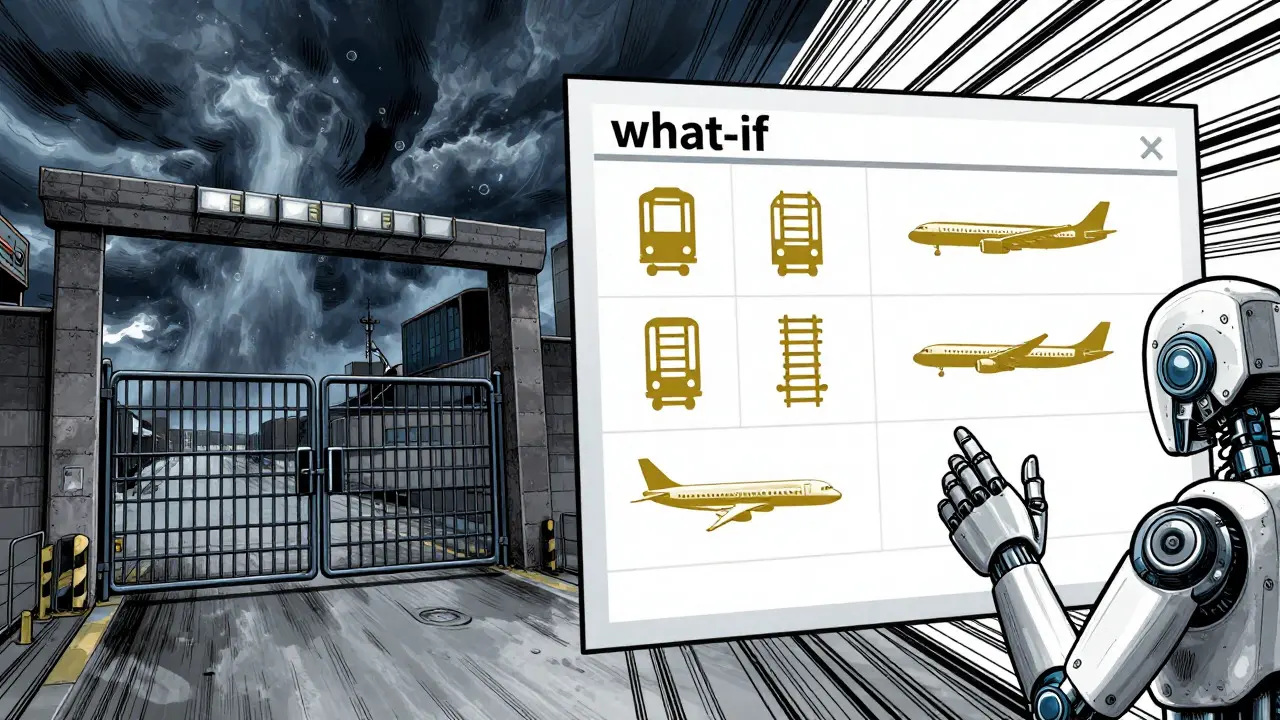
When an exception occurs, the system doesn't just flag an error. It runs 'what-if' simulations. It asks: "If we reroute through Chicago instead of Detroit, what happens to our On-Time In-Full (OTIF) rates? What is the impact on total cost? How does it affect our CO2 emissions?" It provides a clear recommendation. For example, if a port closure threatens a shipment, the AI might suggest switching to rail transport for the first leg and air freight for the last mile, explaining the trade-offs in plain language. This allows managers to make strategic decisions quickly rather than reacting blindly.
This capability extends to communication too. Automated bots can read emails or WhatsApp messages from carriers, extract key details like order numbers and incident descriptions, and update the Transportation Management System (TMS) automatically. No more manual data entry. No more missed updates.
Automated Status Updates and Customer Experience
Customers hate uncertainty. They want to know where their package is and if it will arrive on time. Automated status updates are personalized notifications generated by AI that proactively inform customers about delays, ETAs, and route changes based on predictive analytics. Instead of waiting for a customer to call support because their delivery is late, the system sends an empathetic, informative message before they even notice the delay.
These aren't generic templates. The AI crafts messages tailored to each customer’s history and preferences. If a business client values speed above all else, the update focuses on the revised ETA and mitigation steps. If a consumer cares about sustainability, it might highlight that the reroute reduced carbon emissions. This proactive approach minimizes inbound inquiries, reducing customer service costs significantly. Over time, the system learns from every interaction, refining its tone and accuracy.
Demand Forecasting and Inventory Optimization
Accurate demand forecasting is the backbone of efficient logistics. Demand forecasting uses historical sales data, market trends, and external variables to predict future product demand with high precision. Generative AI enhances this by filling data gaps and simulating rare events like supply shocks or viral product trends. Walmart, a retail leader, implemented AI-driven forecasting to achieve 90% inventory accuracy and eliminate 30 million unnecessary truck miles. By generating synthetic data points representing potential future conditions, these models cut stockouts by 20%. This means you have the right products, in the right place, at the right time-without overstocking warehouses.
Warehouse Operations and Safety Improvements
The benefits extend inside the warehouse. Warehouse optimization involves analyzing operational workflows to suggest optimal layouts, picking paths, and storage configurations based on movement patterns. Generative AI analyzes how workers move through the facility and suggests changes to reduce walking distance and improve space utilization. It also identifies safety hazards, such as cluttered aisles or inefficient stacking, and proposes specific fixes. The result is faster order preparation, less fatigue for staff, and a safer working environment.

Data Quality and Implementation Challenges
None of this works without clean data. Data quality is the accuracy, completeness, and consistency of information used by AI systems, which is critical for reliable outcomes. According to IDC, 80-90% of business data is unstructured. Generative AI helps here too, by automatically cleaning, organizing, and evaluating messy data from invoices, emails, and sensor logs. However, organizations must still invest in robust data governance. Poor input leads to poor output. Security concerns also remain, requiring strict access controls and encryption protocols.
| Feature | Traditional Systems | Generative AI Solutions |
|---|---|---|
| Route Planning | Static algorithms based on fixed rules | Dynamic simulation of real-time variables |
| Exception Handling | Alerts humans to investigate | Proposes and explains alternative scenarios |
| Customer Communication | Generic template-based updates | Personalized, empathetic, proactive messages |
| Data Processing | Requires structured, clean data | Cleans and organizes unstructured data automatically |
| Forecasting | Based on historical averages | Simulates rare events and fills data gaps |
Adoption Trends and Market Impact
Large shippers and TMS vendors led the charge, but smaller operators are now experimenting with focused applications like automated customer service. The retail and e-commerce sector held the largest share of the generative AI logistics market in 2024, driven by needs for same-day delivery coordination and returns processing. Manufacturing follows closely, optimizing raw material procurement and production schedules. As agentic AI systems and digital supply chain twins evolve, disruption will accelerate. Companies that integrate these tools now will define the standard for efficiency and resilience in the coming years.
How does Generative AI differ from traditional AI in logistics?
Traditional AI focuses on analyzing existing data to identify patterns and make predictions. Generative AI goes further by creating new content, such as optimized routes, simulated scenarios, and personalized customer messages. It can generate solutions to problems that haven't occurred yet, offering a proactive rather than reactive approach.
What are the cost savings associated with implementing Generative AI in logistics?
Early adopters report significant reductions in costs. Logistics costs can drop by 15%, while inventory levels are optimized by 35%. Service levels increase by 65% compared to competitors who are slower to adopt. These savings come from reduced fuel consumption, fewer delays, and lower customer service expenses due to automated communications.
Can Generative AI handle real-time exceptions like road closures?
Yes. When an exception occurs, the system detects it immediately and runs multiple 'what-if' simulations. It evaluates the impact on delivery times, costs, and emissions, then proposes the best alternative action. This allows operations teams to respond instantly rather than spending hours manually planning workarounds.
Is data quality a major challenge for Generative AI adoption?
Absolutely. Since 80-90% of business data is unstructured, poor data quality can hinder performance. However, Generative AI helps mitigate this by automatically cleaning and organizing messy data. Organizations still need strong data governance policies to ensure long-term reliability and security.
Which industries are leading the adoption of Generative AI in logistics?
The retail and e-commerce sector leads adoption, focusing on inventory placement, same-day delivery, and returns automation. Manufacturing is also a major user, optimizing procurement and production schedules. Large shippers and transportation management system vendors have been early pioneers, setting the stage for broader industry integration.



Comments
Meagan Mueller
its all a lie. they want to track your every move and sell your data to the highest bidder while you think you're getting a discount on shipping. big brother is watching through your smart fridge now
August 10, 2026 AT 21:03
Dave Gibbeson
Look, I work in supply chain management and this tech is actually saving us from burning out. The dynamic routing isn't just hype it handles the chaos that happens when a bridge closes or weather hits hard. We used to spend hours on calls with drivers trying to guess ETAs but now the system simulates thousands of scenarios instantly and gives us a resilient path not just the shortest one. It cuts fuel use by about ten percent which helps the bottom line and reduces emissions too. The exception handling part is where it really shines because instead of just flagging an error it proposes alternative actions like switching to rail or air freight based on cost and time impacts. It's not perfect but it's way better than the static algorithms we had before.
August 12, 2026 AT 18:55
Bonnie Watt
Oh please spare me the corporate buzzwords. You guys are just trying to replace human jobs with cold unfeeling machines that don't care if a package arrives late or early. It's soulless efficiency for the sake of shareholders who live in glass towers. Real people have feelings and your AI doesn't understand empathy it just spits out generic templates that sound fake. Keep your robots and give me a human driver who can wave hello.
August 13, 2026 AT 07:59
Sabrina Newland
i feel like we are forgetting the human element in all this 🤔 sure the ai cleans up messy data and predicts demand but what about the workers in the warehouse? the article says it suggests layout changes to reduce walking distance which sounds nice but does it consider their mental fatigue? maybe there is a balance between tech and humanity 💡 also i wonder if the typo-prone nature of real life emails makes the ai struggle sometimes lol
August 15, 2026 AT 04:52
Jacob Baby Official
The data quality section is a joke because nobody has clean data. They are feeding garbage into these models and expecting gold out. It's a house of cards waiting to collapse under the weight of its own complexity. The whole industry is built on lies and spreadsheets that no one understands. When the system fails who do you blame? The algorithm? Or the incompetent managers who trusted it blindly?
August 15, 2026 AT 14:01