Product Managers Prototyping with Vibe Coding: How AI Is Cutting Time-to-Feedback to Days
- Mark Chomiczewski
- 19 March 2026
- 10 Comments
Imagine pitching a new feature to your CEO and handing them a working app-not a slide deck, not a Figma mockup, but a real, clickable prototype that does exactly what you described. No engineering team. No waiting weeks. Just you, your words, and AI turning them into something users can try. That’s vibe coding in 2026-and it’s changing how product teams move from idea to feedback.
What Is Vibe Coding, Really?
Vibe coding isn’t about writing code. It’s about talking like a product manager and letting AI handle the rest. You say, "I want a dashboard that shows daily active users, filters by region, and lets admins export data as CSV," and within minutes, you get a live link. No JavaScript. No backend setup. No Jira tickets. Just a working tool.
This isn’t science fiction. At Meta, product teams use tools like Metamate and Devmate to build internal dashboards for executives without touching a single line of code. At Spotify, product managers certified in vibe coding are now leading prototype sprints that cut discovery time from 6 weeks to 3 days. The secret? You stop thinking like a developer. You start thinking like a director-telling AI what to build, not how to build it.
Tools like Lovable, Bolt, and Cursor now turn natural language into full-stack apps. They understand context, remember your style, and even suggest improvements: "You mentioned user authentication, but did you consider SSO? Here’s a template." It’s not magic-it’s large language models trained on millions of real apps, combined with no-code platforms that handle deployment, databases, and APIs automatically.
Why Time-to-Feedback Drops From Weeks to Hours
Traditional product development looks like this: You write a PRD. Engineering estimates. They build. You wait. You test. You iterate. That cycle often takes 4-8 weeks. With vibe coding, it looks like this: You describe the feature. AI builds it. You send it to five users. You get feedback in 24 hours.
McKinsey found that teams using vibe coding cut time-to-feedback by 70% on average. Why? Because you remove every bottleneck between idea and validation. No handoffs. No dependency queues. No "I’ll get to it next sprint." You go from thought to testable product in a single afternoon.
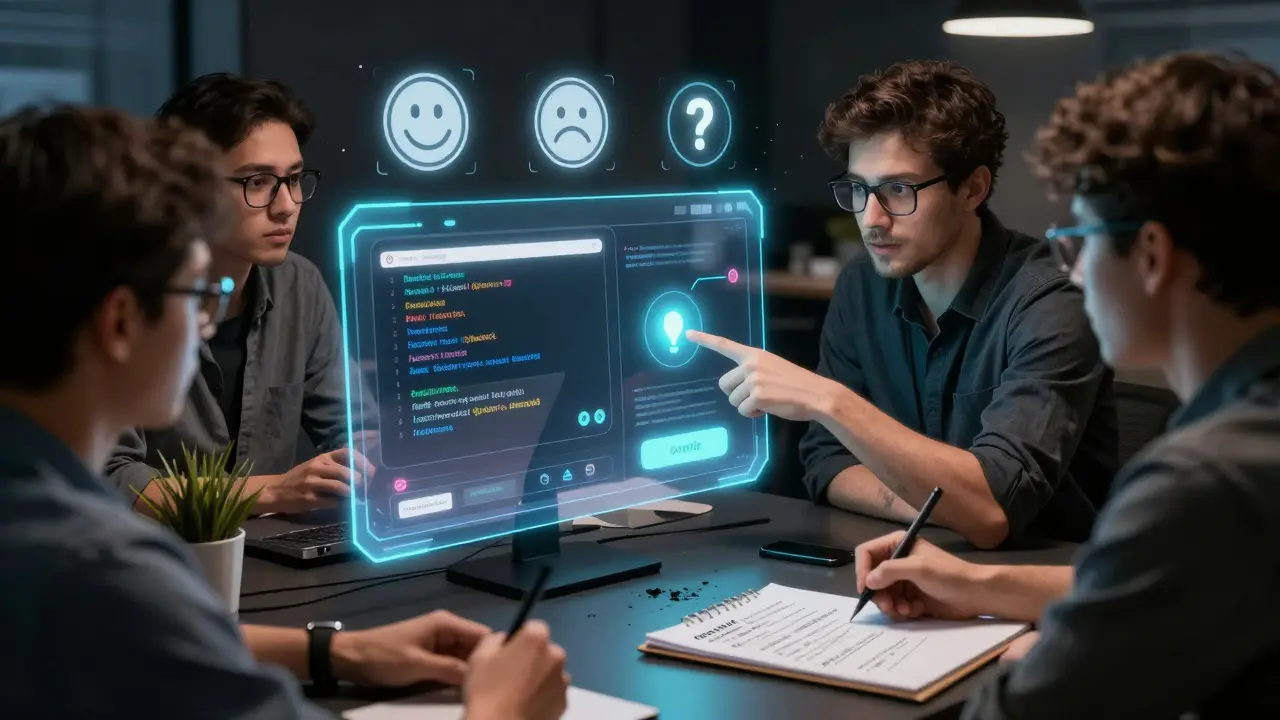
One product manager at a SaaS startup used vibe coding to test a new onboarding flow. She typed: "Create a step-by-step guide that adapts based on user role. Track completion rate. Show a progress bar." The AI generated a React frontend, a Firebase backend, and a Netlify deploy link-all in 18 minutes. She shared it with 8 users. Two dropped off at step three. She tweaked the prompt: "Make step three optional and add a skip button." AI rebuilt it. She sent the new version. Drop-off dropped by 60%.
This is the power of vibe coding: rapid, cheap, zero-friction testing. You don’t need to be right the first time. You need to learn fast.
When Vibe Coding Works Best
Not every prototype needs AI. But these five use cases? They’re perfect for vibe coding:
- UX flow prototypes for user research: Test navigation, buttons, and flows without designing every screen.
- Internal tools: Admin panels, data exports, reporting dashboards, automation scripts. These are low-risk, high-impact.
- Hackathon MVPs: Prove market fit before writing a single line of production code.
- Integration proofs: "Can our app talk to Stripe? Show me." AI builds the connection.
- Learning new tools: Want to understand Supabase? Ask AI to build a login flow with it. You learn by doing.
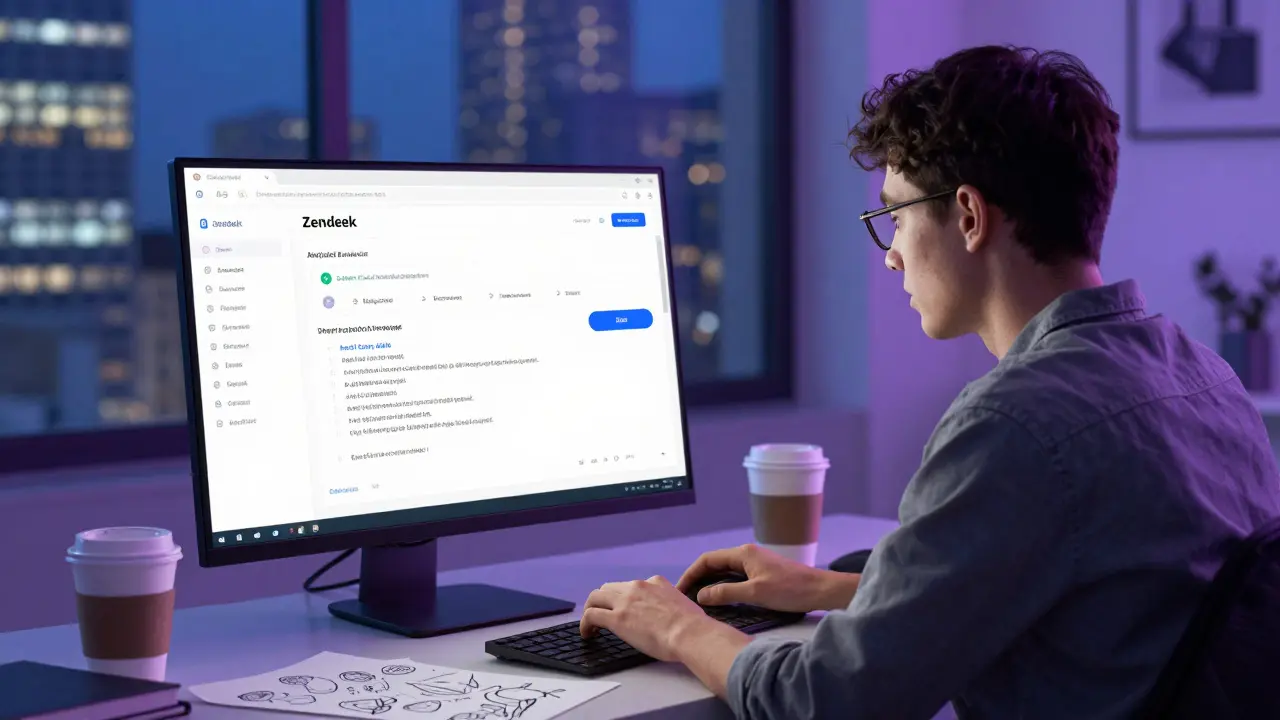
At a fintech startup, a product manager used vibe coding to prototype a customer support dashboard. She didn’t know how to connect it to Zendesk. She just said: "Connect user tickets from Zendesk, show priority levels, and let support managers reassign them." The AI pulled the API docs, wrote the connector, and deployed it. She showed it to the support team. They asked for one change: "Add a button to export all high-priority tickets." She prompted it. Done. In 45 minutes, she had a tool the team now uses daily.
When Vibe Coding Fails (And How to Avoid It)
Vibe coding isn’t a magic wand. It’s a hammer. Use it on nails, not steel beams.
It doesn’t work for:
- High-security systems: Banking, healthcare, or anything with compliance rules. You need engineers to audit the output.
- Complex logic: Real-time bidding, fraud detection, multi-threaded processes. AI can’t optimize for performance like a seasoned backend dev.
- Long-term maintenance: If no engineer will ever own this, don’t build it with vibe coding. It’s great for learning-but not for legacy.
- Design-heavy interfaces: If you need pixel-perfect animations or micro-interactions, start with Figma. Vibe coding gives you functionality, not polish.
Here’s the trap: spending 10 hours tweaking prompts to get a perfect prototype, when a whiteboard sketch and a Figma file would’ve done the job in 2 hours. Vibe coding isn’t about replacing design-it’s about replacing engineering delays. If you’re not testing with users, you’re just building toys.
The Skill Shift: From PRDs to Prompt Engineering
Forget writing 20-page requirements documents. In vibe coding, your superpower is crafting prompts.
A bad prompt: "Make a login page."
A good prompt: "Build a responsive login page with email and password fields. Add Google and Apple sign-in. Show error messages if email is invalid or password is under 8 chars. Store session in localStorage. Deploy to Netlify. Don’t use a framework-just HTML, CSS, and vanilla JS. Make it look like Slack’s login."
Notice the details? That’s the new product management skill: specificity. You need to define:
- Constraints: "No third-party libraries."
- Behaviors: "If the user clicks "Forgot Password," show a modal with email input."
- Success metrics: "Track how many users complete login on first try."
- Design references: "Use the same button style as Notion’s dashboard."
Product managers who master this don’t just build faster-they build smarter. They learn to think in systems, not features. They start asking: "What data do I need to validate this?" instead of "How do I explain this to engineering?"
Design Systems Are Your Secret Weapon
One of the biggest risks in vibe coding? Every prototype looks different. One uses blue buttons. Another uses rounded corners. Another uses a different font. Chaos.
The smartest teams now embed design system rules into their prompts. Instead of saying, "Make a button," they say: "Use the primary button from our Figma design system-#0066CC, 44px height, 8px border radius, Roboto font. Use the spacing token $spacing-md."
This isn’t about control. It’s about consistency. When every prototype follows the same visual language, users don’t get confused. Stakeholders trust the results. And when it’s time to hand off to engineering, they don’t have to rebuild everything-they just clone the prototype.
At Adobe, product teams now include design system tokens directly in their vibe coding prompts. The result? 80% fewer rework cycles during engineering handoff.
How to Start-A 5-Step Workflow
You don’t need to be an AI expert. Here’s how to begin:
- Define the problem: What are you trying to learn? "Do users want a one-click export?" Not: "Build an export button."
- Find inspiration: Pull 2-3 screens from Dribbble or Behance that match the feel you want. Paste them into your AI tool.
- Write the prompt: Use the structure: "Build a [tool] that [does X]. It must [constraints]. Use [design reference]. Track [metric]."
- Build and deploy: Use Lovable or Bolt to generate and deploy. Get a live link in under 10 minutes.
- Test and iterate: Send it to 5 users. Ask: "What did you expect to happen? What confused you?" Then refine the prompt.
Try this today: Pick one small internal tool you wish existed. Describe it in plain English. Use a vibe coding tool. Deploy it. Share it. See what happens.
The Bigger Picture: Product Management Is Changing
Vibe coding isn’t about replacing engineers. It’s about removing friction between product teams and validation. The best product managers in 2026 aren’t the ones with the most detailed PRDs. They’re the ones who can test ideas in hours, not weeks.
Companies like Meta, Spotify, and Shopify aren’t just experimenting-they’re training product managers in vibe coding as a core competency. Certifications now exist, built by leaders who’ve seen teams go from idea to user feedback in under 24 hours.
The future of product management isn’t writing specs. It’s asking better questions, building faster, and learning quicker. Vibe coding doesn’t make you a developer. It makes you a better product leader.
What Comes Next?
By 2027, we’ll see product managers using vibe coding to:
- Connect prototypes to live customer data in real time
- Automatically A/B test two versions of a feature with real users
- Generate user feedback summaries from video recordings of prototype sessions
AI won’t replace product managers. But product managers who use AI will replace those who don’t.

Comments
Geet Ramchandani
Let me get this straight-you’re telling me we can skip engineering entirely and just "vibe" out a full-stack app? That’s not innovation, that’s delusion. I’ve seen 17 "vibe-coded" prototypes at my company, and every single one crashed under 50 concurrent users. The AI doesn’t know what a race condition is. It doesn’t know what load balancing means. It just spits out code that looks pretty until it burns down your entire infra stack. And now we’re supposed to train PMs in "prompt engineering" instead of teaching them how to prioritize? We’re not building products. We’re building sandcastles before the tide comes in.
March 20, 2026 AT 12:48
Pooja Kalra
There is a silence here. A profound, almost sacred silence where the engineer used to be. We have replaced craftsmanship with incantation. We chant to the machine, and it obeys-but at what cost? The soul of the product is not in the click, nor in the deploy link, nor in the CSV export. It is in the quiet struggle of understanding human need through years of iteration. What have we become, when we no longer listen-but only instruct?
March 21, 2026 AT 03:50
Sumit SM
Wait-wait-wait. So you’re saying you typed "make a login page like Slack" and it just… worked? Like, no bugs? No edge cases? No weird Safari rendering? No forgotten CSRF token? That’s impossible. I’ve been doing this for 12 years. AI can’t replicate the thousand tiny decisions a dev makes because they’ve been burned before. This isn’t productivity-it’s a trap. You’ll think you’re moving fast until your entire MVP is held together by duct tape and hope. And then-BAM-your CEO asks for "real production-grade" and suddenly you’re begging for engineers who now hate you.
March 23, 2026 AT 00:07
Jen Deschambeault
I tried vibe coding last week for a simple internal tool to track team availability. Took me 12 minutes. Deployed. Shared. Two people used it. One said "it’s beautiful." Another said "why is the font so small?" I changed the prompt: "Use 16px font, same as Notion." Done. In 8 minutes, it was fixed. No meetings. No tickets. Just… progress. This isn’t magic. It’s liberation. Stop overthinking it. Just try it.
March 23, 2026 AT 21:15
Kayla Ellsworth
"Vibe coding cuts time-to-feedback to days." What a laughable euphemism. You mean it cuts time-to-deploy-a-prototype-to-5-people-who-won’t-give-real-feedback. You think users are going to tell you the truth when the UI looks like a 2012 WordPress theme built by a drunk bot? Feedback without design is noise. Noise without context is worse than silence. This isn’t the future. It’s the dumpster fire we pretended wasn’t on fire.
March 25, 2026 AT 03:07
Soham Dhruv
man i just tried this vibe thing for a tiny internal tool and wow it actually worked? like, i said "make a thing that shows who’s out of office and lets you book a meeting slot" and boom-there it was. no one even had to help me. i sent it to my team and they were like "whoa how did you do this" and i just said "uhhh ai". felt kinda weird but also kinda awesome. now i’m using it for everything. even made a thing to track my cat’s naps. she’s very productive.
March 26, 2026 AT 17:07
Bob Buthune
I’ve watched this happen. I’ve seen the same people who spent 6 months building a "perfect" system in React and Node now scream "I DID IT IN 20 MINUTES" like they just won the lottery. But here’s the truth: they didn’t build anything. They just asked the AI to do the work they were too lazy to learn. And now? They’re stuck. Because when the AI gives you a broken OAuth flow or a database that won’t scale, you have no idea how to fix it. You didn’t learn. You just delegated. And now you’re a product manager with no technical grounding. Congrats. You’ve built a house on quicksand. And now you’re crying because the AI won’t answer your Slack DMs.
March 27, 2026 AT 10:44
Jane San Miguel
It is deeply concerning that this article is being presented as a legitimate advancement in product management. The term "vibe coding" is not only semantically vacuous, it is an affront to the discipline of software engineering. One does not "vibe" a secure, scalable, maintainable system. One constructs it-with rigor, with testing, with architectural foresight. The notion that product managers should replace engineers with prompts is not innovation-it is the commodification of ignorance. This is not progress. It is regression disguised as efficiency.
March 28, 2026 AT 19:48
Kasey Drymalla
this is all a lie. ai is just training on code from github and then selling it back to you. they’re not building anything. they’re just copying. and the real engineers? they’re being fired. you think your "vibe prototype" is safe? it’s got backdoors. the ai knows your data. it’s sending it to china. they’re using your prompts to train models that will replace you next. this isn’t a tool. it’s a trap. they want you to get addicted so they can take your job. wake up.
March 30, 2026 AT 00:13
Dave Sumner Smith
You people are being played. Vibe coding? It’s a corporate psyop. Big Tech wants you to think you don’t need engineers anymore so they can cut costs. But here’s what they won’t tell you: when your "AI-built" dashboard crashes during a product launch, who gets blamed? You. The PM. The one who "vibed" it. Meanwhile, the engineers who actually know how to fix it? They’re gone. Fired. Replaced by contractors who charge $200/hour to clean up your "quick prototype." This isn’t freedom. It’s a slow-motion layoff. And you’re signing the papers with your own words.
March 30, 2026 AT 04:32