Refactoring Sprints for Vibe-Coded Apps: A Practical Guide

- Mark Chomiczewski
- 16 November 2026
- 0 Comments
You just shipped a feature in record time. You prompted Cursor, watched Google Gemini 2.5 Pro generate the backend, and clicked deploy. It works. But if you look closely at the codebase, it’s a house of cards built by an eager intern who didn’t know your naming conventions or security policies. This is the reality of vibe coding: high-velocity, AI-assisted development that prioritizes flow over structure.
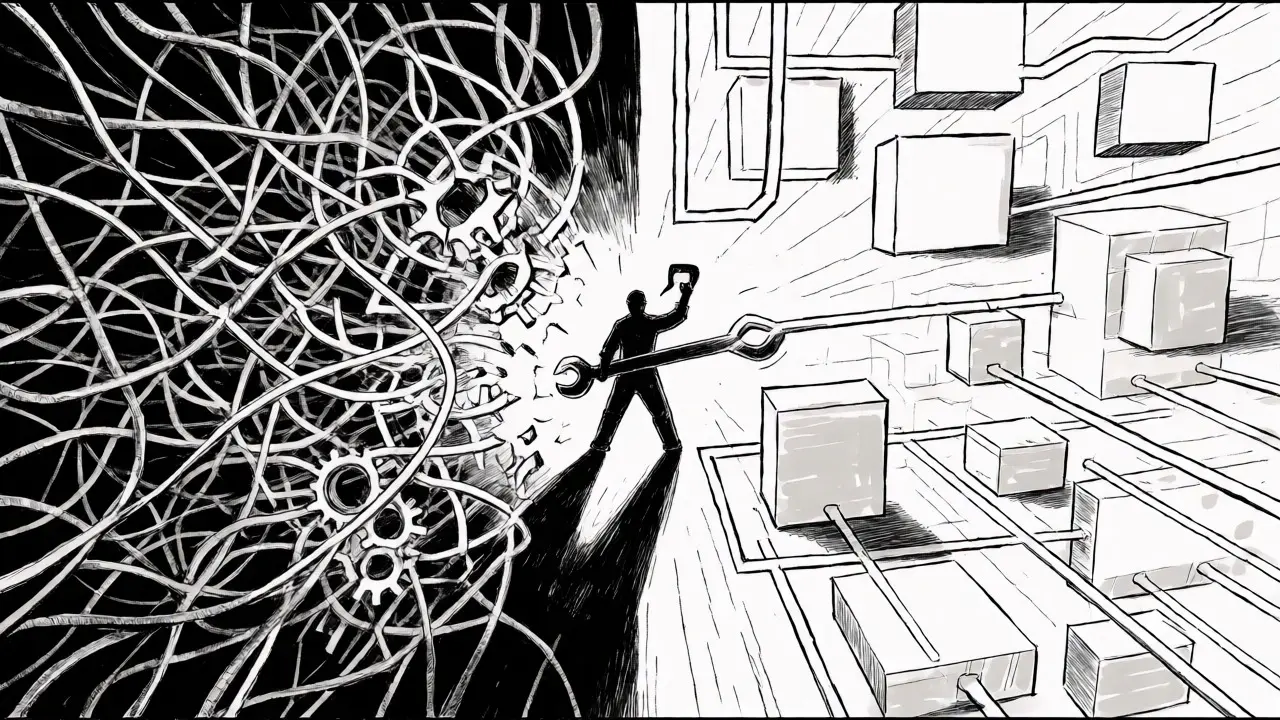
The problem isn't the speed; it's the aftermath. Without intervention, vibe-coded apps accumulate specific types of technical debt: insecure secrets, duplicated logic, and missing documentation. The solution isn't to stop using AI, but to schedule dedicated refactoring sprints. These aren't general cleanup weeks. They are targeted iterations designed to harden AI-generated code against security risks, enforce architectural consistency, and capture institutional knowledge before it evaporates.
| Attribute | Vibe-Coded State | Post-Refactor Sprint State |
|---|---|---|
| Security | Hardcoded API keys, client-side secrets exposed, minimal input validation. | Secrets moved to env vars, server-side auth enforced, inputs sanitized via middleware. |
| Architecture | Duplicated components, inconsistent state management, mixed concerns. | Shared modules extracted, vertical slices aligned, clear separation of DB/UI/Logic. |
| Testing | Manual smoke tests only, zero unit coverage for edge cases. | AI-generated unit tests for core endpoints, integration tests for critical flows. |
| Documentation | None, or outdated README files from initial setup. | Auto-generated architecture diagrams, decision logs, updated rule files. |
Why Your AI-Generated Code Needs a Hardening Phase
Let’s be honest about what happens when you rely on AI for rapid prototyping. Tools like Cursor or GitHub Copilot excel at writing boilerplate and implementing standard patterns quickly. However, they lack context about your specific security constraints or long-term maintenance goals unless explicitly told. Practitioner reports highlight three recurring traps: security holes, technical-debt spirals, and skill atrophy.
Consider a common scenario: you ask the AI to add user authentication. It might generate a functional login form but store the JWT token in localStorage without considering XSS vulnerabilities, or worse, embed your Stripe secret key directly in the frontend component because it was easier than setting up environment variables. These aren't bugs in the traditional sense; the app runs fine. But they are structural liabilities.
A refactoring sprint addresses these liabilities systematically. Instead of fixing issues as they break production, you allocate time to proactively hunt them down. This shifts your workflow from reactive firefighting to proactive engineering. It also helps combat skill atrophy. When you spend a week reviewing AI output and enforcing standards, you stay engaged with the underlying logic rather than becoming a passive prompt engineer.
Scheduling Strategy: When to Insert the Sprint
Timing is everything. If you refactor too early, you’re polishing features that might get scrapped. Too late, and the technical debt becomes unmanageable. For most teams using vibe coding, a cadence-based approach works best.
- The Vertical Slice Trigger: If you work in vertical slices (database schema to UI), schedule a mini-refactor after every 2-3 slices. This prevents small inconsistencies from compounding into architectural drift.
- The Pre-Release Gate: Reserve the final sprint before any major production deployment exclusively for hardening. No new features allowed. This aligns with DevOps practices where stability checks precede releases.
- The Weekly Rhythm: For teams running one-week sprints, consider alternating between "Build Weeks" (heavy vibe coding) and "Stabilize Weeks" (heavy refactoring). This maintains developer flow while ensuring quality doesn't slip.
Don't wait for a crisis. Schedule these sprints during periods of lower feature demand. If your product roadmap is packed, negotiate this time upfront. Frame it not as "cleanup" but as "risk mitigation." Stakeholders understand risk better than they understand code smells.
Defining the Scope: What Actually Gets Done
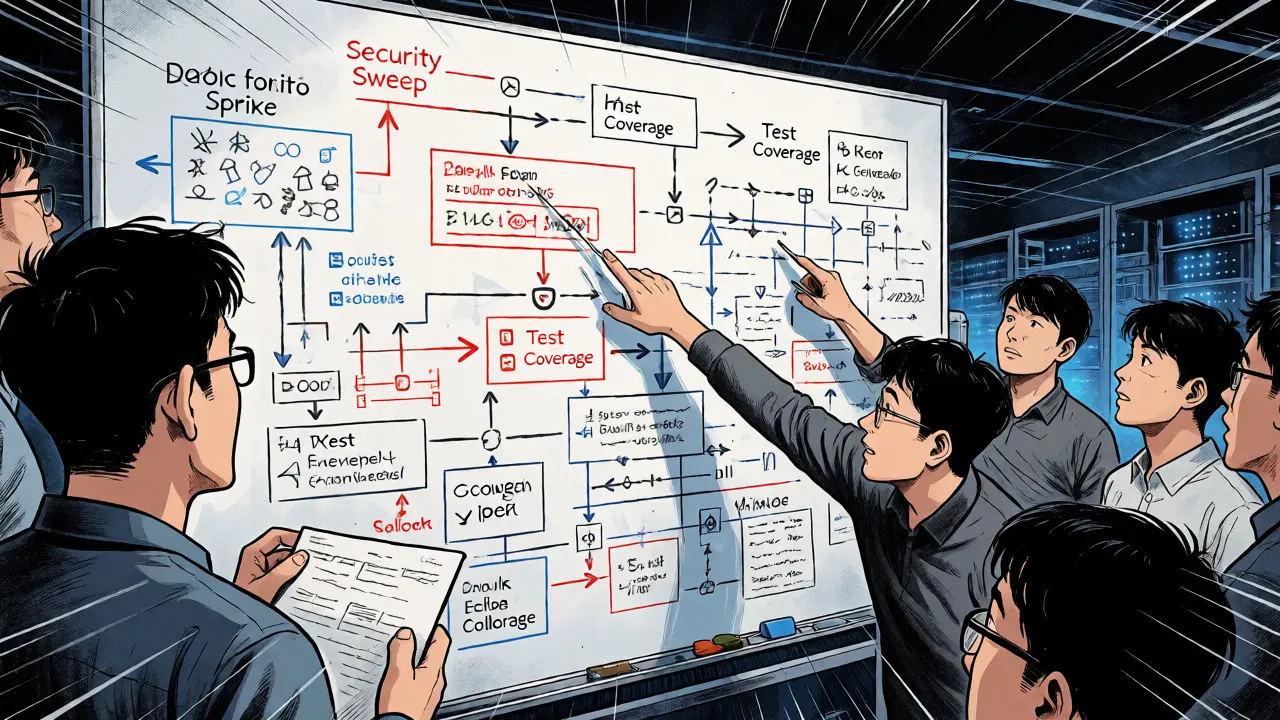
A vague goal like "improve code quality" fails. You need concrete deliverables. Here is a proven scope for a one-week refactoring sprint focused on vibe-coded apps:
1. Security and Privacy Sweep
This is non-negotiable. Start by running an AI-assisted audit. Prompt your IDE agent to "roast its own code" specifically looking for security anti-patterns. Look for hardcoded secrets, insecure password handling, and unprotected endpoints. Replace ad-hoc implementations with guarded platforms. If you're using Supabase for auth or Stripe for payments, ensure you're leveraging their built-in protections rather than rolling your own fragile logic.
2. Architecture Harmonization
Vibe coding often leads to copy-paste programming. You'll find five different ways to fetch data or format dates. Identify cross-cutting concerns-things like error handling, logging, and state management-and extract them into shared modules. Enforce a single pattern for routing and state updates. Use tools like Kiro or similar spec-driven agents to map existing behavior and identify discrepancies.
3. Test Coverage Expansion
AI can write tests faster than humans. Use this sprint to backfill test coverage for critical paths. Don't try to reach 100% coverage. Focus on the "money paths": checkout flows, user registration, and data persistence. Generate unit tests for individual functions and integration tests for API endpoints. Ensure these tests run automatically in your CI pipeline.
4. Documentation and Knowledge Capture
This is often skipped, but it's vital for maintainability. Update your architecture diagrams. If you use Mermaid diagrams, regenerate them to reflect current state. Create a decision log that explains *why* certain refactors were made. This helps future developers (and future AI prompts) understand the rationale behind structural changes.
5. AI Configuration Updates
Your rules files (.cursor/rules, etc.) are living documents. During the sprint, update them based on lessons learned. If you discovered that the AI keeps forgetting to validate email formats, add a rule for that. If it keeps generating verbose comments, adjust the tone. This ensures the next vibe-coding session starts with better guardrails.
Practical Implementation Steps
Here is a step-by-step guide to executing a refactoring sprint effectively:
- Pre-Sprint Analysis: Run a static analysis tool and an AI code review. Compile a list of top 10 issues. Categorize them by severity (Critical, High, Medium).
- Create a Refactoring PRD: Write a brief Product Requirements Document for the sprint. List specific goals, such as "Eliminate all client-side secrets" or "Achieve 60% test coverage on payment module."
- Execute Fixes: Work through the list. Prioritize security fixes first. Then address architectural duplications. Finally, add tests and docs.
- Update Rules: As you fix issues, immediately update your AI rules files to prevent recurrence.
- Validate: Run your full test suite and perform manual smoke tests on critical user journeys.
- Document: Generate an updated system overview and archive the sprint notes.
Keep the scope tight. If you have more than 15-20 significant tasks, cut the lowest priority ones. It’s better to finish 80% of a well-defined scope than to leave 50% of a sprawling one unfinished.
Common Pitfalls to Avoid
Teams often stumble here. Watch out for these traps:
- Over-Refactoring: Don't rewrite working code just because it looks ugly. If it works, is secure, and is documented, leave it alone until it needs to change.
- Ignoring the Rules File: If you fix a bug manually but don't update the AI rules, the bug will return in the next feature. Always close the loop.
- Lack of Testing: Refactoring without tests is dangerous. You might break something subtle. Ensure you have a safety net before you start moving code around.
- Scope Creep: Resist the urge to add new features during the sprint. If a stakeholder asks for a tweak, save it for the next build cycle.
The Long-Term Impact
Integrating refactoring sprints into your vibe-coding workflow transforms how you manage software lifecycle. It turns AI from a chaotic generator into a reliable collaborator. By regularly hardening the code, you reduce the cost of future changes. Developers spend less time debugging cryptic AI outputs and more time building value.
As AI tools evolve, adding features like automatic security scanning and spec synchronization, the mechanics of these sprints will become smoother. But the principle remains: human oversight and structured remediation are essential for production-grade AI-assisted development.
How long should a refactoring sprint last?
Typically, one week is ideal for smaller teams or projects. For larger applications, a two-week sprint may be necessary to cover extensive security audits and architectural restructuring. The key is to keep it time-boxed to prevent endless polishing.
Can I refactor while developing new features?
Yes, but with caution. Micro-refactoring (cleaning up code touched by new features) is encouraged. However, large-scale architectural changes should be isolated in dedicated sprints to avoid destabilizing active development streams.
What tools help with refactoring vibe-coded apps?
Use AI IDEs like Cursor for code reviews and generation. Static analysis tools like ESLint or SonarQube help identify code smells. Spec-driven tools like Kiro can help formalize requirements for legacy vibe-coded sections. Platforms like Supabase or Stripe provide secure defaults that simplify refactoring efforts.
How do I measure the success of a refactoring sprint?
Track metrics like reduction in security vulnerabilities, increase in test coverage, decrease in code duplication (measured by tools like JSCPD), and improved build times. Qualitatively, assess developer confidence in making changes and the clarity of documentation.
Is vibe coding bad for production?
No, but raw vibe coding without refactoring is risky. Vibe coding accelerates prototyping and feature delivery. With regular refactoring sprints to address security, structure, and testing, it becomes a viable strategy for production environments.