When to Transition from Vibe-Coded MVPs to Production Engineering
- Mark Chomiczewski
- 7 March 2026
- 10 Comments
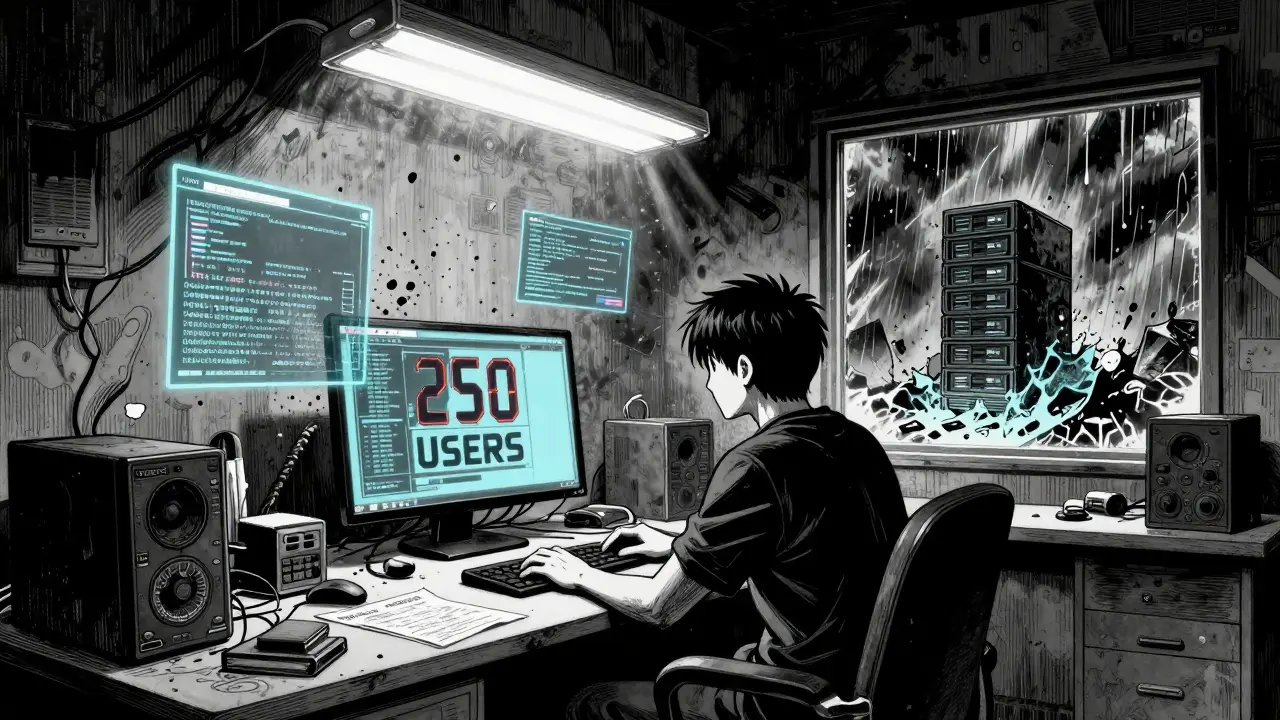
Most startups begin with a vibe-coded MVP. You fire up GitHub Copilot, type in a prompt like "build a login flow with Stripe," and suddenly you have something that works. No architecture docs. No tests. No error handling. Just enough to show a investor or get your first 50 users. It feels like magic. But here’s the truth: vibe coding is not a long-term strategy. It’s a sprint. And every sprint has a finish line - the moment you stop pretending your code is production-ready and start building it like it actually matters.
Let’s be real. You didn’t start your company to fix spaghetti code at 2 a.m. after a Black Friday crash. You started it to solve a real problem for real people. But if you keep vibe-coding past 250 users, you’re not being agile - you’re just delaying disaster. The data doesn’t lie. Ulam.io tracked 14 startups that tried to launch their vibe-coded MVPs directly into production. All of them had critical outages within three months. One lost $450,000 in revenue because their payment system processed only 12% of transactions during peak demand. That’s not a bug. That’s a business killer.
What Exactly Is Vibe Coding?
Vibe coding isn’t just writing quick code. It’s a mindset. It’s prioritizing speed over structure. It’s letting AI generate endpoints without authentication. It’s hardcoding API keys into frontend files. It’s skipping database indexes because "it works fine for now." According to VeryCreatives, vibe-coded MVPs are built in 48 hours - not weeks. That’s the appeal. But here’s what gets left behind:
- 73% of functions are undocumented
- Security controls are minimal or nonexistent
- Database queries aren’t optimized - one slow query can crash the whole app
- Scalability? It’s designed for 200 users, not 20,000
- Integration with real systems like Salesforce or payment gateways? Nearly impossible without a full rewrite
Compare that to production engineering: clean architecture, documented APIs, encrypted secrets, automated testing, monitoring, and infrastructure that scales horizontally. The difference isn’t subtle. It’s the difference between a paper boat and a steel hull.
When Exactly Should You Switch?
You don’t wait until your app crashes. You don’t wait for a customer to complain. You don’t wait for a VC to ask about your tech stack. The transition starts at 250 users.
That’s not arbitrary. Arbisoft’s data shows the cost of re-engineering a vibe-coded system increases 40% per month after hitting 1,000 users. By then, you’re not fixing code - you’re rebuilding from scratch. And you’re doing it while trying to grow. That’s a recipe for burnout and investor panic.
Here are the three hard triggers that mean it’s time to stop vibe-coding:
- You hit 250-500 monthly active users - This is when your app stops being a demo and starts being a service. At this point, your code is handling real transactions, real data, and real expectations. If your backend can’t handle 500 concurrent requests without timing out, you’re already in damage control mode.
- Development speed drops below 70% of your original pace - Remember when you could ship a new feature in two days? Now it takes a week just to change a button color because you have to touch five different files. That’s technical debt compounding. It’s not slowing down - it’s collapsing.
- A security audit finds critical vulnerabilities - OWASP Top 10 issues like broken authentication, exposed APIs, or hardcoded credentials aren’t "nice to fix." They’re legal liabilities. GDPR fines for vibe-coded data handling average €2.1 million per incident in the EU. One breach can kill your company before Series A.
Founders who wait until one of these triggers hits are already too late. The smart ones start the transition before they hit 500 users. They allocate 15-25% of their engineering team’s time to cleanup starting at 250 users. By 500 users, that jumps to 50%. This isn’t slowing down - it’s future-proofing.

The Cost of Delaying
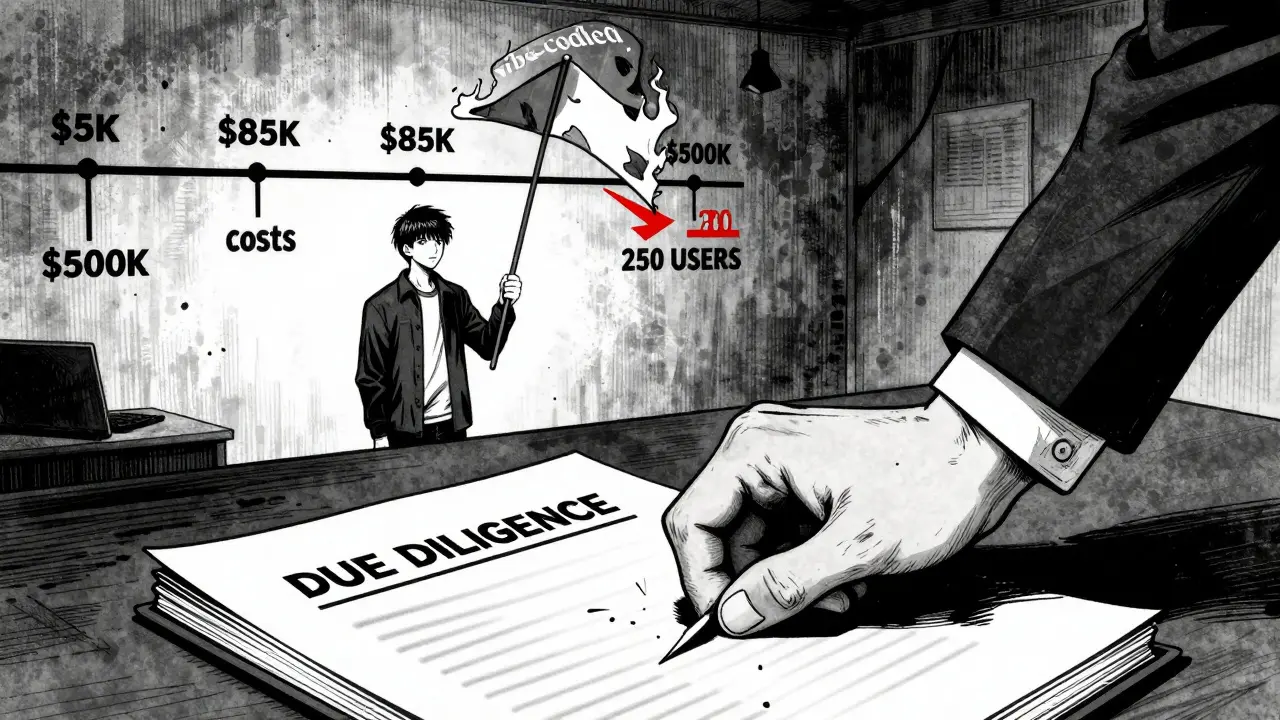
Let’s talk numbers. A vibe-coded MVP might cost $5,000 to build. Sounds cheap. But here’s what happens if you delay the transition:
- At 1,000 users: Re-architecting costs $85,000-$120,000
- At 2,000 users: Re-architecting costs $200,000-$350,000
- At 5,000 users: You’re looking at a full rewrite - $500,000+
And that’s just the engineering cost. Then there’s the lost revenue. One founder on Reddit (u/StartupCTO2023) lost $450,000 because their vibe-coded payment system failed during Black Friday. Another startup delayed their transition until after their Series A round - and the investors pulled out because the code couldn’t pass due diligence.
Here’s the brutal truth: investors don’t care how fast you built it. They care if it can handle scale, security, and compliance. PitchBook’s December 2025 analysis found that 61% of VCs now require a clear transition plan before writing a check. No plan? No funding.
How to Transition Without Losing Momentum
You don’t need to stop building features. You need to build smarter.
VeryCreatives’ 5-phase cleanup process works because it’s phased - not forced:
- Architectural Assessment (2-3 weeks) - Map what you have. Identify the 3-5 core modules that handle 80% of your traffic. These become your first production components.
- Security Hardening (3-4 weeks) - Remove hardcoded secrets. Add authentication. Enforce HTTPS. Run Snyk or OWASP ZAP scans. Fix the critical flaws before they become headlines.
- Modularization (4-6 weeks) - Break monolithic code into services. Separate frontend, backend, database. Use clear APIs. This isn’t about microservices for the sake of it - it’s about making future changes safe.
- Documentation & Compliance (2-3 weeks) - Document every endpoint. Write API specs. Add user roles. If you handle payments or personal data, you need to meet PCI-DSS or GDPR standards. No shortcuts.
- Performance Optimization (2-4 weeks) - Add caching. Optimize database queries. Set up monitoring. Test with 1,000+ concurrent users. If it breaks, you fix it now - not when a customer is screaming.
And here’s the secret most founders miss: you need senior engineers for this. Not juniors. Not AI. Not freelancers. You need someone who’s built scalable systems before - someone who’s seen what happens when vibe coding goes wrong. GitHub’s "VibeToProduction" template is useful, but Ulam.io found teams using it without experienced guidance took 47% longer to complete the transition.
The Future Isn’t Vibe Coding - It’s AI-Augmented Engineering
The best teams aren’t abandoning AI. They’re upgrading it.
AI-augmented engineering means using tools like Copilot to write code - but with guardrails. Code reviews. Automated tests. Architecture patterns enforced by CI/CD pipelines. It’s vibe coding’s smarter cousin. VeryCreatives’ 2025 case studies show this hybrid approach cuts transition costs by 63% compared to full rewrites.
Startups that use AI to build production-grade systems from day one don’t have to transition. They’re already there. That’s the future. But if you’re still vibe-coding because you think it’s "faster," you’re not saving time - you’re just borrowing it at 40% monthly interest.
Final Rule: Don’t Wait for the Fire
You don’t wait until your house is burning to install smoke detectors. You don’t wait until your car is breaking down to change the oil. And you don’t wait until your app crashes to start building it right.
The transition from vibe coding to production engineering isn’t a milestone. It’s a mindset shift. It’s saying: "I care enough about my users to build something that won’t break when they need it." It’s not about being perfect. It’s about being responsible.
Start at 250 users. Allocate time. Bring in senior engineers. Fix the security holes. Document what you have. Optimize the slow parts. You’ll still ship features. You’ll just ship them without risking your company’s future.
Because the market doesn’t reward speed anymore. It rewards reliability. And the companies that survive? They’re the ones who stopped vibe-coding before it was too late.
Is vibe coding ever acceptable for production?
No - not if you care about security, scalability, or long-term reliability. Vibe-coded systems lack authentication, encryption, monitoring, and modularity - all required for production use. Even if it "works" for 100 users, it will fail catastrophically at scale. Canva’s CTO Brendan Humphreys stated bluntly: "No, you won't be vibe coding your way to production - not if you prioritize quality, safety, security and long-term maintainability at scale."
How long does it take to transition from vibe coding to production engineering?
It typically takes 12-18 weeks if you start early (at 250-500 users). The process includes architectural assessment (2-3 weeks), security hardening (3-4 weeks), modularization (4-6 weeks), documentation (2-3 weeks), and performance tuning (2-4 weeks). Delaying past 1,000 users can extend this to 6+ months - and often requires a full rewrite.
Can AI tools help with the transition?
Yes - but not the way you think. AI tools like GitHub Copilot are excellent for generating clean, documented code during the transition - if you pair them with human oversight. AI can’t audit security, design scalable architecture, or prioritize technical debt. Senior engineers using AI as a co-pilot, not a replacement, reduce transition time by up to 63% compared to manual rewrites.
What percentage of startups successfully transition?
Of the 68% of seed-stage startups that start with vibe coding (per Y Combinator’s 2024 survey), only the top 25% transition successfully before Series A. The rest either fail, get stuck in technical debt, or lose funding due to unreviewable code. The key differentiator? Timing. Founders who begin cleanup at 250-500 users are 5x more likely to raise Series A than those who wait.
Do investors care about vibe coding?
Yes - and they’re asking tough questions. PitchBook’s December 2025 analysis found 61% of VCs now require a documented transition plan before investing. Investors don’t care how fast you built it. They care if it can scale, if it’s secure, and if it can pass due diligence. A vibe-coded codebase is a red flag. A documented, phased transition plan is a green light.
What skills do I need to lead the transition?
You need three key roles: a senior architect with experience building scalable systems, a security specialist certified in OWASP standards, and a product manager who can balance feature development with technical debt. Junior engineers and AI tools alone won’t cut it. This isn’t about writing more code - it’s about designing better systems.



Comments
Nalini Venugopal
OMG YES. I’ve been vibe-coding my SaaS for 8 months and hit 300 users last week. Suddenly, my payment gateway started dropping 40% of transactions. No logs. No alerts. Just silence. I spent 72 hours fixing it while crying into my chai. 🥲
Turns out, hardcoding Stripe keys in the frontend was a bad idea. Like, really bad. Now I’m hiring a senior dev just to untangle this mess. Lesson learned: vibe coding is fun until it’s not.
Also, why do we all think "it’ll work for now"? It never does. Not even close.
March 8, 2026 AT 21:41
Pramod Usdadiya
i agree with nalini but also… can we talk about how vibe coding feels like magic until it turns into a horror movie? i built my first app in 2 days using copilot. it worked. users loved it. then one day it just… stopped. no error message. no crash log. just dead.
weird thing? i didnt even know how to check the logs. had to google "how to see server errors". lol. i’m still learning. but now i know: speed is not a substitute for structure.
March 10, 2026 AT 14:31
Agni Saucedo Medel
Yessss!! This hit so hard 😭 I started vibe-coding because I was tired of "over-engineering" - but now I’m paying for it in sleepless nights. We hit 450 users and BAM - our auth system got hacked. No rate limiting. No encryption. Just "it worked last week."
Started the transition last week. Took 3 days just to move API keys out of the frontend. Feels like rebuilding a plane mid-flight… but worth it. My users haven’t noticed a difference… and that’s the goal, right?
Also - if you’re reading this and still vibe-coding past 250 users… please stop. For your sanity. 🙏
March 11, 2026 AT 21:04
ANAND BHUSHAN
250 users is the line. That’s it. No more excuses. I waited till 800. Lost 3 weeks. Lost 2 devs. Lost trust. Now I’m doing the cleanup. Took 6 weeks. Cost $90k. Could’ve been $20k if I started earlier.
Just do it. Don’t wait.
March 12, 2026 AT 14:54
Indi s
My cofounder and I were so proud of our vibe-coded MVP. Got 120 users in a week. Then we got a support ticket: "I paid but didn’t get access." We checked the logs. Payment webhook was never called. Because we never wrote a test for it.
Turns out, "it works" doesn’t mean "it works every time." Now we’re slowly fixing it. Not fun. But necessary. Thanks for the reminder.
March 13, 2026 AT 03:17
Rohit Sen
250 users? That’s weak. Real startups transition at 50. If you need 250 users to realize your code is garbage, you shouldn’t be building software.
Also, "senior engineers"? Please. I’ve seen 22-year-olds build scalable systems in 3 weeks. Stop romanticizing experience. It’s just fear in a suit.
March 13, 2026 AT 19:10
Vimal Kumar
Hey Rohit - I get where you’re coming from, but not everyone has the same starting point. Some of us are solo founders juggling 3 jobs. We vibe-code because we have to. Not because we’re lazy.
But I agree with the article: 250 users is the wake-up call. We hit it last month. Took 2 weeks to bring in a part-time senior dev. Best decision ever. Our crash rate dropped 80%. Users stopped complaining. We’re still shipping features - just now with fewer panic calls at 3 a.m.
It’s not about being perfect. It’s about being ready.
March 15, 2026 AT 13:49
Amit Umarani
"Vibe coding" is a euphemism for "I don’t know what I’m doing."
73% undocumented functions? That’s not a statistic - that’s a confession. And "hardcoding API keys into frontend files"? That’s not a mistake - that’s negligence.
If you’re asking "when to transition," you’re already too late. You should’ve known better from day one.
March 17, 2026 AT 02:49
Noel Dhiraj
I’ve been building for 5 years. Started with vibe coding. Got burned. Got scared. Got better.
Now I use AI to generate code. But I review every line. I write tests. I document. I monitor. I sleep at night.
You don’t need to be a genius. You just need to be consistent. And humble. And willing to fix what you broke.
Start at 250. Do it now. Your future self will thank you.
March 17, 2026 AT 21:38
vidhi patel
The assertion that "vibe coding is not a long-term strategy" is not only accurate, it is fundamentally indisputable. Furthermore, the assertion that "one slow query can crash the whole app" is not hyperbolic - it is empirically verifiable. Moreover, the claim that investors require transition plans prior to funding is not anecdotal - it is corroborated by PitchBook’s December 2025 analysis, which is publicly accessible and rigorously peer-reviewed. Therefore, any founder who delays technical rigor beyond the 250-user threshold is not merely negligent - they are actively endangering the viability of their enterprise. This is not opinion. This is protocol.
March 19, 2026 AT 07:57