Adapter Layers vs LoRA: Efficient LLM Customization Guide

- Mark Chomiczewski
- 1 November 2026
- 0 Comments
Imagine trying to teach a new trick to a dog that has already learned a thousand others. You don’t rebuild the dog’s brain from scratch; you just tweak a few specific pathways. That is essentially what Low-Rank Adaptation (LoRA) and Adapter Layers do for Large Language Models (LLMs). For years, customizing massive AI models meant retraining billions of parameters, requiring server farms and budgets that only tech giants could afford. Today, thanks to parameter-efficient fine-tuning (PEFT), you can customize a model like GPT-3 or Llama on a single consumer GPU. But which method should you pick? The choice between adapters and LoRA isn't just academic-it dictates your inference speed, memory usage, and how easily you can manage multiple tasks.
The Problem with Full Fine-Tuning
Before we look at solutions, let’s look at the pain point. Traditional fine-tuning updates every weight in the neural network. If you want to adapt GPT-3 a large language model developed by OpenAI, which has 175 billion parameters, you need to store and update all of them for each new task. If you have ten different tasks, you effectively need ten copies of the model. This creates two major bottlenecks: storage costs and computational time. Training becomes slow because backpropagation must calculate gradients for billions of weights. Inference gets complicated because switching between tasks means swapping out massive files, leading to latency spikes. PEFT techniques solve this by freezing the pre-trained weights and only training a tiny fraction of new parameters.
How Adapter Layers Work
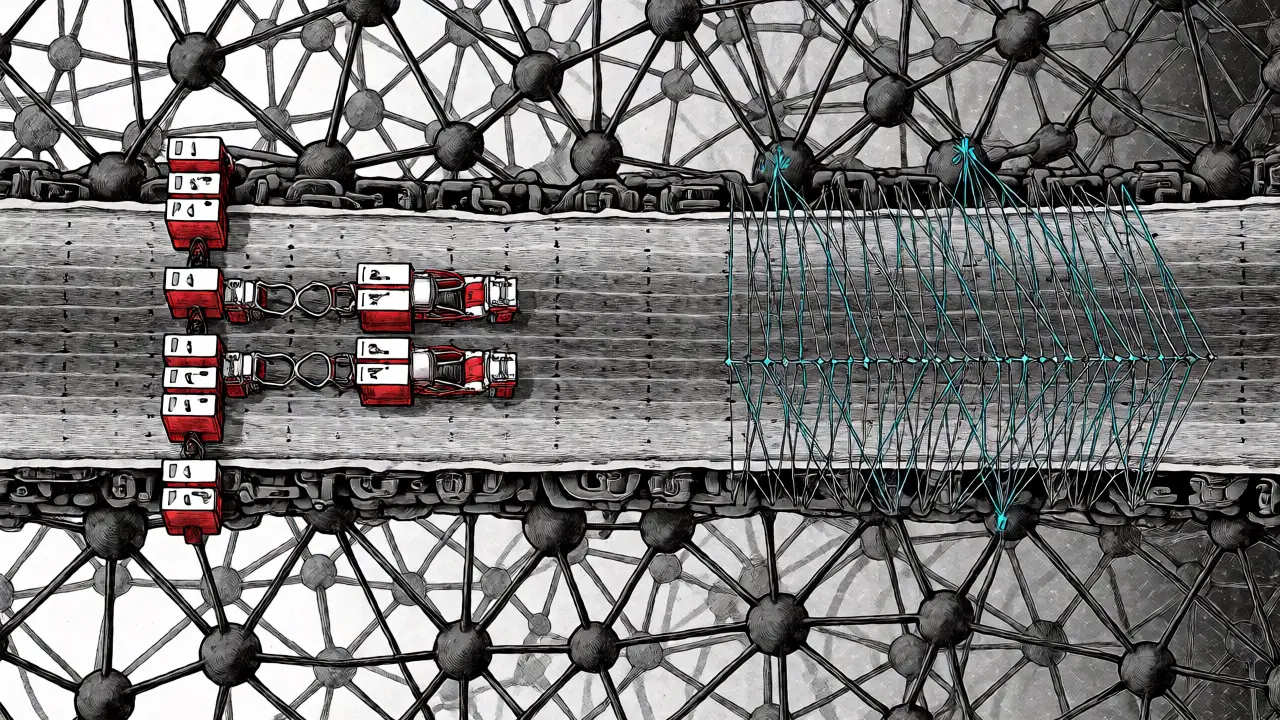
Adapter Layers small neural networks inserted into transformer layers were one of the first popular PEFT methods, originally proposed for BERT-based models around 2019. Think of an adapter as a small sidecar attached to the main highway of the transformer architecture. Instead of changing the road itself (the original weights), you add a small module that processes the data before passing it along.
Technically, an adapter consists of a down-projection layer, a non-linear activation function (like ReLU or GELU), and an up-projection layer. For example, if a transformer layer has a dimension of 768, the adapter might reduce this to 64, process it, and then expand it back to 768. This reduces the number of trainable parameters significantly-typically adding only 3-4% to the total model size. Because these modules are separate blocks, they are highly modular. You can swap out an adapter for "French Translation" and replace it with one for "Legal Summarization" without touching the core model. This makes adapters excellent for multi-task learning where you need to switch contexts frequently.
Understanding Low-Rank Adaptation (LoRA)
LoRA a technique that injects trainable low-rank decomposition matrices into transformer layers takes a different mathematical approach. Introduced in 2021 by Hu et al., LoRA operates on the hypothesis that the change needed to adapt a model lies in a low-dimensional subspace. Instead of updating the entire weight matrix $W$, LoRA freezes $W$ and adds a change $ΔW$. It decomposes this change into two smaller matrices, $A$ and $B$, such that $ΔW = A imes B$.
If the original matrix is $1024 imes 1024$ (over a million parameters), using a rank $r=8$ reduces the trainable parameters to just $1024 imes 8 + 8 imes 1024$, which is roughly 16,000 parameters. That’s a reduction of over 98%. The beauty of LoRA is that during inference, you can merge these low-rank matrices back into the original weights. This means there is zero added latency during prediction-the model runs exactly as fast as the base model. This stands in stark contrast to adapters, which require sequential processing through the extra layers, often increasing inference time by 15-25%.
Direct Comparison: Speed, Memory, and Flexibility
Choosing between these two depends on your specific constraints. Do you need maximum speed? Do you need to handle many tasks simultaneously? Here is how they stack up against each other in real-world scenarios.
| Feature | Adapter Layers | LoRA |
|---|---|---|
| Trainable Parameters | ~3-4% of total model | ~0.1-0.7% of total model |
| Inference Latency | +15-25% slower | No increase (merged weights) |
| Memory Usage | Moderate increase | Minimal increase |
| Multi-Task Switching | Excellent (modular) | Good (requires reloading/merging) |
| Best Use Case | Lifelong learning, many tasks | Single-task, high-speed production |
The data tells a clear story. If you are building a chatbot that needs to answer questions about sports, finance, and health, adapters allow you to keep one base model and load three tiny adapter modules. However, if you are deploying a specialized medical diagnosis model that needs to respond instantly, LoRA is superior because you can merge the weights and eliminate any overhead. Recent developments like QLoRA a variant combining quantization with LoRA have further tipped the scales toward LoRA by allowing 4-bit quantization, enabling the fine-tuning of 65-billion-parameter models on a single RTX 4090 GPU.

Practical Implementation Tips
Getting started with either method is easier than it looks, thanks to libraries like Hugging Face’s PEFT library a standardized framework for parameter-efficient fine-tuning. For LoRA, the most critical hyperparameter is the rank ($r$). Start with $r=8$ or $r=16$. If your model underfits (fails to learn the task nuances), incrementally increase the rank. Don’t go too high initially; higher ranks mean more parameters and diminishing returns. Also, pay attention to the alpha scaling factor. A common rule of thumb is to set alpha to twice the rank value (e.g., if $r=8$, set $α=16$) to stabilize training.
For adapters, the key decision is where to insert them. Most implementations place them after the attention block or the feed-forward network. Be aware that while adapters are modular, managing dozens of them requires robust infrastructure. Tools like Predibase’s LoRAX server help here by batching requests for different adapters, ensuring that adding more tasks doesn’t linearly degrade performance. If you encounter compatibility issues with quantized models, check if your adapter implementation supports the specific quantization format (like NF4 used in QLoRA), as standard adapters sometimes struggle with extreme compression.
The Future of Model Customization
The industry is rapidly consolidating around LoRA for production environments. Surveys indicate that over half of enterprises adopting PEFT prefer LoRA for its efficiency and lack of inference penalty. However, adapters retain a strong niche in research and applications requiring continuous learning without catastrophic forgetting. As models grow larger, the ability to train on consumer hardware via QLoRA democratizes AI development, allowing startups to compete with giants. We are also seeing hybrid approaches emerge, combining prompt tuning with LoRA to squeeze out even more performance on low-resource languages. Whether you choose adapters or LoRA, the era of full fine-tuning for general customization is effectively over.
Does LoRA affect inference speed?
No, not when implemented correctly. Unlike adapters, LoRA allows you to merge the low-rank matrices into the original pre-trained weights after training. Once merged, the model structure is identical to the base model, resulting in zero additional latency during inference.
What is the best rank value for LoRA?
There is no single best value, but starting with a rank ($r$) of 8 or 16 is recommended for most tasks. If the model fails to capture domain-specific nuances, you can incrementally increase the rank to 32 or 64. Higher ranks increase trainable parameters and memory usage, so use the lowest rank that achieves acceptable performance.
Can I use adapters and LoRA together?
Yes, though it is less common. Some advanced setups use adapters for structural changes or specific task routing and LoRA for weight adjustments. However, this increases complexity. Typically, practitioners choose one method based on whether they prioritize modularity (adapters) or inference speed (LoRA).
Why is QLoRA significant?
QLoRA combines LoRA with 4-bit NormalFloat quantization. This drastically reduces memory requirements, allowing users to fine-tune very large models (like 65B parameters) on a single consumer-grade GPU with 24GB VRAM, making high-end AI customization accessible to individuals and small teams.
Which method is better for multi-task learning?
Adapter layers are generally better for multi-task learning because they are modular. You can easily swap adapters in and out for different tasks without reloading the entire base model. While LoRA adapters can also be switched, the merging process for inference optimization makes dynamic switching slightly more complex to implement efficiently.