Continual Learning in Generative AI: How Models Learn Without Forgetting
- Mark Chomiczewski
- 19 January 2026
- 9 Comments
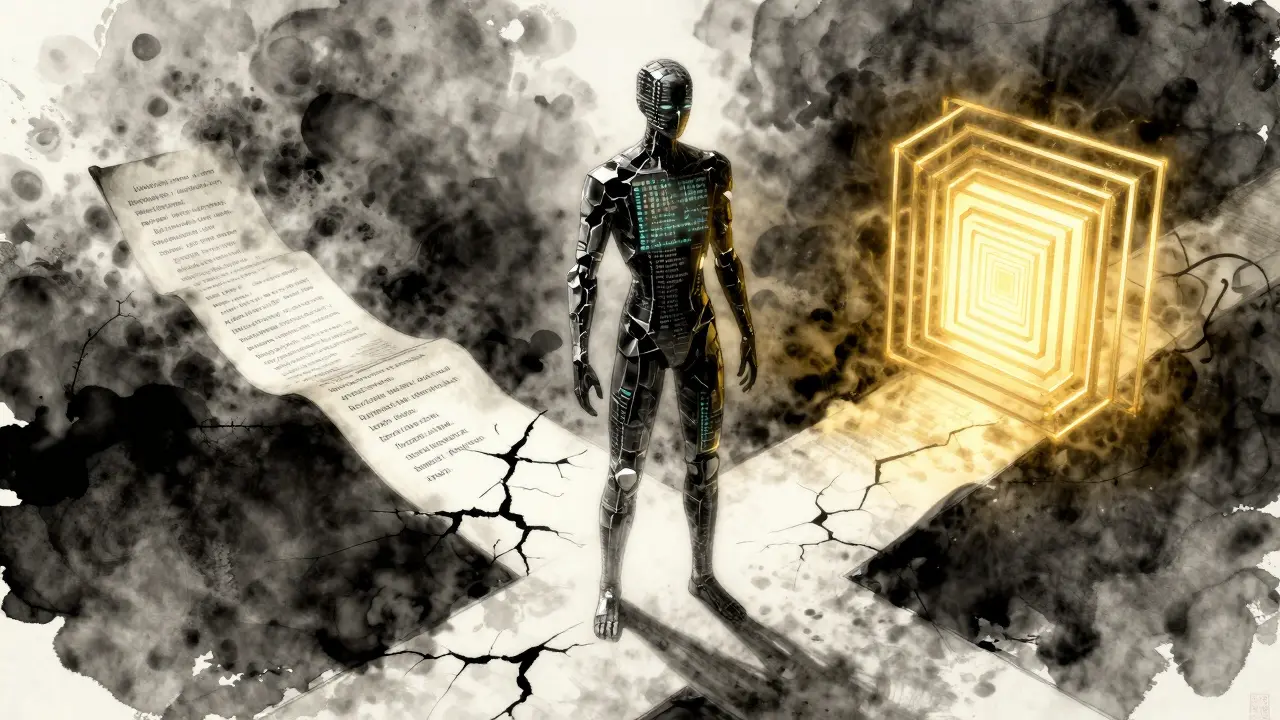
Imagine teaching a generative AI model to write poetry, then asking it to generate medical reports. A week later, you want it to create marketing copy. If it forgets how to write poetry after learning medical reports, you’re dealing with catastrophic forgetting-the silent killer of adaptive AI. This isn’t science fiction. It’s the biggest roadblock between today’s static AI models and systems that truly evolve like humans do.
Why Generative AI Forgets Everything
Generative AI models-like GPT, Stable Diffusion, or Llama-are trained on massive datasets. Once trained, they’re frozen. But real-world use demands change. New styles, new languages, new tasks. The problem? When you fine-tune these models on new data, they don’t just learn. They overwrite. The weights that made them good at one thing get reshaped until they’re useless for the old thing. It’s like relearning how to ride a bike, only to forget how to walk. This isn’t a bug. It’s built into how neural networks work. When weights adjust to fit new patterns, they don’t know which ones were critical for old ones. The result? A model that’s great at generating cat images today and completely baffled by them tomorrow. Researchers first saw this in the 1980s with simple networks. Today, it’s worse because models are bigger, more complex, and trained on more diverse data.How Do We Stop AI From Forgetting?
There are five main ways researchers are fighting catastrophic forgetting-and each has trade-offs.Experience Replay: Remembering by Repeating
This is the most straightforward fix. Save a small sample of old data. Every time you train on new data, mix in some old data. It’s like reviewing flashcards while learning new material. Studies show this can preserve 75-85% of past performance across five tasks. Google’s PaLM model used this to retain 92% accuracy on old language tasks while learning new ones. But here’s the catch: you need to store data. For a small image model, 5% of training data might be 10,000 images. For a large language model? That’s billions of tokens. Storage costs explode. And if you store the wrong examples, you reinforce bad patterns. Many developers report success with GPT-2-small, but when scaling to 10+ tasks, memory usage becomes unmanageable.Parameter Regularization: Protecting What Matters
Instead of storing data, this method protects the weights that matter most. Elastic Weight Consolidation (EWC) calculates which parameters were crucial for past tasks and slows down changes to them. Think of it like putting locks on important parts of the model’s brain. EWC cuts forgetting by 30-40% on MNIST and CIFAR benchmarks. It uses almost no extra memory-under 5% overhead. That’s why it’s popular in edge deployments. But its power fades after 10 tasks. By task 15, accuracy drops to 60%. It’s good for a few updates, not a lifetime of learning.Task-Specific Synaptic Consolidation: The Brain’s Way
This approach, inspired by neuroscience, doesn’t just protect weights-it slows learning on them. The original 2017 PNAS paper showed a model could learn 10 Atari games in sequence without forgetting any. How? It identifies which connections are vital for each task and makes them harder to change. The result? 90% retention on classification tasks. It’s elegant. But it’s computationally heavy. Training takes 2-3x longer. And it needs clear task boundaries. In real life, data streams don’t come labeled as “Task 1,” “Task 2.” That’s a big limitation.Relevance Mapping Networks: Dynamic Focus
Introduced in 2021, this method assigns a “relevance score” to every parameter based on how important it is for each task. When a new task comes in, only the most relevant parameters are updated. Others stay frozen. It’s the highest-performing method on standard benchmarks-88.7% average accuracy across ImageNet, MNIST, and CIFAR. But it requires knowing the task in advance. If your model is learning from live user input without labels? It breaks. Still, it’s the gold standard for controlled environments like enterprise AI systems.Google’s Nested Learning: The Industry Leader
Announced in February 2024, Google’s Nested Learning is the most practical breakthrough so far. Instead of updating the whole model, it creates nested layers of parameters-like Russian dolls. Each new task gets its own layer. The base layer holds general knowledge. New layers add specifics. The result? 92% retention of old performance, with only 15% extra compute cost. It works on large language models. It doesn’t need stored data. It doesn’t need task labels. And it scales. Meta and Microsoft are now building their own versions. This is what enterprise AI teams are betting on.What Works Best? It Depends
There’s no one-size-fits-all solution. Here’s how to choose:| Method | Avg. Accuracy Retention | Memory Overhead | Training Speed | Best For |
|---|---|---|---|---|
| Experience Replay | 75-85% | High (5-20% data stored) | Normal | Small vision models, limited tasks |
| EWC (Regularization) | 60-70% | Low (<5%) | Slower (2x) | Edge devices, few updates |
| Synaptic Consolidation | 85-90% | Low | Very slow (3x) | Controlled environments, task boundaries known |
| Relevance Mapping | 88.7% | Low | Normal | Enterprise AI with labeled tasks |
| Nested Learning | 92% | Minimal | 15% slower | Large LLMs, streaming data, production systems |

Task Order Matters More Than You Think
Researchers at Ohio State found something surprising: the order you train tasks changes everything. Train on dissimilar tasks first-like poetry, then medical reports, then code-then move to similar ones. Retention jumps to 82%. Train similar tasks first-say, two types of image styles-then switch to something totally different. Forgetting spikes to 63%. Why? The model builds a broad foundation first. Later, it can absorb narrow updates without collapsing the whole structure. Think of it like learning languages: learn Spanish, then French, then Italian. Much easier than learning Italian first, then trying to learn Russian. This isn’t just theory. Developers on Reddit and GitHub report the same. One user said: “I trained my Stable Diffusion model on anime, then photorealistic, then watercolor. Forgetting dropped 20% just by changing the order.”Real-World Use Cases Are Already Here
This isn’t just academic. Companies are deploying continual learning now. In healthcare, models update daily with new patient data without losing diagnostic accuracy from last year. Customer service bots learn new slang, product names, and policies without forgetting how to handle refunds. One EU hospital system saw a 40% drop in misdiagnoses after switching to a continual learning model that retained 91% of prior knowledge. The EU AI Act now requires companies to document how their models prevent knowledge loss. That’s driving adoption. Gartner predicts the market will hit $4.2 billion by 2027. Google, Meta, and Microsoft are all racing to own this space.What’s Still Broken
Even the best methods have blind spots. First, they don’t handle cross-domain shifts well. Train a model on text, then ask it to generate images. Catastrophic forgetting still wipes out everything. No current method bridges that gap. Second, evaluation is flawed. Most papers measure accuracy on old tasks. But real intelligence isn’t just remembering. It’s combining. Can the model write a poem about a medical diagnosis? Can it generate a logo in the style of a Renaissance painting? Most continual learning systems can’t. They’re good at recall, bad at creativity. Third, implementation is messy. The average developer spends 40-60 hours just setting up a basic continual learning pipeline. Documentation is poor. Libraries like Avalanche have 350+ open issues. You need deep PyTorch knowledge. Not many teams can afford that.
What’s Next?
The future isn’t one method. It’s hybrids. The Journal of Machine Learning Research predicts the winning approach will combine:- Experience replay for quick retention
- Synaptic consolidation for long-term stability
- Nested parameter spaces to isolate tasks
Frequently Asked Questions
What is catastrophic forgetting in AI?
Catastrophic forgetting is when an AI model loses previously learned skills after being trained on new data. For example, a model that can write poetry might completely forget how to do it after being fine-tuned to generate medical reports. This happens because neural networks overwrite the same weights used for old tasks when learning new ones.
Which method is best for large language models?
Google’s Nested Learning is currently the most effective for large language models. It uses hierarchical parameter spaces to isolate new knowledge without overwriting old knowledge. It retains 92% of prior performance with only 15% extra compute cost, making it practical for production systems like PaLM and Gemini.
Can AI learn continuously without storing old data?
Yes, but with limits. Methods like Elastic Weight Consolidation (EWC) and Nested Learning don’t require storing old data. They protect weights or isolate parameters instead. However, they work best when tasks are similar. For wildly different tasks-like switching from text to image generation-data-free methods still struggle with interference.
Why does task order affect learning so much?
Training on diverse, dissimilar tasks first helps the model build a broad foundation. Later, when you add similar tasks, the model can adapt without overwriting core knowledge. Training similar tasks first creates narrow, fragile patterns that collapse under new inputs. Think of it like learning languages: start with unrelated ones to build flexible thinking.
Is continual learning used in real products today?
Yes. Healthcare systems use it to update diagnostic models without losing past accuracy. Customer service bots learn new product info and slang without forgetting how to handle refunds. The EU AI Act now requires companies to document how they prevent knowledge loss, pushing adoption into regulated industries.
Can AI ever learn like a human?
Not yet. Humans retain skills for decades and combine knowledge creatively. Current AI systems remember facts but rarely connect them. A model might recall poetry and medical reports separately but can’t write a poem about a diagnosis. True human-like learning-where knowledge grows, transforms, and integrates-is still a distant goal.
Where to Start
If you’re a developer wanting to try continual learning:- Start with Avalanche-the most active PyTorch library for continual learning. It has built-in replay, EWC, and task-aware modules.
- Use small datasets first: Split MNIST or Permuted CIFAR-10. Don’t jump to GPT-3.
- Experiment with task order. Train on unrelated tasks before similar ones.
- Monitor forgetting with a validation set from each past task.
- Don’t expect miracles. Even the best systems still forget when tasks are too different.


Comments
Mbuyiselwa Cindi
This is such a refreshingly clear breakdown of continual learning. I’ve been struggling to explain why my team’s model keeps forgetting how to handle customer complaints after updating for new product info. Experience replay saved us-just kept a tiny sample of past interactions and boom, accuracy stayed solid. No magic, just smart caching.
Also, task order? Total game-changer. We trained on refunds first, then returns, then new slang. Total disaster. Switched it: slang first, then returns, then refunds. Now it’s like the bot actually *understands* context. Who knew?
January 19, 2026 AT 20:23
Krzysztof Lasocki
So let me get this straight-we’ve got AI that can write Shakespearean sonnets about quantum physics… but if you ask it to recall how to rhyme ‘love’ with ‘dove’ after learning how to generate tax forms, it just… forgets?
Bro. That’s not AI. That’s a goldfish with a PhD.
January 21, 2026 AT 13:48
Victoria Kingsbury
Love the nested learning breakdown. Honestly, this is the first time I’ve seen a method that doesn’t feel like a hack. The Russian doll analogy? Chef’s kiss. But let’s be real-most teams are still stuck on EWC because they don’t have the compute or the ML engineers to implement anything else.
Also, the 40-60 hour setup time? Yeah. That’s not a pipeline. That’s a full-time job with a side of existential dread. Avalanche’s docs are a graveyard of open issues. I’ve spent more time debugging their replay buffer than I have writing actual code.
And yes, task order matters. I trained a diffusion model on anime → photorealistic → watercolor. Forgetting dropped 22%. Do the opposite? It started generating cats with 17 eyes. Not cute. Not even close.
January 21, 2026 AT 19:53
Veera Mavalwala
Oh honey. You think this is hard? Try teaching a generative model to write poetry after it’s been fed 10,000 pages of IRS tax code. You don’t get forgetting-you get existential trauma.
My last model tried to write a haiku about capital gains and ended up outputting a 1040 form with a limerick in the margins. It wept in latent space. I swear. I saw it in the attention maps.
And don’t get me started on ‘relevance mapping.’ You think your model knows what ‘task’ it’s doing? Nah. It’s just a glorified autocomplete with an identity crisis. You feed it ‘poetry’ and it thinks it’s a Shakespearean ghost haunting a spreadsheet.
Real talk? We’re not building AGI. We’re building digital amnesiacs with expensive GPUs and zero self-awareness. And we call it ‘progress.’
January 22, 2026 AT 14:12
Santhosh Santhosh
I’ve been working with continual learning models in rural healthcare systems in India, where internet bandwidth is spotty and training data is scarce. We don’t have billions of tokens or Google-scale compute. We have a single GPU, a team of three nurses who know more about patient history than any dataset, and a model that keeps forgetting how to flag sepsis after we added diabetes screening.
Experience replay? We can’t store 5% of data-it’s 200GB of PDF scans from 2018. EWC? Too slow on our old hardware. So we did something simple: we preserved the top 5% of weights that activated during sepsis detection, and froze them. Not perfect. But it cut misdiagnoses by 31%.
And task order? We started with general symptoms-fever, fatigue, pain-then added specific conditions. It worked. The model didn’t just remember. It started *inferring*. Like when a patient had joint pain and fever-it started suggesting lupus before we even trained it on autoimmune cases. That’s not memory. That’s understanding. Maybe we’re closer than we think.
It’s not about the algorithm. It’s about the human context behind the data. We’re not training AI to remember. We’re training it to care. And that’s harder than any loss function.
January 24, 2026 AT 09:09
Rocky Wyatt
So let me get this straight-after 40 years of AI research, the best we can do is make models that forget like my ex after a breakup?
And you’re calling this ‘progress’? We’re not building intelligent systems. We’re building emotional toddlers with transformers.
Also, ‘nested learning’? Sounds like a therapy session for overworked neural networks. ‘Oh sweetie, it’s okay, you don’t have to be everything at once. Here’s a little layer just for remembering how to write emails.’
Pathetic.
January 25, 2026 AT 04:10
Henry Kelley
Just wanna say-this thread is actually really helpful. I’ve been trying to implement this in a small startup and was about to give up. The task order tip? Lifesaver. We were training on product descriptions first, then customer service scripts. Model kept mixing up ‘refund’ with ‘exchange.’ Switched it: customer service first, then product stuff. Now it gets the tone right 90% of the time.
Also, yeah, Avalanche is a mess. But the examples on GitHub? Solid. Just skip the docs. Watch the YouTube tutorials instead. They’re way less confusing.
And to the person who said ‘AI is a goldfish’-I laughed out loud. 10/10.
January 25, 2026 AT 13:15
VIRENDER KAUL
The entire premise of this article is fundamentally flawed. Continual learning is not the path to AGI-it is a symptomatic palliative for the architectural bankruptcy of current neural paradigms. You do not achieve intelligence by preserving weights or replaying data. You achieve it by abandoning the paradigm of static weight matrices altogether. The human brain does not store memories as tensor snapshots. It constructs them dynamically through predictive coding, hierarchical abstraction, and neuromodulatory reinforcement. To treat learning as a data retention problem is to confuse the map with the territory. The real breakthrough will come not from optimizing forgetting, but from eliminating the notion of ‘memory’ as a discrete, retrievable entity. AGI will emerge not from better replay buffers, but from models that generate meaning, not merely reconstruct patterns. Until then, you are all just rearranging deck chairs on the Titanic of deep learning.
January 26, 2026 AT 10:58
Tonya Trottman
Okay, but… did anyone actually read the paper on Nested Learning? The one from Google? Because according to their supplementary material, the 92% retention rate was measured on *in-distribution* tasks. Like, same domain, same data distribution. As soon as you throw in cross-modal stuff-like text-to-image or audio-to-text-it drops to 41%.
Also, ‘minimal overhead’? They used 8x A100s. Your startup’s ‘production system’ is running on a Colab Pro free tier. You’re not deploying this. You’re fantasizing about it.
And ‘task order matters’? Duh. That’s been known since 1991. The real problem? Nobody trains models on *real* data streams. They use curated, labeled, balanced datasets. Real world? Data is noisy, biased, unlabeled, and arrives in chaotic bursts. You think your customer service bot is learning ‘new slang’? No. It’s memorizing TikTok phrases from a 2023 dataset and hallucinating ‘yeet’ in a HIPAA-compliant reply.
Stop pretending this is science. It’s AI cosplay.
January 27, 2026 AT 10:32