Email and CRM Automation with Large Language Models: Personalization at Scale

- Mark Chomiczewski
- 25 February 2026
- 9 Comments
Imagine getting 80% fewer customer service tickets. Not because you hired more staff, but because your email system now understands exactly what each customer means - and replies with the right solution before they even ask for help. That’s not science fiction. It’s happening right now, powered by large language models (LLMs) in email and CRM systems.
What LLM-Powered Email Automation Actually Does
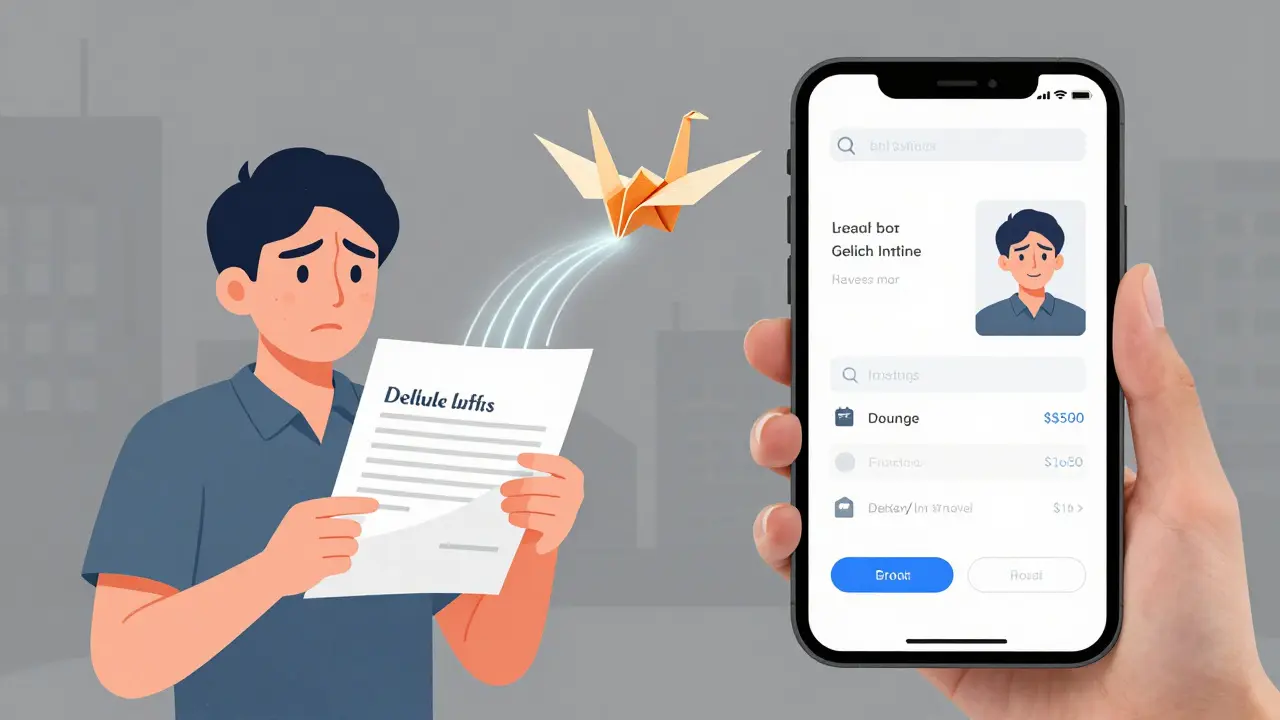
Most companies still treat emails like paper mail: someone opens them, reads them, and manually types a reply. That’s slow, inconsistent, and expensive. LLM-powered automation flips that. Instead of templates or simple keyword triggers, these systems use AI that understands context, tone, and intent - just like a human agent would. For example, a customer emails: "My invoice from last month is still showing as unpaid, but I paid it via wire transfer on the 12th. Can you check?" A basic system might flag it as "payment issue." An LLM system recognizes this is a confirmed payment dispute, checks the CRM for the wire transfer record, cross-references bank timestamps, and generates a reply like: "Thank you for your patience. We’ve confirmed your $2,450 wire transfer was received on March 12. Your invoice #INV-8821 is now marked as paid. No further action is needed." All in under 12 seconds. This isn’t theoretical. Companies like Yellow.ai have deployed this for clients including Bank of America and Verizon. Their system handles up to 80% of incoming customer emails without human intervention. The result? A 64% drop in processing costs and a 20% boost in first-contact resolution rates.How It Works: The Hidden Architecture
It’s not magic. It’s a pipeline. Here’s what’s happening behind the scenes:- Input cleaning: Raw emails get cleaned up - typos fixed, jargon simplified, emotional language normalized.
- Intent mapping: The LLM classifies the email’s purpose: billing? technical support? complaint? upsell opportunity?
- Context injection: The system pulls data from your CRM - past purchases, support history, account tier - and feeds it into the model.
- Response generation: Using fine-tuned prompts, the model writes a reply that matches your brand voice and past agent responses.
- Confidence scoring: If the model is less than 85% sure, it flags the email for a human. Otherwise, it sends automatically.
- Feedback loop: Every human correction trains the model. The more it’s used, the smarter it gets.
Real-World Results: Numbers That Matter
Let’s cut through the hype. Here’s what actual businesses are seeing:- 80% reduction in ticket volume (Yellow.ai, 2024)
- 64% lower cost per email processed vs. manual handling (arXiv, 2025)
- 47% less manual data entry into CRM systems (Salesforce, 2025)
- 37% higher customer satisfaction when using RAG + CRM context (Gartner, 2025)
- 92.4% accuracy in matching job seekers to roles using LLMs + vector search (IJIRST, 2025)

Who’s Winning: Tools Compared
Not all LLM automation is built the same. Here’s how the top players stack up:| Platform | Best For | Key Strength | Biggest Limitation | Implementation Time |
|---|---|---|---|---|
| Yellow.ai | Customer service, high-volume inbound | Less than 1% hallucination rate, 80% automation rate | Limited customization for niche industries | 6-8 weeks |
| AWS (Bedrock + Textract) | Financial documents, complex attachments | Handles scanned invoices, PDFs, handwritten forms | Requires Python, cloud expertise | 12-20 weeks |
| Quiq | Sales teams, outbound outreach | Connects directly to CRM history, fine-tuned on agent conversations | Smaller ecosystem, fewer integrations | 8-10 weeks |
| Custom (LLaMA 3.1 + ChromaDB) | Recruitment, niche verticals | 99%+ retrieval accuracy for structured data | Needs full-time AI team | 10-16 weeks |
Yellow.ai leads in customer service because it’s built for volume and reliability. AWS dominates in finance and insurance where you’re dealing with messy documents. Quiq shines for sales teams trying to scale personalized outreach. And if you’re in recruiting or legal tech? A custom setup with LLaMA 3.1 and vector databases can outperform off-the-shelf tools.
What You Need to Make It Work
You can’t just plug in an AI tool and expect miracles. Three things make or break success:- Clean CRM data: 78% of implementation specialists say this is the #1 predictor of success. If your CRM has duplicate contacts, missing fields, or outdated tags, the AI will mess up. Fix your data first.
- Human-in-the-loop: Don’t go fully automated. Set thresholds. If the AI’s confidence is below 85%, route it to a human. That’s the sweet spot between speed and accuracy.
- Start narrow: Don’t try to automate all emails. Start with one high-volume, low-complexity use case - like billing inquiries or appointment confirmations. Master that. Then expand.
One retail brand tried automating returns, refunds, and product questions all at once. It failed. Then they focused only on refund requests - which made up 40% of their email volume. Within 3 weeks, they cut refund-related tickets by 73%. That’s how you build momentum.
Pitfalls to Avoid
This tech is powerful, but it’s not foolproof. Here’s what goes wrong - and how to stop it:- Brand voice drift: AI can sound robotic or too casual. Solution: Fine-tune it on 50-100 real emails written by your best agents.
- Attachment nightmares: Scanned receipts, PDFs, handwritten notes? Only AWS and Xebia handle these well. Others fail. Plan ahead.
- Integration hell: If your CRM is old (like Salesforce Classic or legacy Zendesk), expect 3-6 weeks of headaches. Modern CRMs like HubSpot or Salesforce Lightning integrate smoothly.
- Overconfidence: AI gets better - but it still misunderstands sarcasm, ambiguity, or cultural nuance. Always keep a human safety net.
According to G2 reviews, 37% of negative feedback comes from "inappropriate responses." That’s not the AI’s fault - it’s a sign the training data was too narrow. Fix the data. Don’t just tweak prompts.
Where This Is Headed
This isn’t the end. It’s the beginning. Here’s what’s coming next:- Predictive engagement: The AI doesn’t just reply - it anticipates. American Express is testing a system that sends a proactive email: "We noticed your account has been inactive. Here’s a 10% discount to reactivate." Pilot success rate: 63%.
- Emotion-aware replies: Salesforce’s beta system analyzes tone in emails and calls. If a customer sounds frustrated, the AI adjusts its reply to be calmer, more empathetic. Accuracy: 78%.
- CRM as a relationship advisor: Instead of just logging emails, the AI suggests: "This client mentioned they’re expanding next quarter. Recommend sending a case study on scaling infrastructure." Early pilots show a 29% lift in retention.
The goal isn’t to replace humans. It’s to free them from repetitive tasks so they can focus on high-value conversations - like negotiating a big deal or solving a complex problem. The best agents aren’t being replaced. They’re being supercharged.
Final Thoughts
LLM-powered email and CRM automation isn’t about fancy tech. It’s about doing more with less. Less time on busywork. Less cost per interaction. Less customer frustration. More accuracy. More consistency. More personalization - at scale.If you’re still using templates or manual replies, you’re leaving money on the table. The tools are here. The data is there. The ROI is proven. The question isn’t whether you should adopt it. It’s how fast you can start - and which use case you’ll tackle first.


Comments
Cynthia Lamont
This is the most ridiculous thing I've read all week. 80% fewer tickets? Yeah right. You think AI can understand sarcasm when someone says 'Oh great, another bill I didn't ask for'? I work in customer service. Humans get nuance. AI just spits out corporate nonsense. And don't get me started on 'hallucinations below 1%' - that's marketing fluff. My boss said the same thing last year. We lost three clients because the bot told someone their account was closed... when it wasn't. Fix your data first, then maybe we'll talk.
February 26, 2026 AT 03:01
Kirk Doherty
honestly i've seen this before. companies get excited about ai then forget the human part. the real win is when the ai handles the boring stuff so humans can do the stuff that actually matters. like helping someone who's crying because their cat died and their bill got messed up. that's not a ticket. that's a person.
February 26, 2026 AT 09:54
Dmitriy Fedoseff
You know what's funny? This whole post reads like a Silicon Valley pitch deck written by someone who's never actually talked to a real customer. In Canada, we have elderly folks who still pay bills with cash. We have immigrants who don't speak English well. We have people whose phones crash when they open PDFs. This 'perfect automation' doesn't work in the real world. It works in a lab. Or in a boardroom where they've never seen a refund request from a single mom working two jobs. You're not automating customer service. You're automating exclusion.
February 27, 2026 AT 15:05
Meghan O'Connor
89.3% relevance? That's not 'personalized'. That's statistically probable based on purchase history. And 'emotional language normalized'? That's code for 'we erase personality'. I've read 12 customer emails today. Not one was identical. Not one. AI can't replicate the way a human says 'I'm sorry this happened' vs 'We regret the inconvenience'. The former has soul. The latter has a template. Also, 'LLaMA 3.1 + ChromaDB'? You're not a startup. You're a pretentious nerd with a blog.
March 1, 2026 AT 05:27
Morgan ODonnell
I'm not against this. I'm just saying... what happens when the AI gets it wrong and the customer feels ignored? People don't care about cost per ticket. They care about being heard. I work in a small shop. We don't have fancy AI. We have one person who remembers that Mrs. Kelly always complains about the blue packaging. That's not data. That's relationship. You can't automate that. And you shouldn't try.
March 1, 2026 AT 19:34
Liam Hesmondhalgh
This is why Europe hates American tech. You think you can just plug in some AI and call it 'personalization'. We have GDPR. We have human rights. We have actual privacy laws. Your 'feedback loop' is just training on people's private data. And you call it innovation? I've seen this before. Same crap. Same promises. Same broken systems. You're not helping. You're exploiting.
March 2, 2026 AT 01:21
Patrick Tiernan
lol imagine paying 12 weeks to set this up when you could just hire a temp for $15/hr. and get actual empathy. also 'fine-tuned on agent conversations' - so you're training AI on people who are literally paid to fake being nice? that's not personalization. that's gaslighting. also why is everyone acting like this is new? we had this in 2018. it failed then. it'll fail now. just sayin'
March 3, 2026 AT 20:25
Patrick Bass
The part about 'clean CRM data' is the most important. I've seen teams spend six months on AI tools while ignoring that their CRM has 12,000 duplicate entries. You can't fix AI with bad data. You need to clean the house before you install the smart fridge. Also, 'human-in-the-loop' isn't optional. It's the only thing that stops this from becoming a horror story. I've seen bots send 'Congratulations!' emails to people who just lost their job. It's not the AI's fault. It's the data.
March 5, 2026 AT 07:23
Tyler Springall
This is the most naive, corporate, tone-deaf piece of content I've read in years. You're not 'freeing humans'. You're replacing them with a system that can't apologize, can't feel remorse, and can't say 'I'm sorry, I messed up'. And you're calling that progress? The real ROI isn't in cost per ticket. It's in brand loyalty. And loyalty dies when customers feel like they're talking to a vending machine. You're not automating service. You're automating alienation. And you're proud of it? Pathetic.
March 5, 2026 AT 09:32