Generative AI in HR: Transforming Performance Reviews and Career Pathing

- Mark Chomiczewski
- 10 April 2026
- 7 Comments
Writing a performance review usually feels like a chore for managers and a lottery for employees. One manager might write a novel, while another provides two sentences of vague feedback. This inconsistency isn't just annoying; it creates a gap in how people grow and advance in their careers. Enter Generative AI in HR is artificial intelligence capable of creating new content like job descriptions, training materials, and performance evaluations by processing both structured and unstructured data. By early 2026, this technology has moved from a novelty to a core part of the people strategy, turning the dreaded annual review into a dynamic tool for growth.
The Shift in Performance Management
For years, HR departments have struggled with "rating inflation" and subjective bias. When a manager is tired or lacks a specific vocabulary, high-performers often get generic praise, and struggling employees get vague critiques. Lattice has seen this firsthand, reporting that 68% of organizations now use AI to help draft and edit performance reviews. The goal isn't to let the machine decide if someone gets a promotion, but to ensure every employee gets a fair, personalized review based on actual data.
The real magic happens when AI connects structured data-like hitting a sales quota-with unstructured data, such as a string of positive Slack messages from a teammate or detailed notes from a 1:1 meeting. This eliminates the "recency bias," where a manager only remembers what an employee did in the last two weeks of the year. Instead, the AI synthesizes the entire period, reducing the time managers spend writing by nearly half while actually making the feedback more accurate.
Designing Smarter Career Paths
Most career paths in traditional companies are linear and rigid: you move from Junior to Senior to Lead. But skills evolve faster than job titles. This is where Career Pathing AI changes the game. These systems analyze years of performance data, skills assessments, and internal mobility patterns to suggest non-linear moves that a human might miss.
For example, a marketing coordinator might have a hidden knack for data analysis that isn't reflected in their current job description. An AI system can spot this pattern and suggest a transition into a Data Analyst role, providing a personalized growth plan to bridge the gap. Eightfold AI uses this kind of skills intelligence to map out where an employee is and where they could realistically go, identifying internal opportunities up to 83% faster than a human HR representative could by manually scanning resumes and profiles.
| Metric | Manual Process | AI-Enhanced Process | Improvement |
|---|---|---|---|
| Review Writing Time | ~3 Weeks | ~4 Days | 47% reduction in time |
| Internal Mobility | Standard Growth | AI-Guided Plans | 27% increase in mobility |
| Rating Consistency | High Variance | Standardized Language | 19% reduction in inflation |
| Opportunity Identification | Manual Search | Algorithmic Mapping | 83% faster detection |

The Technical Engine Behind the Insights
To make these reviews and paths work, the system needs more than just a chatbot. It requires deep integration with an HRIS (Human Resource Information System) like Workday or SAP SuccessFactors. The AI leverages large language models (LLMs) such as GPT-4 or Claude 3, but the secret sauce is the "context window"-the ability to feed the AI specific competency frameworks and company-specific values so the output doesn't sound like a generic robot.
When a company implements a tool like the "Recommended Growth Plans" from Lattice, the AI isn't guessing. It performs a gap analysis. It looks at the skills required for the next level (the target) and compares them to the employee's demonstrated skills (the current state). The output is a concrete list of projects, courses, or mentors the employee needs to engage with to move forward. This shifts the HR role from being a "data gatekeeper" to a strategic partner who helps people actually achieve their goals.
Avoiding the "Bias Trap"
It would be naive to say AI is perfectly fair. If the historical data used to train the AI is biased-for instance, if women were historically promoted less often in a specific department-the AI might "learn" that women are less suitable for leadership roles. This is the primary danger: bias amplification.
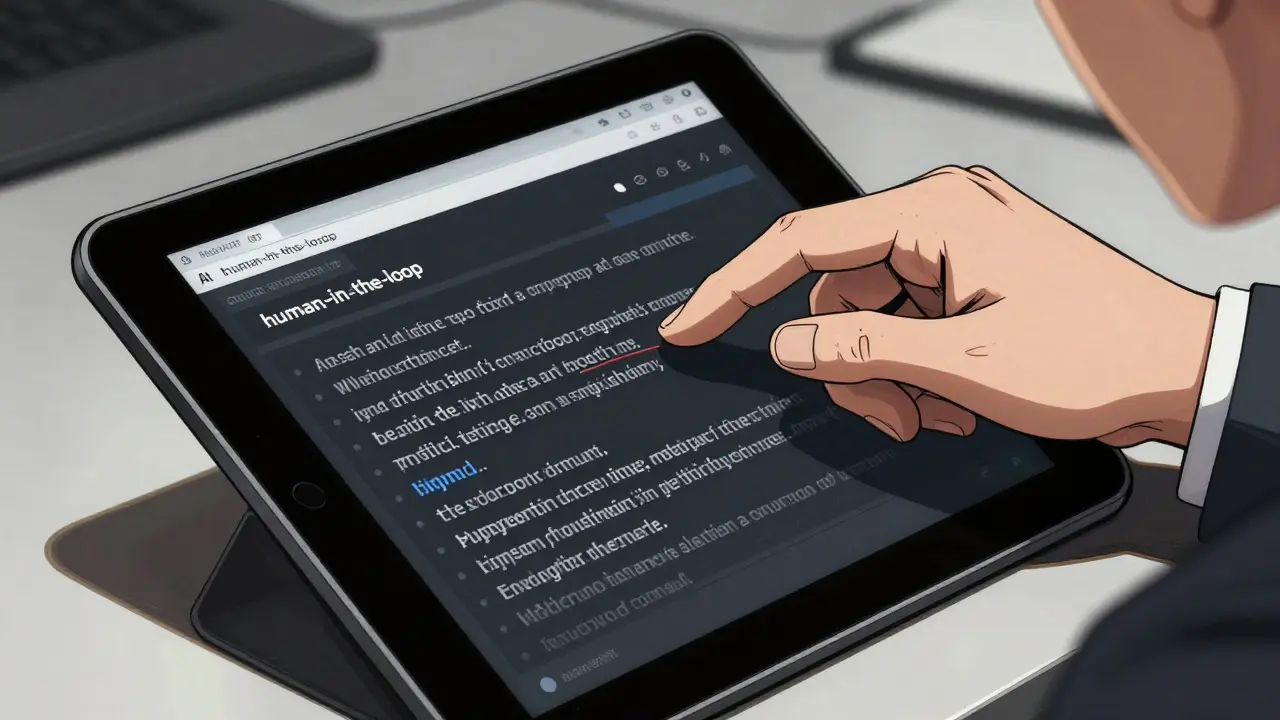
To fight this, the Generative AI in HR landscape is moving toward "human-in-the-loop" systems. No AI should ever hit "submit" on a performance review or a promotion denial. HR professionals now need a new set of skills: prompt engineering and data literacy. They must be able to audit the AI's suggestions and challenge them when they feel impersonal or unfair. In Europe, the EU AI Act (effective February 2026) now legally requires transparency in how AI influences hiring and promotions, forcing companies to implement strict validation protocols.
Practical Steps for Implementation
If you're looking to bring these tools into your organization, don't just flip a switch. Successful companies typically spend 8 to 12 weeks in a preparation phase. You can't automate a broken process; if your current review system is a mess, AI will just make the mess faster.
- Audit Your Data: Ensure your competency frameworks are updated. If your "Senior Manager" definition is from 2015, the AI will give outdated advice.
- Define the Human Guardrails: Establish exactly where the AI stops and the human starts. AI drafts the feedback; the manager edits it for emotional nuance; the employee discusses it in person.
- Train for Prompting: Teach managers how to prompt the AI for specific outcomes, such as "Rewrite this critique to be more constructive and focused on actionable growth rather than past mistakes."
- Integrate Early: Connect your AI tools to your existing HRIS to avoid the "data silo" problem where your AI doesn't know about the promotion that happened last month.
The Future: From Administration to People Science
We are moving toward a world where HR is less about paperwork and more about "people science." As AI handles the tactical work-the drafting, the mapping, the scheduling-the ratio of HR professionals to employees can shift dramatically. Some experts suggest we could see ratios move from 1:100 to as high as 1:400.
This doesn't mean HR is disappearing; it means the role is evolving. The future is "secure AI agents" that can forecast hiring needs in real-time and identify burnout before an employee even submits a resignation letter. The goal is a workplace where growth isn't a mystery, but a transparent, data-backed journey that anyone, regardless of their relationship with their manager, can navigate successfully.
Will AI replace my manager during performance reviews?
No. AI is used as a co-pilot to draft feedback, synthesize data, and reduce bias. The final review and the actual conversation must remain human-led to handle emotional nuances and interpersonal dynamics that AI cannot understand.
How does AI-driven career pathing actually work?
It uses a process called dynamic skills mapping. The AI analyzes your current skills, identifies the requirements for roles you're interested in, and compares the two to find "gaps." It then suggests specific projects or training to fill those gaps based on how other successful employees moved through the company.
Is my data safe when using Generative AI for HR?
Enterprise-grade AI tools (like those from Lattice or Eightfold) use secure, private instances of LLMs that do not train on your company's private data. However, companies must ensure their implementation complies with regulations like GDPR and CCPA to protect employee privacy.
Can AI really reduce manager bias?
Yes, by standardizing the language used in reviews and pulling in objective data from across the entire year. This prevents "halo/horn effects" where one great or terrible event colors the entire review, though human oversight is still needed to ensure the AI itself isn't amplifying existing data biases.
What is the typical timeline to implement AI in HR?
Mid-sized organizations typically spend about 14 weeks on full implementation. This includes an initial 8-12 week preparation phase for data cleaning and framework updates before the tools are fully deployed to managers and employees.



Comments
Vishal Bharadwaj
lol typical corporate hype. the "bias reduction" is a joke because the LLM is just a mirror of whoever wrote the prompt or the dirty data it was fed. its just a fancy way to make managers lazy so they can pretend to care about a staff member while a bot writes a generic script. totaly overblown and probbaly just another tool for HR to justify their bloated budget!!
April 10, 2026 AT 21:25
Sandeepan Gupta
While the points about automation are valid, it's crucial to remember that the effectiveness of these tools depends entirely on the quality of the input. A poorly structured competency framework will lead to flawed AI outputs regardless of how advanced the model is. I'd suggest focusing on a robust data auditing phase before deployment to ensure the outcomes are truly equitable.
April 12, 2026 AT 15:15
Rajashree Iyer
Oh, the tragedy of the human spirit being reduced to a series of data points and algorithmic gaps! We are essentially handing over the keys of our professional souls to a ghost in the machine, hoping it can see the spark of genius that a tired manager missed. What a cold, sterile future where our growth is plotted on a digital map by a silicon deity that cannot feel the sweat or the passion of a midnight deadline. It is truly a poetic descent into a world where the heart is replaced by a prompt and the intuition of a mentor is swapped for a calculated probability. We are becoming ghosts in our own cubicles, dancing to the tune of an invisible conductor who knows our sales quotas but knows nothing of our dreams. The sheer audacity of thinking a machine can map a career path is like trying to capture the wind in a net made of binary code. It is a heartbreaking transition from the organic chaos of human mentorship to the rigid precision of a spreadsheet. I can almost hear the screams of the muse as she is replaced by a 'Recommended Growth Plan' from a software suite. Such a clinical approach to the messy, beautiful art of professional evolution is simply devastating to the human experience!
April 14, 2026 AT 07:20
Parth Haz
This sounds like a wonderful step forward for workplace transparency. If AI can truly help employees find hidden opportunities that were previously overlooked, it will lead to much higher job satisfaction and overall productivity.
April 15, 2026 AT 21:19
Madhuri Pujari
Wow!!! Just wow!!! Imagine actually believing that HR will "audit" the AI for bias!!! They can't even fix the coffee machine without a three-month committee meeting!!! This is just a fancy way to fire people using a bot so the managers don't have to feel guilty!!! Absolutely pathetic!!!
April 17, 2026 AT 03:14
Jitendra Singh
I think there's a middle ground here where both sides can be happy. Maybe the AI handles the boring parts and the humans focus on the emotional support.
April 17, 2026 AT 10:26
anoushka singh
Sounds okay I guess.
April 18, 2026 AT 15:03