Multimodal Generative AI in Education: Interactive Lessons and Tutors
- Mark Chomiczewski
- 28 September 2026
- 0 Comments
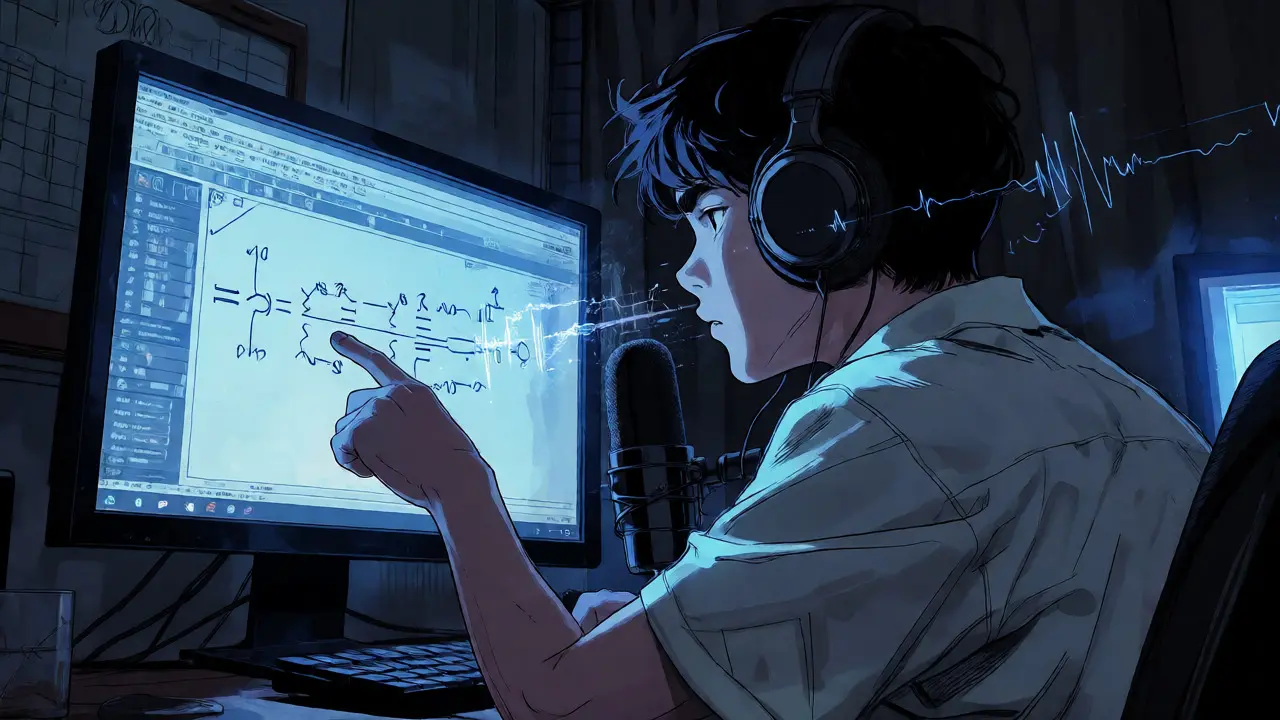
Imagine a student struggling with a complex physics problem. Instead of typing out their confusion into a text box, they share their screen showing the half-solved equation and simply say, "I'm stuck here." The AI sees the code or diagram, hears the question, and responds with a tailored audio explanation overlaid on the visual context. This isn't science fiction; it's the current reality of Multimodal Generative AI in education. As of late 2024, the landscape has exploded, with over 300 GenAI-powered educational tools identified by Edtech Insiders. But not all tools are created equal. The real shift is happening in how these systems process multiple forms of communication-text, audio, video, and images-to create truly interactive lessons and tutors.
The Shift from Text-Only to Multimodal Interaction
For years, AI in education meant chatbots that only understood typed words. If you were bad at typing or struggled to describe a visual concept in words, you hit a wall. Multimodal AI breaks that barrier. It processes inputs and outputs across different modalities simultaneously. Think of it as giving the AI eyes, ears, and a voice. A recent peer-reviewed study on ArXiv highlighted this shift dramatically. In think-aloud sessions with undergraduate programming novices, researchers found that in over 50% of cases, students preferred sharing their screen to show their work rather than describing it. When they did share their screen, 83% of them chose to speak their instructions instead of typing them. Why? Because talking while showing your work feels natural. It mimics how a human tutor sits next to you, looks at your paper, and listens to your questions.
This preference for voice-plus-visual interaction changes everything for lesson design. It means we can stop forcing students into rigid text-based interfaces. Instead, we can build systems that adapt to how humans actually communicate. For a novice learner, explaining a bug in code via text is exhausting. Showing the screen and saying "this part is wrong" is efficient. The AI doesn't just parse the text; it analyzes the visual state of the application and correlates it with the spoken query. This reduces cognitive load significantly, allowing students to focus on the learning objective rather than the mechanics of interacting with the software.
Transforming Static Content into Dynamic Experiences
One of the biggest pain points for educators is content adaptation. You have a textbook chapter on photosynthesis. One student reads at a fourth-grade level, another at a tenth-grade level, and a third struggles with visual processing. Traditionally, creating three versions of that lesson was a nightmare. Generative AI now allows teachers to act as precision customizers rather than manual creators. Tools can instantly convert dense text into podcast-style audio lessons, TikTok-like mini-videos, or interactive flashcards. Crucially, these transformations aren't just cosmetic. They maintain the underlying learning science principles, such as spaced repetition and sequencing logic.
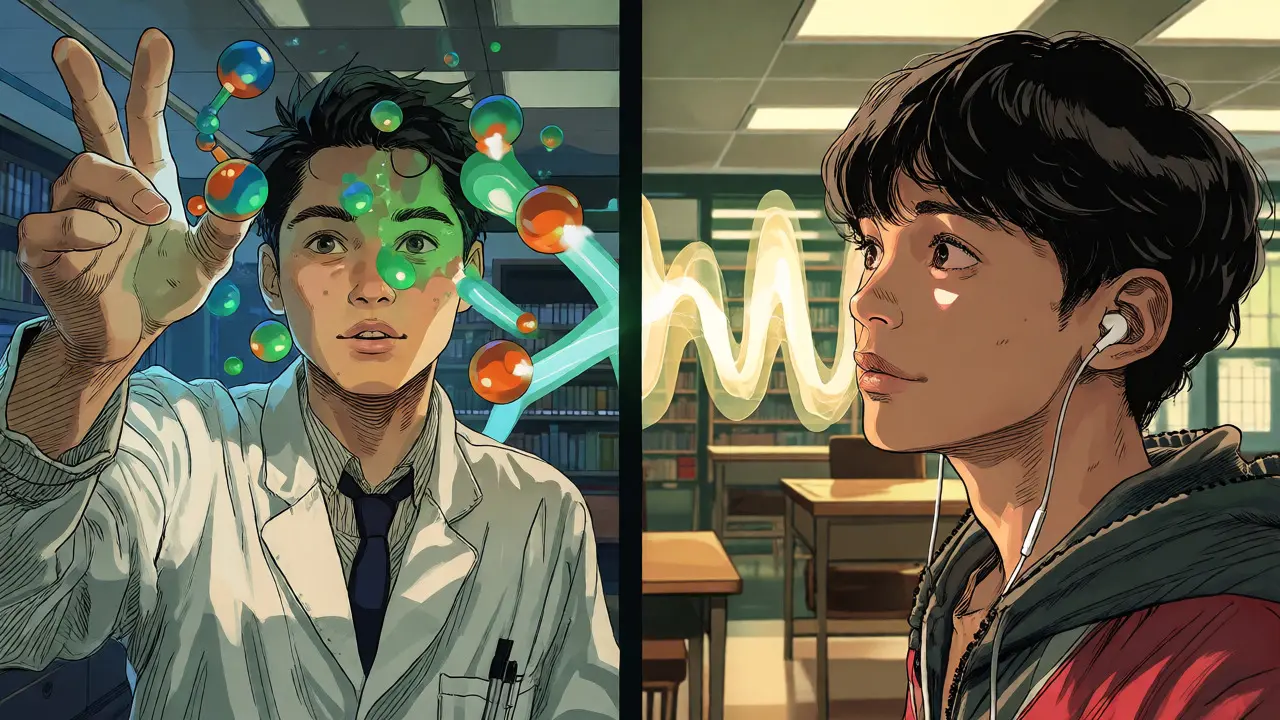
Consider a chemistry lab simulation. Historically, high-quality simulations were expensive luxuries. Now, multimodal AI can generate interactive scenarios where students manipulate variables verbally or via touch, receiving immediate visual feedback and audio explanations. If a student makes a common misconception error, the AI doesn't just mark it wrong; it generates a specific counter-example using an image or short animation to correct the misunderstanding. This moves us away from one-size-fits-all delivery toward adaptive pathways where each student discovers an engaging route to the same core concept.
The Rise of the Always-On Tutor
Tutoring has always been the gold standard for academic improvement, but human tutors are scarce and expensive. Instructional Chatbots powered by multimodal capabilities offer a scalable alternative. These aren't your basic FAQ bots. They are context-aware assistants that can observe a student's work in real-time. Imagine a language learning app where the student speaks a sentence, and the AI analyzes both the audio pronunciation and the facial expressions (via camera) to provide nuanced feedback on intonation and confidence.
These tutors excel at providing immediate, low-stakes feedback. A student afraid of asking a teacher a "dumb question" will often ask an AI. The AI doesn't judge. It can rephrase an explanation if the first attempt didn't land, switching modalities if needed. If a text explanation fails, it might generate a diagram. If the diagram is too complex, it might switch to a simple analogy delivered via voice. This flexibility ensures that the support matches the student's current state of understanding, not just their grade level.
Implementation Challenges and Learning Curves
Despite the promise, implementing these systems isn't plug-and-play. There is a meta-cognitive learning curve for students. They need to learn how to effectively combine modalities. The ArXiv study noted that while students rapidly adapted, there was an initial period of figuring out when to type, when to speak, and when to share screens. Educators must guide this process. We can't just throw tech at students and expect magic. We need to teach digital literacy specifically around AI interaction patterns.
| Modality | Best Use Case | Student Effort Level | Cognitive Load |
|---|---|---|---|
| Text Only | Quick factual queries, precise definitions | High (typing/describing) | Medium (requires articulation) |
| Voice + Screen Share | Complex problem solving, debugging, creative work | Low (natural speech) | Low (contextual alignment) |
| Video/Image Input | Math problems, art critique, physical science observations | Medium (framing/capturing) | Medium (visual interpretation) |
Another challenge is accuracy. While multimodal AI is powerful, it can still hallucinate facts, especially in niche subjects. Teachers remain crucial in validating content. The role of the educator shifts from content creator to curator and strategist. They use AI to handle routine adaptation tasks, freeing them up to focus on relationships and higher-order thinking skills. The goal is augmentation, not replacement. The human element provides the empathy and ethical judgment that AI lacks.
Future Outlook: Immersive Virtual Worlds
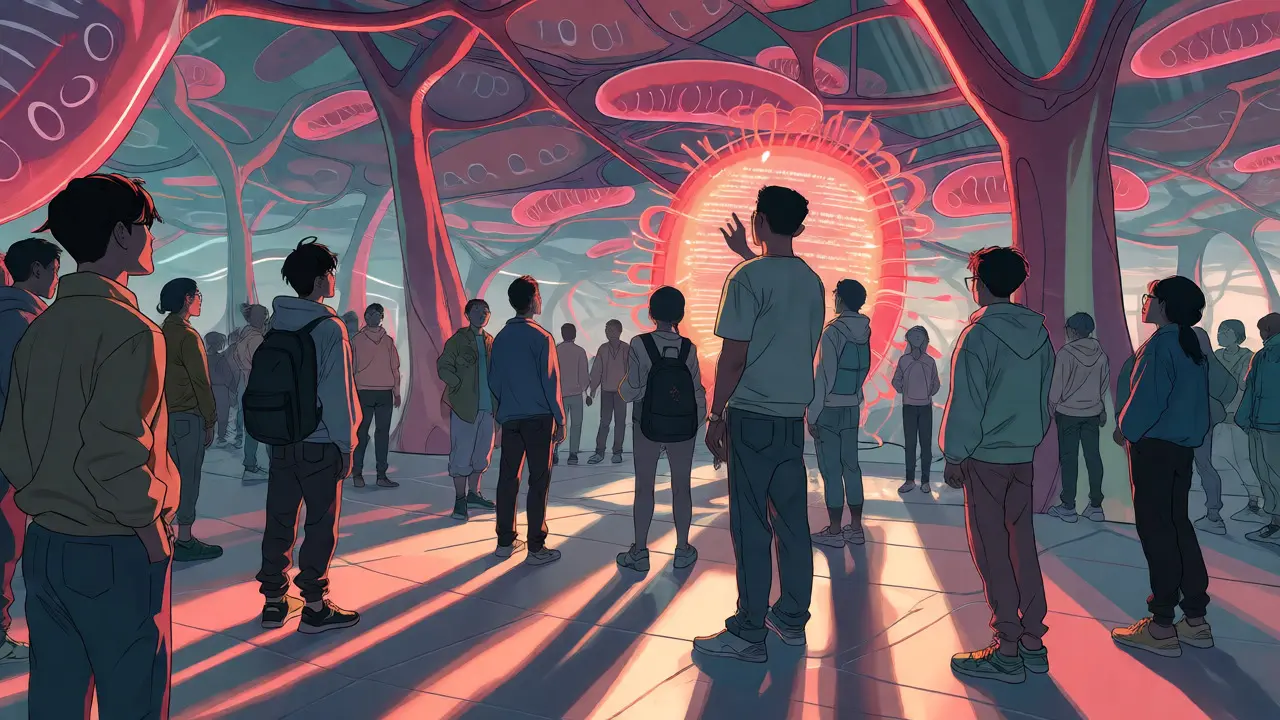
We are moving beyond simple Q&A bots. The future points toward immersive virtual worlds generated on demand. Imagine asking an AI to explain cellular respiration, and it builds a navigable 3D environment where you can fly through a mitochondrion, hearing narrated explanations and seeing chemical reactions unfold in real-time. These environments embed learning science directly into the spatial experience. Engagement mechanisms like gamification no longer compromise pedagogical rigor because the interactivity is tied to assessment and feedback loops.
As we look toward 2026 and beyond, the distinction between "learning" and "using AI" will blur. Students won't just use AI to find answers; they will use it to explore concepts. The key metric for success won't be how fast a student gets an answer, but how deeply they understand the path to get there. Multimodal AI facilitates this by allowing students to externalize their thinking through speech and visuals, making their mental models visible and adjustable.
What is the main advantage of multimodal AI over text-only chatbots in education?
The primary advantage is reduced cognitive load and more natural interaction. Studies show that novice learners prefer combining screen-sharing with voice input because it mirrors human tutoring dynamics, allowing them to show context visually while explaining issues verbally, rather than struggling to articulate complex visual problems in text.
How does multimodal AI help students with different learning needs?
It enables dynamic content transformation. A single lesson can be instantly converted into audio podcasts for auditory learners, interactive videos for visual learners, or simplified text for those with reading difficulties. Crucially, these adaptations preserve core pedagogical structures like spaced repetition and logical sequencing, ensuring accessibility without sacrificing educational integrity.
Will AI tutors replace human teachers?
No, the consensus among experts is that AI serves as an augmentation tool. Teachers evolve from content creators to precision customizers and learning experience designers. AI handles routine tasks like generating variations of materials or providing instant feedback, allowing human educators to focus on mentorship, emotional support, and complex pedagogical strategies that require human judgment.
What are the risks of using multimodal AI in classrooms?
Key risks include potential inaccuracies in AI-generated explanations (hallucinations), privacy concerns regarding screen-sharing and voice data, and the possibility of students relying on AI for answers rather than developing problem-solving skills. Additionally, there is a learning curve for students to master effective modality combinations, which requires guided instruction.
How many educational AI tools currently exist?
As of November 2024, research by Edtech Insiders identified over 300 distinct GenAI-powered educational tools covering more than 60 use cases. This number continues to grow rapidly, with a significant portion focusing on instructional materials and interactive tutoring applications.