Per-Token Pricing Explained: How LLM APIs Actually Charge You

- Mark Chomiczewski
- 25 May 2026
- 0 Comments
You build a cool app. It uses an Large Language Model (LLM) that generates text based on prompts. You launch it. Then you check your bill. And suddenly, you’re staring at a number that makes no sense. Why did that one conversation cost $0.50? Why did the other one cost $0.02? The answer isn’t magic-it’s math. Specifically, it’s per-token pricing.
This is how almost every major AI provider charges you today. Instead of paying a flat monthly fee or per request, you pay for every tiny chunk of text the model processes. These chunks are called tokens. If you don’t understand how they work, you will overpay. Let’s break down exactly what you are buying, why it costs what it costs, and how to stop bleeding money on hidden inefficiencies.
What Is a Token, Really?
To understand the price tag, you first have to understand the unit of measurement. In human language, we count words. In AI, we count tokens. A token is not always a whole word. It can be a word, part of a word, or even just punctuation.
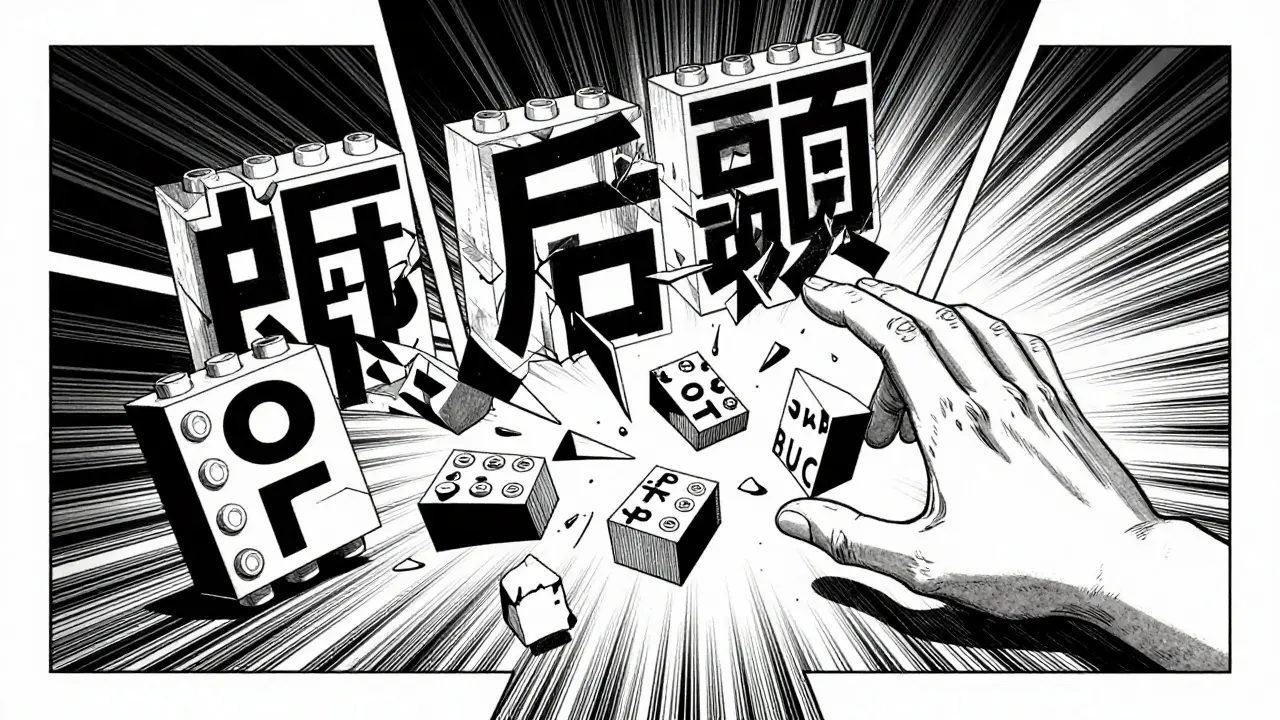
Think of tokens like Lego bricks. Some words fit into one brick ("cat"). Others need two ("playing") or three ("unbelievable"). Special characters and emojis often take up multiple bricks too. This matters because if your prompt has 1,000 words but those words break down into 1,300 tokens, you pay for 1,300 units, not 1,000.
Most providers use a method called Byte-Pair Encoding (BPE), an algorithm that merges frequent character pairs into single tokens. This means common words get cheaper treatment (one token), while rare words or complex structures get split up. According to technical analyses from NVIDIA in early 2024, this system typically creates a vocabulary of 30,000 to 100,000 unique tokens. For English text, a rough rule of thumb is that 1,000 tokens equal about 750 words. But don’t rely on that guesswork when scaling. Different languages behave differently. Hebrew, for instance, often requires 30% more tokens per word than English due to its root-based structure. If you are building a global app, this linguistic variance directly impacts your bottom line.
Input vs. Output: The Hidden Cost Split
Here is where most developers get tripped up. Not all tokens are priced equally. There are two types:
- Input Tokens (Prompt): The text you send to the AI. This includes your instructions, the user’s question, and any context you paste in.
- Output Tokens (Completion): The text the AI generates back to you.
Output tokens are consistently more expensive-usually 2 to 4 times the price of input tokens. Why? Because generating text is computationally heavier. When the AI reads your prompt, it processes it largely in parallel. But when it writes the answer, it does so autoregressively. It predicts the next token, then the next, then the next, one by one. As noted in NVIDIA’s March 2024 technical breakdown, completion operations require significantly more compute power than prompt processing. That extra effort gets passed on to you in the form of higher per-token rates.
This distinction changes how you design your applications. If you are summarizing a long document, your input cost might be high, but your output is short. If you are writing code or creative stories, your output explodes, and so does your bill. Understanding this split is the first step toward cost control.
Current Market Rates and Provider Comparisons
Pricing varies wildly between models and providers. As of late 2024 and early 2025, the market has settled into clear tiers. Here is how the major players stack up based on data from Qwak and CloudWars analyses.
| Model | Provider | Input Price ($) | Output Price ($) | Best Use Case |
|---|---|---|---|---|
| GPT-3.5-Turbo | OpenAI | $0.50 | $1.50 | High-volume, simple tasks |
| Claude Haiku | Anthropic | $0.25 | $1.25 | Fast, cheap classification |
| GPT-4o | OpenAI | $5.00 | $15.00 | General purpose, balanced cost/perf |
| Claude Sonnet | Anthropic | $3.00 | $15.00 | Complex reasoning, coding |
| GPT-4 Turbo | OpenAI | $10.00 | $30.00 | Heavy lifting, legacy support |
| Claude Opus | Anthropic | $15.00 | $75.00 | Ultra-complex analysis |
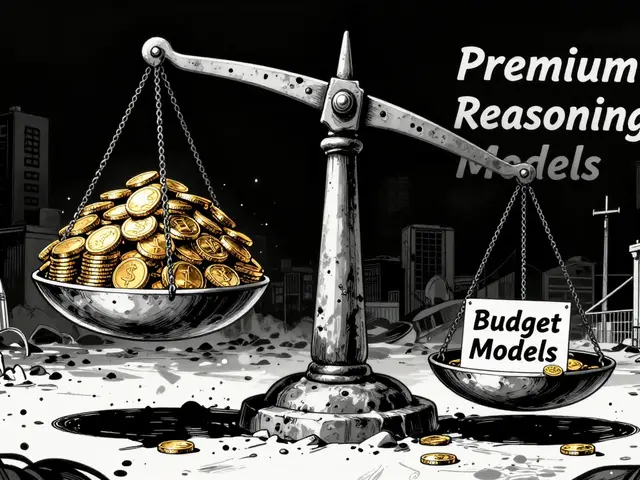
Notice the gap. GPT-3.5 and Claude Haiku are dirt cheap. They are perfect for spam filtering, basic categorization, or internal search suggestions where speed and volume matter more than nuance. On the other end, Claude Opus and GPT-4 Turbo are premium products. You use them when you need deep reasoning, complex code generation, or high-stakes decision support. Using Opus to summarize a tweet is like using a Ferrari to deliver pizza. It works, but it’s a terrible financial move.
The Context Window Tax
There is another layer to pricing: the context window. This is the maximum amount of text the model can "remember" at once. Larger windows mean more memory usage and more computational overhead. Providers charge more for larger contexts. For example, Claude models offer windows up to 200,000 tokens, while GPT-4o caps at 128,000. If you need to feed an entire book into the model, you aren’t just paying for the tokens in that book; you are paying a premium for the infrastructure required to hold that much data in active memory.
If your application doesn’t need 200k context, don’t buy it. Truncating unnecessary history or summarizing previous interactions before sending them to the model can slash your input costs significantly. Microsoft’s documentation recommends actively managing context length to avoid these hidden premiums.
Real-World Cost Calculation Example
Let’s look at a concrete scenario. Imagine you run a customer support bot using GPT-4o. You process 30 requests per minute. Each request involves a 45-token prompt and a 100-token response.
- Tokens per minute: 30 requests × (45 input + 100 output) = 4,350 tokens/min.
- Tokens per hour: 4,350 × 60 = 261,000 tokens/hour.
- Split by type:
- Input: 30 × 45 × 60 = 81,000 tokens.
- Output: 30 × 100 × 60 = 180,000 tokens.
- Daily Cost Calculation (24 hours):
- Input: 81,000 × 24 = 1,944,000 tokens. At $5/M, that’s ~$9.72/day.
- Output: 180,000 × 24 = 4,320,000 tokens. At $15/M, that’s ~$64.80/day.
Total daily cost: ~$74.52. Monthly: ~$2,235. Now, imagine if you had used GPT-3.5 instead. The output cost would drop from $15/M to $1.50/M. Your daily output cost becomes ~$6.48. Total daily cost drops to ~$16.20. Monthly: ~$486. By switching models for a task that didn’t require advanced reasoning, you saved nearly 80%. This is the power of understanding per-token economics.

Pitfalls and Optimization Strategies
Even with careful planning, costs can spiral. Here are the most common traps and how to avoid them.
1. Local Estimation Errors
Many developers use local libraries like tiktoken to estimate costs before deploying. However, these libraries sometimes diverge from the actual API’s tokenizer. A Reddit developer reported in October 2024 that their local tool estimated 1,200 tokens, but the API billed for 1,387. An 8-15% discrepancy is common. Always budget for a buffer. Never assume your local count matches the invoice.
2. Special Characters and Emojis
Emojis and special symbols are token hogs. One emoji can cost 4 tokens in some models. If your chat interface allows users to paste messy text with formatting codes, emojis, or non-standard characters, your input size inflates silently. Sanitize inputs. Strip unnecessary formatting before sending data to the API.
3. Caching Common Prompts
If your app answers the same FAQ questions repeatedly, you are wasting money regenerating the same output. Implement caching. Store the response for common queries and serve it from your database. Developers report 15-25% reductions in token usage just by caching top-tier FAQs. This is free efficiency.
4. Fine-Tuning Costs
Fine-tuning a model adds a new layer of complexity. You pay for training tokens, usage tokens on the fine-tuned model, and hourly deployment fees. While fine-tuning can improve performance, the Yale University economic framework suggests the benefits are bounded. Only fine-tune if you have a massive volume of specific domain data and standard prompting fails. For most apps, good prompt engineering is cheaper than fine-tuning.
Future Trends: What’s Next for Pricing?
The market is moving fast. Prices are dropping. CloudWars forecasts a 15-20% annual reduction in per-token costs through 2027 as hardware becomes more efficient. We are already seeing this with OpenAI’s GPT-4o, which cut prices by 50% compared to its predecessor while improving speed. Anthropic’s Haiku 2.0 maintained low prices despite better performance, signaling intense competition.
However, expect pricing to become more sophisticated. Researchers predict "quality-adjusted token pricing," where tokens generated with higher confidence scores might cost less, or "token pooling" across models. For now, stick to the basics: monitor your usage, choose the right model for the job, and never ignore the difference between input and output costs.
How many tokens are in 1,000 words?
In English, 1,000 words roughly equal 750 tokens. However, this ratio varies by language and content complexity. Technical jargon or non-English languages like Hebrew may require significantly more tokens per word.
Why are output tokens more expensive than input tokens?
Output tokens are more expensive because generating text is computationally intensive. The model must predict each token sequentially (autoregressively), whereas reading input tokens happens largely in parallel. This extra compute load drives up the cost.
Which LLM API is the cheapest?
As of early 2025, Anthropic’s Claude Haiku and OpenAI’s GPT-3.5-Turbo are among the cheapest options, costing around $0.25-$0.50 per million input tokens. They are ideal for high-volume, low-complexity tasks.
Can I accurately estimate costs locally?
You can get close, but not exact. Local tokenizers like tiktoken may differ from the API’s actual tokenizer by 5-15%. Always add a buffer to your estimates to account for discrepancies and unexpected character encoding issues.
Does context window size affect price?
Yes. Models with larger context windows (e.g., 200k tokens) often have higher base per-token rates or additional fees for extended context. If you don’t need to process massive documents, choose a model with a smaller context window to save money.