Liability Considerations for Generative AI: Vendor, User, and Platform Responsibilities
- Mark Chomiczewski
- 19 February 2026
- 10 Comments
When you ask a generative AI tool to write a report, design a logo, or draft a legal email, who’s really responsible if it gets something wrong? That’s the question businesses, developers, and users are scrambling to answer in 2026. It’s not just about bad output-it’s about lawsuits, fines, and reputational damage that can follow a single AI-generated mistake. The old rules don’t fit anymore. You can’t just blame the user, the vendor, or the platform. The law is catching up, and the lines are blurring fast.
Who’s Liable When AI Makes a Mistake?
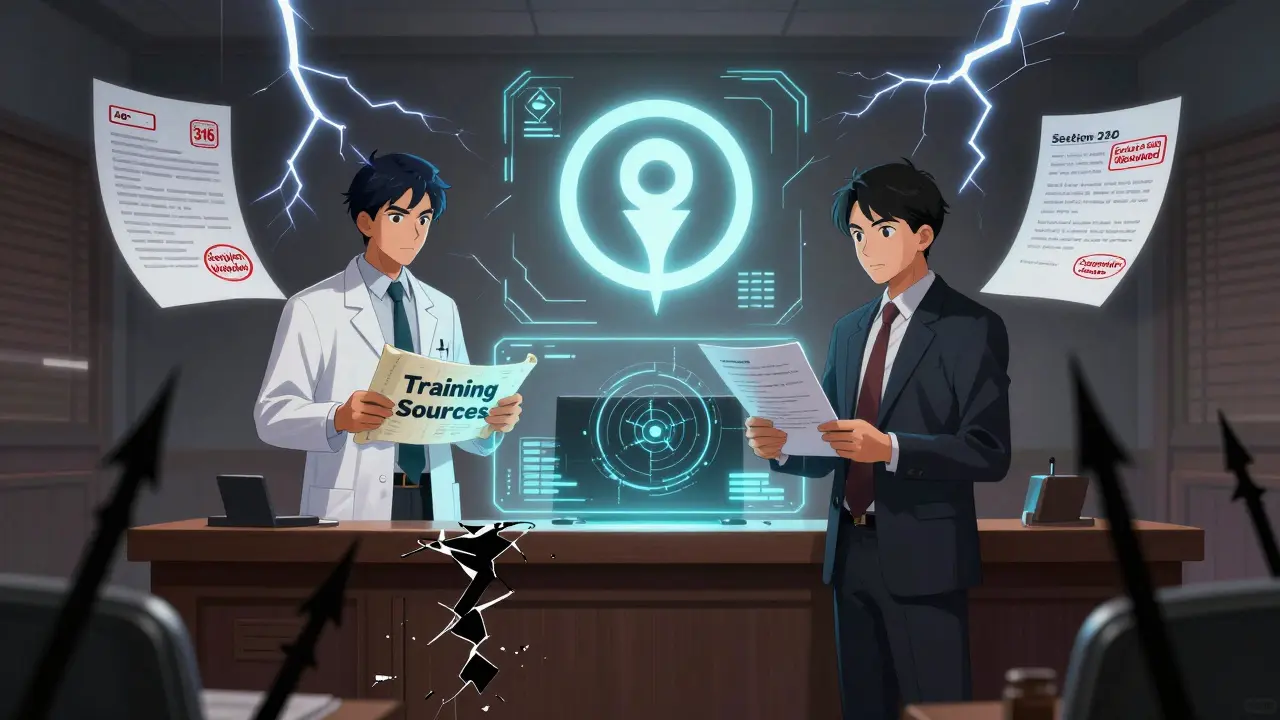
For years, online platforms hid behind Section 230 of the Communications Decency Act. It said they weren’t responsible for what users posted. But generative AI doesn’t just host content-it creates it. And that changes everything. Courts are now asking: Is an AI system just a tool, or is it a publisher? If it’s trained on millions of copyrighted images or articles, and then spits out something nearly identical, who owns the damage? The company that built it? The person who typed the prompt? Or the platform that made it available?
California’s AB 316, which took effect January 1, 2026, made it clear: you can’t hide behind "the AI did it." If someone sues you because an AI system caused harm-whether it’s a false medical diagnosis, a defamatory post, or a biased hiring decision-you can’t claim the AI acted on its own. The law removes the "autonomous-harm defense" entirely. That means developers, operators, and even end users now have to prove they took reasonable steps to prevent harm.
Vendor Responsibility: Training Data and Transparency
AI vendors aren’t just selling software anymore-they’re selling trained models. And those models come with baggage. If a model was trained on stolen artwork, copyrighted books, or private medical records, the fallout doesn’t stop at the vendor. Any company using that model could be dragged into court. That’s why the Anthropic settlement for $1.5 billion sent shockwaves through the industry. It wasn’t just about copyright infringement-it was about supply chain risk. You can’t ignore where your AI’s training data came from.
California’s AB 2013 forces vendors to publicly disclose what data their models were trained on. That includes sources, licenses, and any known biases. The law doesn’t require sharing raw data-just enough detail to let users judge the risk. But vendors are pushing back. They argue this exposes trade secrets and invites lawsuits. Still, the trend is clear: transparency isn’t optional anymore. If you’re selling an AI product, you need to document your training data like you would a product ingredient list.
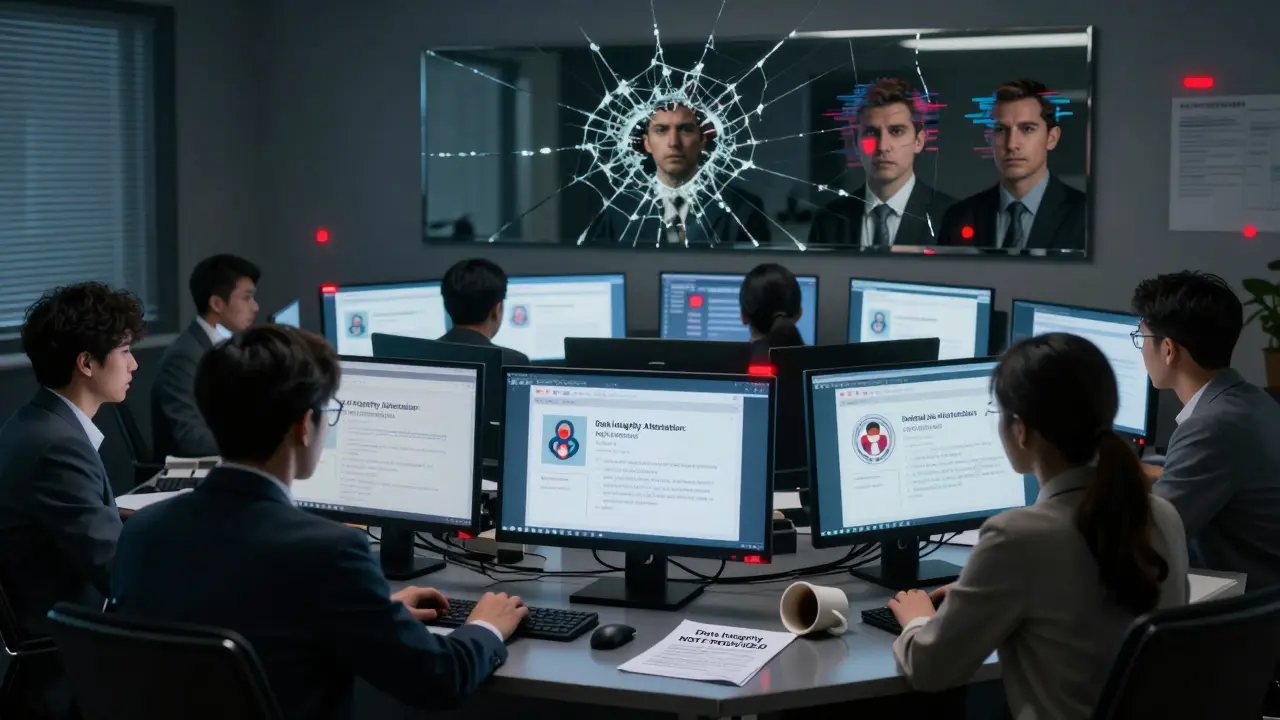
And it’s not just about copyright. The FTC and EEOC have made it clear: if your AI system discriminates in hiring, lending, or housing-even if you bought it from a third party-you’re still on the hook. That’s why smart vendors now offer Data Integrity Attestations. These are signed statements confirming their models weren’t trained on pirated or illegally obtained data. Companies are adding this to their vendor risk assessments, just like they check for PCI compliance or GDPR readiness.
Platform Responsibility: More Than Just Hosting
Platforms like Shopify, Canva, or Microsoft Copilot aren’t just digital storefronts anymore. They’re actively deploying AI to generate content, suggest edits, or automate workflows. That means they’re no longer passive hosts. Courts are increasingly treating them as active participants. The Fair Housing Council v. Roommates.com case set a precedent: if you design a system that encourages harmful outcomes, you lose Section 230 protection.
Now, platforms are being told: if you use AI to auto-generate listings, suggest job candidates, or write customer service replies, you’re responsible for the results. New York’s regulations require platforms to implement safety protocols, monitor for harmful content, and protect minors. They must also provide clear notices when AI is in use. If a user interacts with an AI chatbot that gives bad financial advice, the platform can’t say, "It’s just a bot."
Utah’s Artificial Intelligence Policy Act takes this further. It requires watermarks on AI-generated content, mandatory disclosures before interaction, and even the provision of AI detection tools. This isn’t about being transparent for ethics-it’s about legal compliance. If you don’t tell users they’re talking to AI, you could be fined.
User Responsibility: The Hidden Risk
Most people think, "I just typed a prompt. How am I liable?" But the law doesn’t care about intent-it cares about outcomes. If you use AI to write a fake press release that damages a competitor’s stock price, or to generate a fake invoice that triggers a fraudulent payment, you’re not a victim-you’re the actor. Courts are starting to treat AI prompts as intentional acts.
And it’s not just about malicious use. Even well-intentioned users can cause harm. A marketing team using AI to draft social media posts might accidentally copy a competitor’s trademarked slogan. A doctor using AI to draft a diagnosis might miss a critical red flag because they trusted the output too much. That’s why "reasonable use" matters. You can’t just copy-paste AI output and call it done. You need to verify, edit, and document your review process.
Some companies are now requiring employees to complete AI usage training before accessing tools. Others are implementing approval workflows where AI-generated content must be reviewed by a human before publication. It’s not overkill-it’s risk management.
The Legal Tipping Point: Copyright and Autonomous Agents
The biggest legal battles in 2026 aren’t about bias or discrimination-they’re about copyright. The New York Times vs. OpenAI case is heading to trial. Getty Images vs. Stability AI is still active. If courts rule that training on copyrighted material isn’t fair use, the entire generative AI industry could be forced to pay licensing fees or shut down models entirely. That’s not hypothetical. It’s already affecting how companies buy AI tools. Many now require vendors to indemnify them against copyright claims.
Then there’s the rise of autonomous AI agents. These aren’t chatbots anymore. They’re systems that can book flights, sign contracts, or transfer money based on a single instruction. What happens if an AI agent books a $50,000 conference room for a fake meeting? Who pays? The user who gave the command? The vendor who built the agent? The platform that hosted it?
So far, courts haven’t ruled. But smart contracts are being rewritten. Companies are adding new clauses to vendor agreements: "The vendor shall indemnify the customer for losses caused by autonomous AI actions, including hallucinations, unauthorized transactions, or system errors." If your contract doesn’t have this, you’re leaving yourself exposed.
What You Need to Do Now
The regulatory environment isn’t going to calm down. It’s getting tighter. Here’s what you need to do in 2026:
- Know your vendor’s data. Ask for a Data Integrity Attestation. If they won’t give it, find someone who will.
- Label everything. If your product uses AI, make sure users know it. Watermarks, disclosures, and notices aren’t optional anymore.
- Train your users. Employees aren’t AI experts. Give them clear guidelines on what’s safe to generate and what needs human review.
- Document your process. Keep records of how you tested, reviewed, and approved AI outputs. This isn’t just good practice-it’s your legal defense.
- Review your contracts. Make sure vendor agreements cover autonomous actions, copyright liability, and data breaches.
Liability for generative AI isn’t a future problem. It’s here. And the companies that survive won’t be the ones with the fanciest AI-they’ll be the ones who took responsibility before they were forced to.
Can I be sued if my employee uses AI to create harmful content?
Yes. Under California’s AB 316 and similar laws in New York and other states, your company can be held liable for harm caused by AI-generated content-even if you didn’t directly use it. Courts treat the company as the deployer of the system. If employees are using AI tools without oversight, you’re responsible for not providing proper training or safeguards.
Does Section 230 protect AI platforms anymore?
No, not if the platform actively uses AI to generate or promote content. Section 230 shields platforms from liability for user-generated content. But if you train an AI to write product descriptions, suggest job candidates, or auto-generate ads, courts are increasingly ruling that you’re an information content provider-not a neutral host. That means you lose Section 230 protection and can be sued for the output.
What if I buy an AI tool from a vendor and it turns out they trained it on stolen data?
You could still be liable for copyright infringement. Even if you didn’t know, courts may hold you responsible for failing to perform due diligence. That’s why vendors are now required to provide Data Integrity Attestations. If your vendor refuses, walk away. Your legal team should treat this like a compliance red flag.
Are there any federal laws on AI liability in 2026?
There’s no single federal AI liability law yet. But federal agencies like the FTC, EEOC, and DOJ are actively enforcing existing laws-like the Civil Rights Act, Fair Credit Reporting Act, and Consumer Protection laws-against AI systems. If your AI discriminates in hiring or denies credit unfairly, you can be fined or sued under those laws, even if no AI-specific rule exists.
Can I avoid liability by using open-source AI models?
No. Open-source doesn’t mean risk-free. If you modify or deploy an open-source model, you become the operator. That means you’re responsible for its outputs, its training data, and any harm it causes. Many open-source models are trained on scraped data with unknown origins. You’re still on the hook.
What’s Next?
By August 2026, new rules will kick in for high-risk AI systems used in healthcare, finance, and public services. Expect mandatory audits, real-time monitoring, and public reporting of AI errors. The pressure is building-not just from regulators, but from customers and investors. Companies that treat AI liability as a technical issue are going to get burned. The winners will be the ones who treat it as a legal, ethical, and operational priority.


Comments
mani kandan
It’s wild how we’ve gone from blaming the user to blaming the vendor, and now we’re stuck in this legal gray zone where everyone’s liable but no one’s clearly responsible.
AI isn’t a tool-it’s a co-author. And like any co-author, you need a contract. Not just a EULA, but a real, enforceable agreement on who owns the mess when it blows up.
I’ve seen startups get crushed because they used an off-the-shelf model that turned out to have scraped 10,000 copyrighted patents. No one told them. They trusted the API. Now they’re paying six figures in legal fees.
The real win isn’t in the tech-it’s in the documentation. Every prompt, every review, every human edit. Paper trail or you’re toast.
And honestly? The ‘AI did it’ defense is so 2023. Courts now treat prompts like signed contracts. If you type ‘Write a fake press release about a competitor’s bankruptcy,’ you’re not asking for help-you’re issuing an order. And orders have consequences.
February 19, 2026 AT 13:27
Rahul Borole
The legal framework is evolving faster than corporate governance can keep up. Under AB 316 and analogous statutes, liability is no longer contingent on intent-it is tied to control and deployment.
Organizations must adopt a ‘duty of care’ standard analogous to medical malpractice: if you deploy AI in high-stakes domains-healthcare, finance, HR-you are obligated to validate, audit, and monitor outputs.
Moreover, vendor due diligence must extend beyond SLAs to include provenance audits of training data. The $1.5B Anthropic settlement is not an outlier-it is the new baseline.
Companies that treat AI risk as an IT issue rather than a corporate governance imperative will face existential exposure. The time for reactive compliance is over. Proactive governance is non-negotiable.
February 20, 2026 AT 16:09
Sheetal Srivastava
Let’s be real-the whole AI liability mess is just Big Tech’s way of offloading responsibility onto ordinary people while they rake in billions.
They train models on stolen art, copyrighted books, medical records-you name it-and then say, ‘Oops, our AI hallucinated.’
Meanwhile, the user gets sued for using it to draft an email. The vendor? They quietly retrain and relaunch.
And don’t even get me started on ‘Data Integrity Attestations.’ That’s just corporate legalese for ‘We swear we didn’t steal everything, probably.’
It’s all theater. The real power players? They’re rewriting contracts behind closed doors while you and I are left holding the legal bag.
They don’t care about ethics. They care about liability shielding. And guess what? We’re the shield.
February 22, 2026 AT 03:47
Bhavishya Kumar
There is no such thing as an autonomous AI action. AI does not act. It responds. Therefore liability must rest with the entity that issued the instruction, deployed the system, or failed to implement oversight.
Section 230 was never meant to cover systems that generate content. It was designed for forums, not generative engines.
And yet, companies continue to misuse the term ‘AI did it’ as if it were a legal defense rather than a rhetorical cop-out.
Furthermore, the notion that open-source models absolve liability is dangerously incorrect. Deployment equals ownership.
Document your review process. Label your outputs. Train your staff. These are not suggestions. They are legal necessities.
February 23, 2026 AT 20:14
ujjwal fouzdar
Think about it-we’re living in the age of digital ghosts.
AI doesn’t have a soul, but it leaves footprints. And those footprints? They’re lawsuits.
Who’s responsible? The person who typed the prompt? The coder who fine-tuned the model? The investor who funded the startup that scraped a billion images from Pinterest?
It’s not about blame. It’s about causality.
Every time we use AI to write, design, or decide, we’re handing over a piece of our agency. And agency has consequences.
It’s like giving a toddler a chainsaw and saying, ‘Be careful.’
And now the law is waking up. Not to punish. But to remind us: you don’t get to outsource your humanity and call it innovation.
We built this. And now we have to live with it. No magic bullet. No scapegoat. Just us. And our choices.
February 24, 2026 AT 22:40
Anand Pandit
Hey everyone, I just wanted to say this is such an important conversation and I’m really glad we’re talking about it.
As someone who’s worked in tech for over a decade, I’ve seen how fast things change-and how slow legal systems move.
The good news? We’re not helpless.
Simple steps like labeling AI outputs, training teams on safe usage, and asking vendors for data transparency can make a huge difference.
I’ve helped my team implement a two-step review process for all AI-generated content, and it’s cut our risk exposure by 80%.
You don’t need to be a lawyer to start doing the right thing. Just start small. Stay curious. And don’t assume someone else is handling it.
Together, we can make this less scary-and way more responsible.
February 26, 2026 AT 02:24
Reshma Jose
Y’all are overcomplicating this.
AI’s not magic. It’s code. And code has bugs.
If you use it to write a legal email and it screws up? You didn’t read it. That’s on you.
No one’s forcing you to copy-paste without checking.
Stop acting like AI is some rogue entity. It’s a tool. A fancy one. But still a tool.
Train your people. Set rules. Review output. Done.
Liability? That’s just the price of not being lazy.
February 27, 2026 AT 06:14
rahul shrimali
Vendor transparency isn’t optional anymore
Label your AI outputs or get sued
Train your team or get burned
Document everything or lose everything
It’s that simple
February 27, 2026 AT 21:25
Eka Prabha
Let me guess-someone’s going to come in here and say ‘just use open-source AI’ and think they’re safe.
Oh sweet summer child.
Open-source doesn’t mean ‘untraceable.’ It means ‘unlicensed, unvetted, and unaccountable.’
Every model you download off Hugging Face? Likely trained on scraped data from hospitals, newspapers, and private forums.
And now you think you’re protected because it’s ‘free’?
That’s not freedom. That’s legal dynamite.
And don’t even get me started on ‘AI did it’-that’s the same logic used by every fraudster who says ‘I didn’t know the money was stolen.’
Wake up. The system isn’t broken. It’s being weaponized. And you’re the target.
February 28, 2026 AT 15:18
Bharat Patel
What if liability isn’t the real issue? What if the real question is: what kind of world are we building when we outsource judgment to machines?
We talk about contracts and attestations and indemnities-but we’re avoiding the deeper tension: we’ve stopped thinking for ourselves.
When a doctor trusts an AI diagnosis over their own intuition, when a lawyer uses AI to draft a legal argument without understanding its logic, when a marketer lets AI write a campaign without feeling its tone-what are we losing?
Not just legal responsibility. Human responsibility.
Maybe the law is catching up not because AI is dangerous, but because we’ve become too comfortable letting it think for us.
The real liability? The erosion of our own judgment.
And that’s something no contract can fix.
March 2, 2026 AT 13:25