Trademark Risks in Generative AI: Protecting Brands from Synthetic Content
- Mark Chomiczewski
- 28 October 2026
- 0 Comments
Imagine spending months building a brand identity, only to have an algorithm spit out a logo that looks suspiciously like your competitor’s. Or worse, imagine your own marketing team using an AI tool that accidentally generates images mimicking a famous luxury mark, triggering a lawsuit before the campaign even launches. This isn't hypothetical anymore. As of late 2025, Generative AI has collided head-on with trademark law, creating a legal minefield for businesses large and small.
The core problem is simple but terrifying: AI models are trained on billions of web pages containing registered trademarks. When you ask an AI to "design a sneaker logo," it doesn't know who owns what. It just sees patterns. If those patterns match existing brands, you might be walking into infringement without even realizing it. The American Bar Association reported a 217% year-over-year increase in AI-related trademark cases by Q3 2023. By 2026, Gartner predicts that 40% of all trademark disputes will involve AI-generated content. Are you ready for that shift?
Why Traditional Trademark Law Struggles with AI
Trademark law was built for humans. It relies on the concept of "use in commerce" and human intent. If I copy your logo, I did it on purpose (or negligently). But if an AI copies your logo because its statistical weights favor those shapes, who is liable? You? The AI developer? The person who typed the prompt?
This ambiguity breaks the traditional "likelihood of confusion" standard used in cases like Polaroid Corp. v. Polarad Electronics Corp. In the past, courts looked at how similar two marks were and whether consumers would be confused. Now, AI can generate thousands of variations instantly. Some will look different; others will look identical. Internal testing from early 2024 showed that platforms like Midjourney and Stable Diffusion generated content confusingly similar to existing trademarks 12-18% of the time when prompted with generic descriptors.
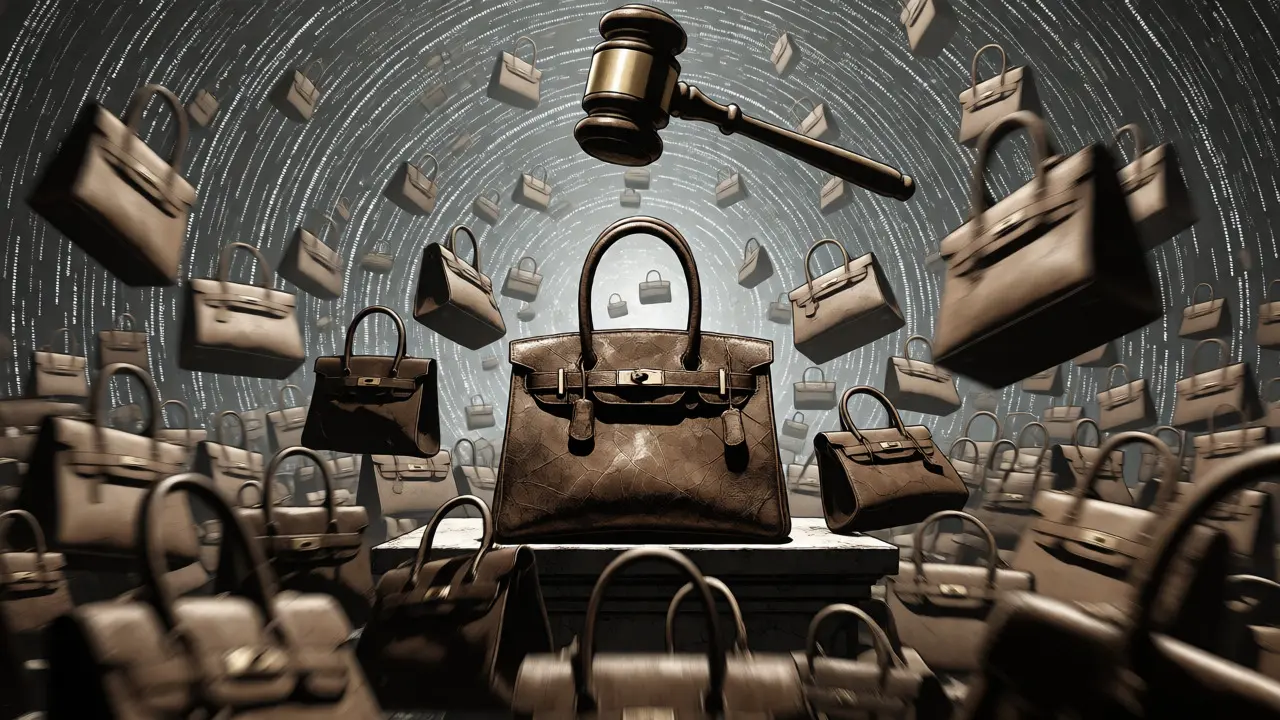
Consider the Hermès v. Rothschild case. A jury awarded $133,000 in damages after finding that AI-generated "MetaBirkins" images diluted Hermès' famous Birkin bag mark. The key takeaway? Even if the AI made the art, the human who deployed it faced the consequences. The Lanham Act still applies, but the application is messy. Unlike copyright, which requires human authorship, trademark rights stem from market presence. If AI floods the market with near-identical visuals, it dilutes the distinctiveness of your brand.
The Specific Risks Facing Modern Brands
Brand owners face three primary threats from synthetic content. First is unintentional infringement. Your designer uses an AI tool to brainstorm ideas. The tool outputs a design that matches a registered trademark. You don't check it because you assume the AI "created" something new. You launch the product. Six months later, you get a cease-and-desist letter. This accounts for 78% of AI-related trademark disputes, according to a 2024 study by Cuneo Gilbert & LaDuca.
Second is brand dilution. Famous marks like Coca-Cola or Nike lose value if they become generic or are associated with low-quality AI spam. If deepfake technology replicates your brand voice or visuals with 95% accuracy (a capability MIT's Media Lab confirmed in 2025), consumers may struggle to distinguish official content from AI noise. This erodes trust and distinctiveness.
Third is registration hurdles. Can you register an AI-generated logo? The USPTO updated guidance in August 2025 stating that AI-generated marks may be registered if human creators exercise sufficient control over expressive elements. But proving that control is hard. If you just clicked "generate," you might lack the human authorship needed for strong protection.
How Major Platforms Handle Trademark Screening
Not all AI tools are created equal when it comes to legal safety. Some prioritize speed; others prioritize compliance. Here is how the major players stack up in terms of trademark risk mitigation:
| Platform | Trademark Screening | User Liability Stance | Risk Level |
|---|---|---|---|
| Adobe Firefly | Real-time cross-reference with USPTO database via "Trademark Shield" | Indemnifies commercial users | Low |
| Midjourney | Minimal automated screening; relies on user vigilance | User bears full responsibility | High |
| Stable Diffusion | Open-source; no built-in checks | User bears full responsibility | Very High |
| Canva AI | Basic filters; mixed user reports on effectiveness | User bears responsibility for final output | Medium |
Adobe Firefly stands out here. Its "Trademark Shield" feature reduced infringement incidents by 89% in Adobe's own Q1 2025 case studies. For enterprises, this kind of indemnification is worth paying for. For freelancers using Midjourney, the burden falls entirely on them. A Reddit thread from November 2024 highlighted a small business owner who spent $8,500 rebranding after Midjourney generated a logo identical to a registered trademark. The platform offered no warning. The user paid the price.
Practical Steps to Mitigate Brand Risk
You don't need to stop using AI. You just need to use it differently. Legal teams report spending 22-35 hours monthly manually reviewing AI content. That’s unsustainable. Here is a streamlined approach to keep your brand safe:
- Practice Prompt Hygiene: Avoid using specific brand names in your prompts unless you are intentionally referencing them. Instead of "make a logo like Apple," try "minimalist tech logo with rounded edges." This reduces the chance the AI pulls direct visual cues from protected marks.
- Conduct Reverse Image Searches: Before deploying any AI-generated visual, run it through reverse image search tools. Check against the USPTO database and global trademark registries. Do not skip this step. It takes ten minutes but can save thousands in litigation.
- Maintain Detailed Logs: Keep records of every prompt, seed number, and generation date. In the Hermès case, documentation proved crucial. If you are sued, you need to prove you didn't knowingly infringe. Show your process.
- Use Specialized Monitoring Tools: Basic Google Alerts miss 83% of AI-generated infringements. Enterprise solutions like Corsearch AI Monitor cost around $42,000/year but catch issues early. For smaller budgets, consider dedicated AI monitoring plugins that integrate with your CMS.
Training is also critical. A 2025 survey by the Practising Law Institute found that 89% of in-house counsel felt unprepared for AI-specific IP issues. Traditional IP knowledge isn't enough anymore. Your marketing team needs to understand that AI output is not "safe" by default. It is raw material that requires vetting.
The Regulatory Landscape: What’s Coming Next?
Laws are catching up, slowly. The EU’s 2024 AI Act requires high-risk AI systems to implement "trademark compliance measures." In the US, things are fragmented. California’s AB-331, effective January 1, 2025, mandates disclosures for AI-generated content. But there is no federal standard yet.
Legislators are trying. The proposed AI Trademark Protection Act of 2025 (S.1843) aims to create a "safe harbor" for AI users who implement certification systems. Essentially, if you follow best practices, you might be shielded from liability. Meanwhile, the European Commission’s draft AI Liability Directive proposes reversing the burden of proof for AI-generated content. This means if you sue someone for AI infringement, they might have to prove they didn’t infringe, rather than you proving they did.
Judicial interpretations are evolving too. The Supreme Court’s 2024 Booking.com decision reaffirmed that consumer perception remains central to trademark analysis. Courts are looking less at the technical process of creation and more at how the market perceives the result. If consumers think an AI-generated ad is endorsed by your brand, you have a problem, regardless of how the pixels were arranged.
Frequently Asked Questions
Can I trademark an AI-generated logo?
Yes, but it is tricky. The USPTO requires human authorship. You must demonstrate significant creative control over the selection and arrangement of elements. Simply clicking "generate" is usually insufficient. Document your editing and curation process to strengthen your claim.
Who is liable if AI generates an infringing trademark?
Currently, the human user who deploys the content in commerce bears the primary liability. Most AI Terms of Service disclaim responsibility for outputs. However, some enterprise platforms like Adobe offer indemnification for commercial users. Always check the specific terms of your provider.
Does using AI for brainstorming count as trademark use?
No. Trademark law protects marks used in commerce to identify goods or services. Internal brainstorming that never reaches the public marketplace generally does not constitute actionable use. The risk arises when you publish or sell products featuring the AI-generated mark.
How accurate are current AI trademark detection tools?
It varies widely. Basic alerts detect only about 17% of infringements. Specialized enterprise tools like Corsearch or Adobe Firefly’s integrated features perform significantly better, with Adobe reporting an 89% reduction in incidents. Human review remains essential for high-stakes branding.
Will new laws change my obligations soon?
Likely yes. The EU AI Act is already enforcing compliance measures. In the US, state-level regulations like California’s AB-331 require disclosure. Federal proposals aim to create safe harbors for certified compliant workflows. Stay updated on local regulations relevant to your sales regions.