Context Windows in LLMs: Limits, Trade-Offs, and Best Practices

- Mark Chomiczewski
- 9 October 2026
- 0 Comments
You’ve probably felt it. You paste a massive codebase or a 50-page contract into an AI chatbot, ask a specific question about page 3, and get a hallucinated answer that ignores the first half of your input. Or maybe you hit a hard error saying the prompt is too long. This isn’t just a bug; it’s a fundamental constraint of how Large Language Models (LLMs) work. The culprit is the context window.
Think of the context window as the model’s short-term memory. It determines exactly how much text the AI can "see" at once when generating a response. If your input plus the AI’s output exceeds this limit, older information gets dropped, leading to confusion or errors. As we move deeper into 2026, understanding these limits isn't just for researchers-it's critical for developers, legal teams, and anyone building AI-driven workflows.
What Exactly Is a Context Window?
A context window is the maximum amount of text data, measured in tokens, that a model can process in a single inference step. It acts as the working memory for the model. When you send a prompt, the model looks at everything within this window to generate the next piece of text. If the conversation grows longer than the window allows, the earliest parts are typically truncated or summarized.
Tokens aren't always whole words. They can be word fragments, prefixes, or even individual characters. For example, "email" might be one token, while "unbelievable" might be three. Different models use different tokenization schemes, so a 100-word paragraph might consume 150 tokens in one model and 120 in another. This distinction matters because costs and limits are calculated in tokens, not words.
The context window includes both your input (the prompt) and the model's generated output. If you have a 10,000-token window and your prompt is 9,000 tokens, the model only has 1,000 tokens left to write its answer before it hits the limit. This dual consumption is often overlooked by beginners, leading to unexpected truncations.
The Evolution of Capacity: From GPT-2 to Gemini
We’ve seen explosive growth in context sizes over the last few years. In June 2019, OpenAI’s GPT-2 set an early standard with a modest 2,048-token window. By late 2023, GPT-4 Turbo expanded this to 128,000 tokens. Fast forward to May 2025, and Anthropic’s Claude 3.7 Sonnet supports up to 200,000 tokens. Google’s Gemini 1.5 Pro pushed experimental boundaries to 1 million tokens.
This expansion allows models to ingest entire books, complex codebases, or multi-year financial reports in one go. However, bigger isn't always better without caveats. While Claude 3.7 Sonnet outperforms GPT-4 Turbo by nearly 20% in document summarization tasks exceeding 100,000 tokens, other models like Meta’s Llama 3 70B struggle significantly beyond their native 8,192-token limit.
| Model | Max Context Tokens | Inference Speed Impact | Best Use Case |
|---|---|---|---|
| Claude 3.7 Sonnet | 200,000 | Moderate increase at max capacity | Complex document analysis & coding |
| GPT-4 Turbo | 128,000 | High cost per token | General purpose & creative writing |
| Gemini 1.5 Pro | 1,000,000 (Experimental) | Significant latency spikes | Huge dataset ingestion (e.g., video transcripts) |
| Llama 3 70B | 8,192 (Native) | Fast, low resource usage | Chatbots & short-form tasks |
The Hidden Costs: Latency, Memory, and Quality
Expanding the context window isn't free. It comes with significant hardware and computational trade-offs. Processing 200,000 tokens requires roughly 3.2GB of VRAM on high-end GPUs like the NVIDIA A100. More critically, inference times balloon. While a small model might respond in 2-3 seconds, processing a full 200k context can take 18-22 seconds per 1,000 tokens generated.
There’s also the issue of "attention dilution." As the context grows, the model’s ability to focus on specific details degrades. Internal testing from Anthropic showed that response quality drops by 8.3% on average when moving from 100,000 to 200,000 tokens. Why? Because the attention mechanism has to spread its focus across more data points, making it harder to pinpoint relevant information buried deep in the text.
NVIDIA’s Chief Scientist Bill Dally highlighted this at GTC 2025, noting that scaling context windows increases computational complexity quadratically. This means doubling the context length doesn't just double the cost; it can quadruple the computational load. For enterprise users, this translates directly into higher API bills and slower user experiences.
Common Pitfalls: Lost in the Middle
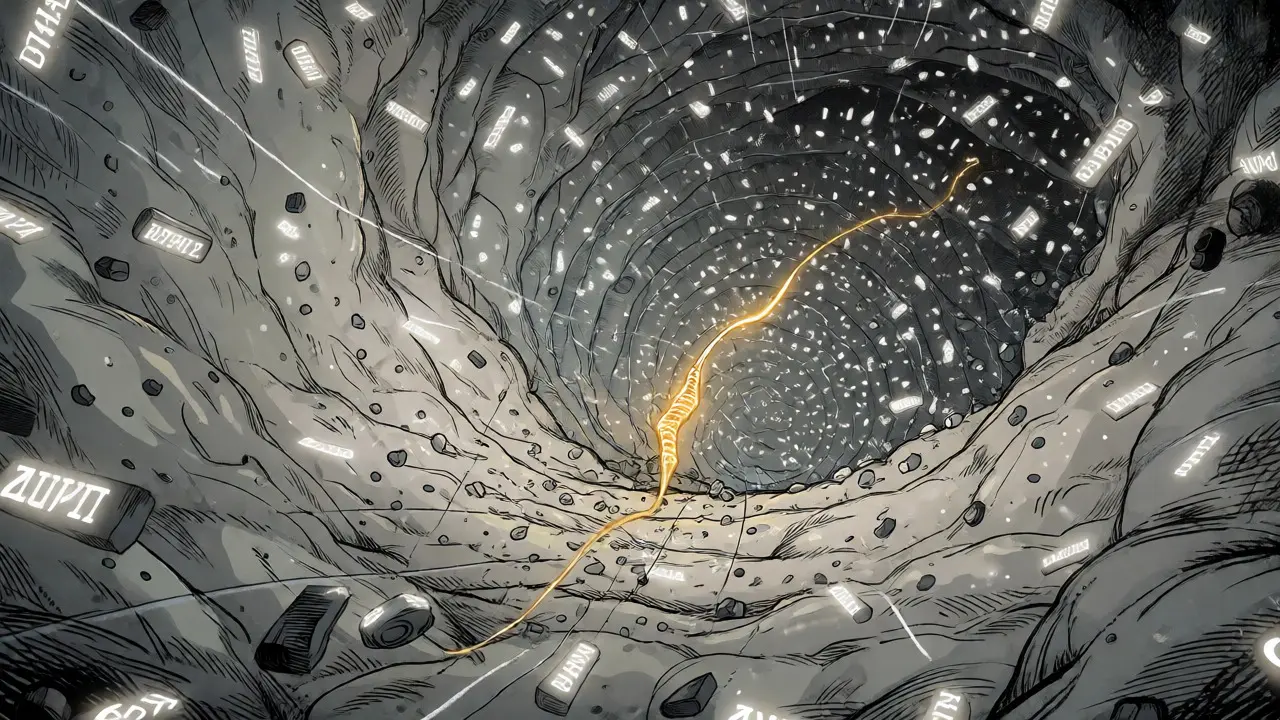
One of the most frustrating phenomena for developers is the "Lost in the Middle" effect. Studies show that LLMs perform best when relevant information is placed at the very beginning or the very end of the context window. Information buried in the middle is frequently ignored or misinterpreted.
Imagine you’re asking an AI to summarize a 50-page report where the key conclusion is on page 25. If you dump the whole report into the prompt, the model might miss that crucial detail because it’s lost in the noise of the surrounding text. Microsoft Research found that coherence degradation occurs in 63% of conversational threads once they exceed 150,000 tokens, largely due to this positioning issue.
Truncation is another silent killer. Most APIs automatically cut off the oldest messages when the limit is reached. If you don’t manage this explicitly, you might lose critical system instructions or earlier context that defines the persona or constraints of the conversation. Developers using tools like Cursor.sh report 73% fewer issues when they actively manage context pruning rather than relying on automatic truncation.
Best Practices for Managing Context
So, how do you handle these limits effectively? Here are four strategies that work in real-world scenarios:
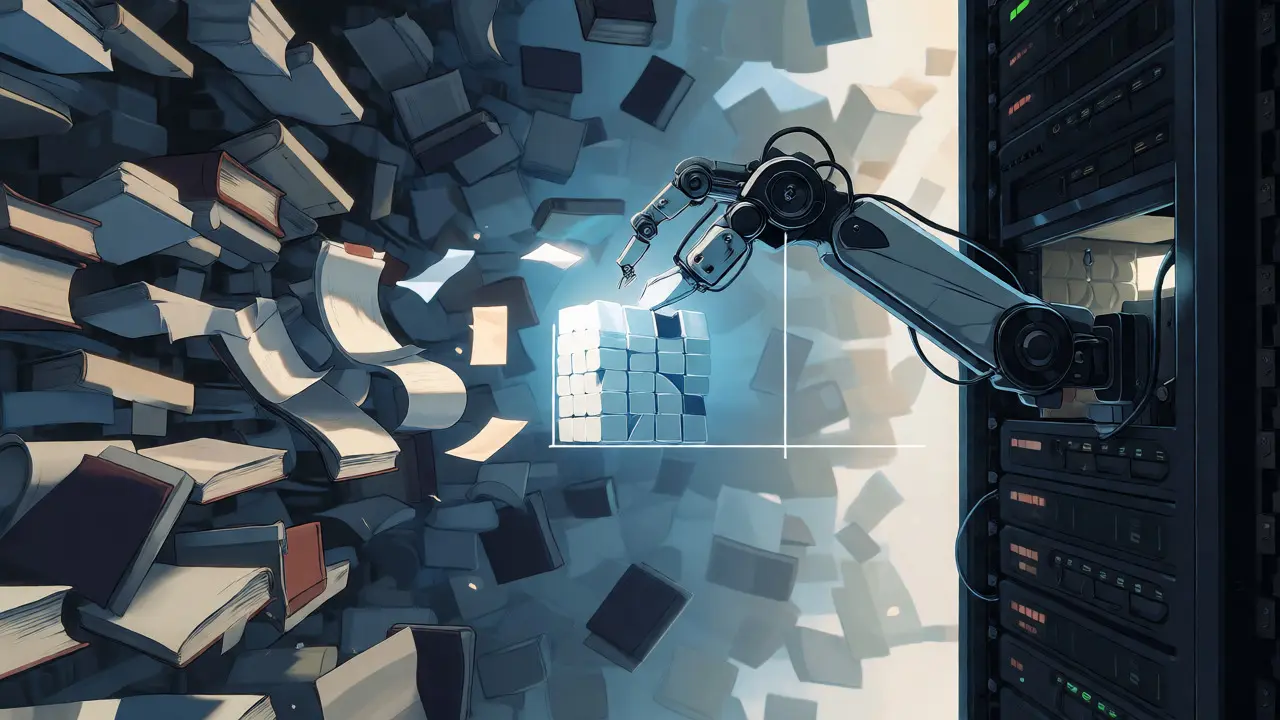
- Strategic Chunking: Don’t throw everything at once. Break documents into smaller chunks (around 75% of max capacity) with a 10% overlap to preserve continuity. This ensures no critical sentence gets split awkwardly between two requests.
- Retrieval-Augmented Generation (RAG): Instead of loading an entire book into the context, store it in a vector database. Retrieve only the most relevant paragraphs based on the user’s query and inject them into the prompt. This keeps the context window lean and focused.
- Explicit Summarization: When conversations get long, periodically summarize the history. Replace the last 20 turns of dialogue with a concise summary. This frees up space for new interactions while retaining the core narrative.
- Positioning Matters: Place critical instructions or questions at the start or end of your prompt. If you must include long background info, put it in the middle, but ensure the actual task is clearly framed at the edges.
Tools like LangChain help automate some of this, but manual oversight is still required. A common mistake is assuming the model "remembers" everything from a previous session if you’re using stateless APIs. Always re-inject necessary context unless you’re using a persistent memory feature specifically designed for it.
Future Outlook: Where Are We Heading?
The race for larger context windows shows no signs of slowing. McKinsey predicts that by 2027, commercial models will routinely offer 1-million-token contexts. However, experts warn against naive expansion. Dr. Anna Rogers from MIT notes that beyond 50,000 tokens, comprehension quality diminishes without architectural innovations like specialized attention mechanisms.
We’re seeing moves toward smarter context management rather than just brute-force size increases. Anthropic’s "Dynamic Context Allocation," introduced in May 2025, prioritizes relevant segments within a large window, improving response quality by 14%. Similarly, Meta is optimizing KV caching to make larger contexts faster and cheaper.
For now, the sweet spot depends on your use case. If you need speed and low cost, stick to smaller windows with RAG. If you need deep analysis of massive datasets, accept the latency penalty of 100k+ token windows. The technology is maturing, but human oversight in managing what goes into the box remains essential.
What happens if my prompt exceeds the context window limit?
Typically, the API will either return an error indicating the prompt is too long, or it will silently truncate the oldest parts of the conversation (FIFO - First In, First Out). Some advanced interfaces allow you to configure whether to drop old messages or reject the request entirely. Always check your provider's documentation for their specific behavior.
Do images and audio count towards the token limit?
Yes, multimodal inputs consume tokens. Images are converted into a fixed number of tokens depending on their resolution and the model's vision encoder. Audio files are transcribed or encoded into token sequences. These additions reduce the available space for text input and output.
Is a larger context window always better for accuracy?
Not necessarily. Larger windows can lead to "attention dilution," where the model struggles to identify relevant information amidst noise. Additionally, performance often degrades for information located in the middle of very long contexts. Precision in retrieval (via RAG) often yields better results than dumping all data into a massive window.
How does context window size affect API pricing?
Most providers charge per token processed. Since the context window includes both input and output, using a larger portion of the window increases costs. Furthermore, some providers implement tiered pricing where processing very long contexts (e.g., >128k tokens) incurs a premium rate due to higher computational requirements.
Can I extend the context window of a local LLM?
Some local models support RoPE (Rotary Positional Embeddings) scaling techniques that allow extending the effective context window beyond the training length. However, this often comes at the cost of reduced reasoning capability and increased memory usage. It requires careful tuning and may not match the performance of natively trained long-context models.