How Utilities Use Generative AI for Outage Alerts and Field Guides

- Mark Chomiczewski
- 13 May 2026
- 8 Comments
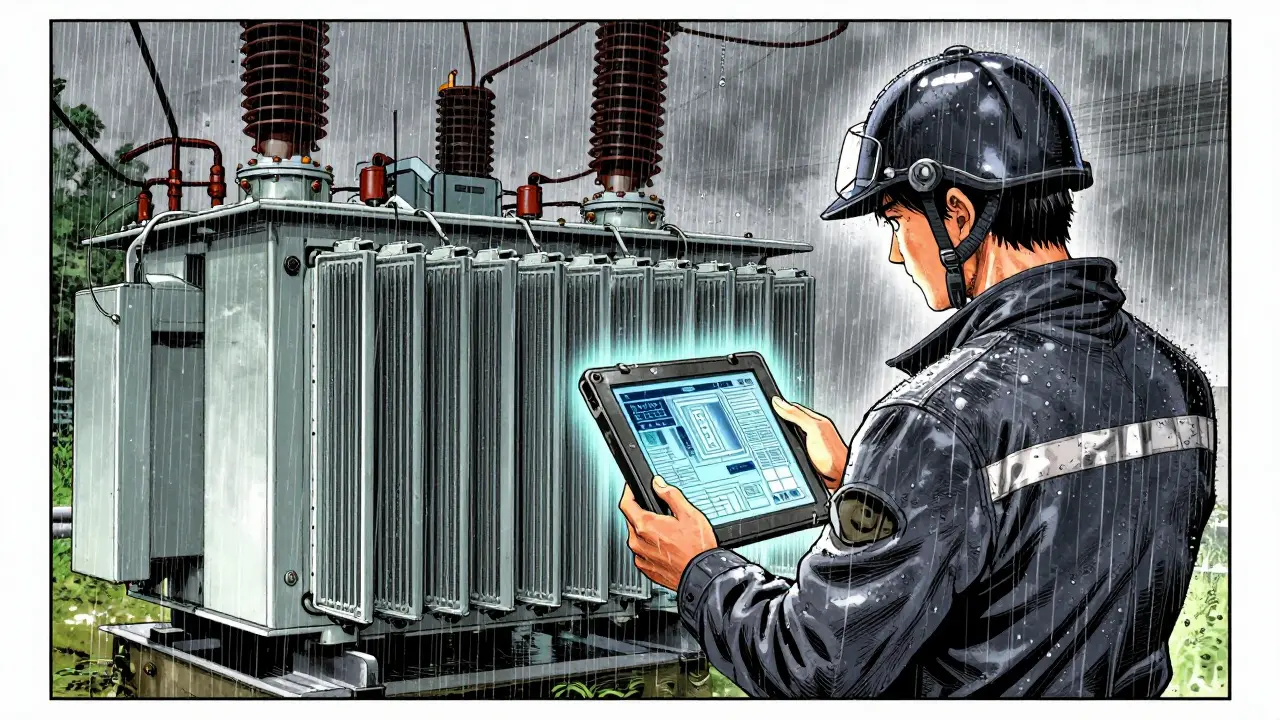
Imagine a storm hits your neighborhood. The power goes out. Your phone buzzes with an instant text: "We know you’re without power. Crews are dispatched. Expected restoration: 4 hours." No hold music. No vague "we are working on it" emails. Just clear, real-time info. Meanwhile, the technician arriving at your transformer isn’t digging through dusty paper manuals to find safety protocols. Their tablet is already showing the exact repair steps, updated for today’s weather conditions.
This isn’t science fiction. It’s what happens when energy and utilities companies plug Generative AI into their operations. As of 2026, this technology has moved beyond hype to become a critical tool for managing grid reliability, calming frustrated customers, and keeping field crews safe and efficient. We are seeing a shift from reactive fixes to proactive, intelligent management across the entire utility sector.
The Crisis of Communication During Outages
For decades, the biggest complaint during a blackout hasn’t been the darkness itself-it’s the silence. Customers call in droves, only to face hour-long wait times or generic automated messages that offer no real help. This friction destroys trust. When people can’t get answers, they panic, they complain on social media, and they lose faith in their provider.
Outage Management Systems (OMS) have traditionally handled ticket routing, but they weren’t built for natural language conversation. Enter Generative AI. By connecting Large Language Models (LLMs) directly to OMS data, utilities can now automate customer notifications at scale. These systems don’t just send alerts; they understand context. If a transformer blows in a residential zone versus a hospital district, the AI tailors the message accordingly.
Here is how it works in practice:
- Instant Reporting: Customers use voice or text to report issues. The AI extracts location, severity, and type of fault instantly, bypassing the need for a human agent to ask repetitive questions.
- Proactive Updates: Instead of waiting for customers to call, the system pushes SMS or app notifications with estimated restoration times (ETRs). These ETRs aren’t guesses; they are calculated by analyzing historical patterns, current crew locations, and weather forecasts.
- Complex Routing: If a question is too complex-like billing disputes mixed with outage concerns-the AI seamlessly routes the user to a human specialist, providing them with a full transcript so the customer doesn’t have to repeat themselves.
The result? Wait times drop drastically. Customer sentiment improves even during bad events because transparency replaces uncertainty. Support teams stop drowning in simple inquiries and focus on high-value tasks.
Empowering Field Technicians with Intelligent Guides
While customers wait for power to return, field technicians are under immense pressure. They are often working in dangerous conditions, dealing with legacy equipment, and navigating complex regulatory requirements. In these moments, every second counts. Digging through PDF manuals or calling a supervisor for a specific torque specification can delay repairs and increase safety risks.
Generative AI acts as an intelligent personal assistant for these workers. Integrated into existing Field Service Management platforms, these AI tools provide real-time access to critical knowledge. A technician can ask, "What is the safety protocol for this specific transformer model in wet conditions?" and receive an immediate, accurate answer pulled from thousands of pages of documentation.
This capability transforms how work gets done:
- Safety First: AI assistants remind workers of mandatory safety checks before they touch live lines, reducing accident rates.
- Regulatory Compliance: Regulations change frequently. AI ensures technicians always follow the latest local codes without needing constant retraining.
- Faster Diagnostics: By describing symptoms or uploading photos of damaged components, technicians get instant troubleshooting advice, helping them identify root causes like loose cotter pins or vegetation encroachment faster.
This isn’t about replacing human expertise. It’s about augmenting it. Experienced engineers still make the final calls, but they do so with better information, faster. This leads to higher first-time fix rates and less downtime for customers.
Predictive Maintenance: Stopping Failures Before They Happen
The true power of Generative AI lies not just in responding to problems, but in preventing them. Traditional maintenance schedules are often rigid-replace parts every X years, regardless of their actual condition. This is inefficient. You might replace good parts too early, wasting money, or leave failing parts in place too long, risking outages.
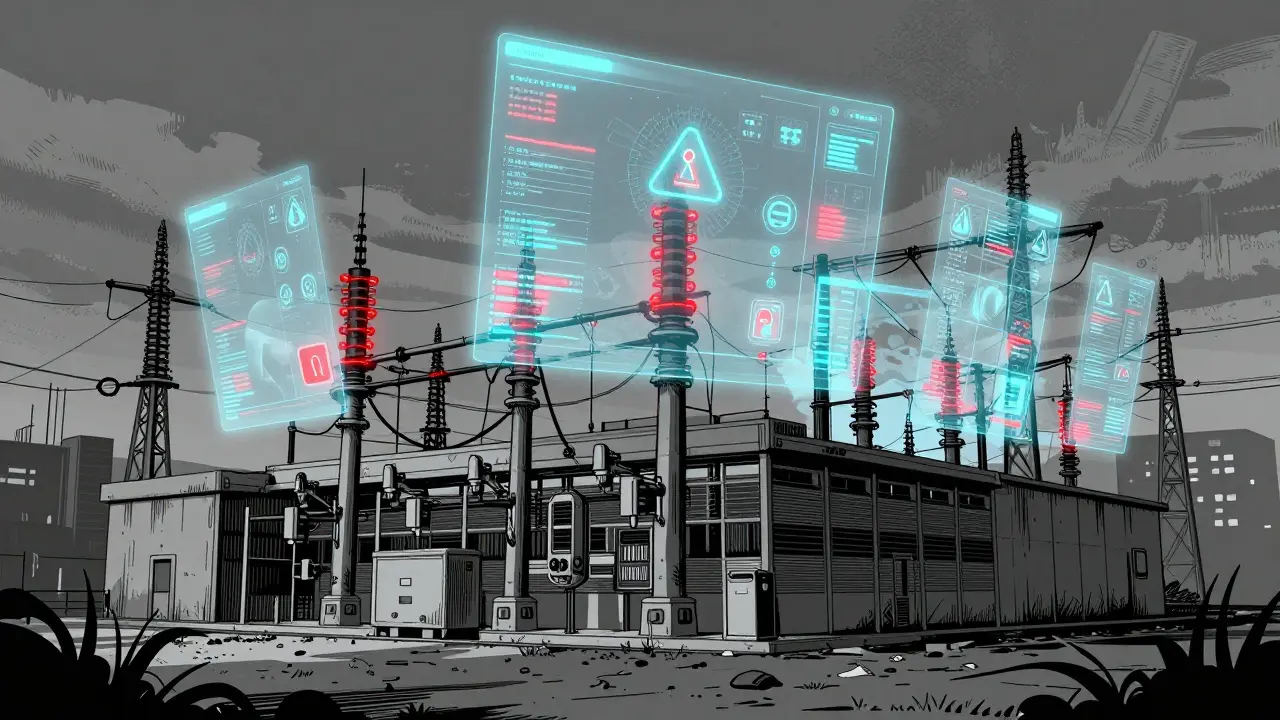
GenAI changes this by generating synthetic failure scenarios. It learns from years of historical data-including SCADA logs, weather patterns, load profiles, and sensor readings-to predict how equipment might fail under specific future conditions. For example, it can simulate how a heatwave combined with increased electric vehicle charging demand will stress a specific substation.
By comparing these AI-generated scenarios with real-time monitoring data, utilities can catch anomalies earlier than standard threshold-based alerts. This approach has led to significant business impacts:
- Cost Reduction: Industry data shows maintenance costs dropping by an average of 30% because resources are deployed only where needed.
- Extended Asset Life: Equipment lasts longer because it’s maintained based on actual wear and tear, not arbitrary calendars.
- Improved Uptime: Machine uptime improvements of 10-20% are common, meaning fewer unexpected blackouts.
73% of utility executives now consider AI-driven preemptive repair essential for asset optimization. It shifts the paradigm from "break-fix" to "predict-prevent."
Smart Grid Optimization and Renewable Integration
As grids become more complex with the addition of solar panels, wind farms, and EV chargers, traditional management methods struggle. Energy flows both ways now, making balance harder to maintain. Generative AI helps manage this chaos by optimizing supply and demand predictions in real time.
AI systems analyze usage patterns across neighborhoods to rebalance distribution loads automatically. They can prevent overstrain on specific grid segments before it happens. They also coordinate operations across different utilities-electric, gas, and water-using shared models to improve overall infrastructure resilience. For instance, predicting low-voltage events or pipe pressure drops allows for preemptive adjustments that keep services running smoothly for residents.
This level of automation enables self-learning systems to make minor grid adjustments autonomously, improving performance beyond what traditional analytics could achieve. It’s crucial for supporting the transition to renewable energy sources, which are inherently variable.
Water Utilities: A Thirst for Efficiency
It’s not just electricity. Water utilities face similar challenges: aging infrastructure, resource scarcity, and high operational costs. GenAI applications here are equally transformative. Municipal providers use AI to detect leaks and abnormal usage patterns in real time, minimizing water loss and preventing infrastructure damage.
AI predicts failures in pumps and treatment systems, enabling condition-based maintenance rather than emergency repairs. It also models rainfall and demand forecasts to better manage reservoirs and drought risk. By redefining energy utilization in treatment processes, especially during peak periods, water utilities lower expenses while conserving vital resources.
Implementation Challenges and Risks
Adopting Generative AI isn’t plug-and-play. Utilities deal with legacy systems that are decades old. Integrating modern AI with these outdated infrastructures requires careful architectural planning. Data quality is another hurdle. AI is only as good as the data it feeds on. Garbage in, garbage out.
There are also risks to mitigate:
- False Positives: Synthetic outputs must be validated by subject matter experts to avoid modeling errors that could lead to unnecessary maintenance or ignored threats.
- Overfitting: Models trained only on historical data might miss new failure modes caused by changing environmental conditions or new technologies like EVs.
- Governance: Clear protocols are needed for human escalation. AI should assist, not replace, human judgment in critical infrastructure decisions.
Successful implementations start small. Pilot programs focusing on specific asset classes, like switchgear or transformers, allow organizations to test accuracy and refine alert logic before scaling up. Deployment timelines vary, with some utilities seeing pilot results in 2-3 months, while comprehensive integration takes 6-12 months.
How does Generative AI improve outage communication compared to traditional methods?
Traditional methods rely on static templates and manual updates, leading to delays and generic messages. Generative AI connects directly to Outage Management Systems to provide real-time, personalized updates via SMS or apps. It calculates Estimated Restoration Times (ETRs) using live data and historical patterns, reducing customer anxiety and support call volumes significantly.
Can AI replace field technicians in utility operations?
No, AI does not replace technicians. Instead, it acts as an intelligent assistant. It provides instant access to safety protocols, repair guides, and regulatory updates, allowing technicians to work faster and safer. Human expertise remains critical for complex decision-making and physical repairs.
What is the cost benefit of using Generative AI for predictive maintenance?
Industry data indicates that implementing AI-driven predictive maintenance can reduce maintenance costs by an average of 30%. It also improves machine uptime by 10-20% and extends the lifespan of physical assets by shifting from scheduled replacements to condition-based interventions.
How long does it take to implement Generative AI in a utility company?
Deployment timelines vary based on existing infrastructure. Pilot programs focusing on specific assets can show results within 2-3 months. Full-scale integration with legacy systems and comprehensive deployment typically takes 6-12 months, requiring careful data validation and staff training.
Is Generative AI used in water utilities as well as electric grids?
Yes. Water utilities use GenAI to detect leaks in real time, predict pump failures, optimize energy use in treatment plants, and model rainfall for reservoir management. These applications help conserve water resources and prevent service disruptions similar to those in electric grids.



Comments
David Smith
Oh great, another tech solution to fix the mess we made. I just want my power back without having to talk to a robot that thinks it's smarter than me. The drama of waiting in the dark is bad enough without an AI telling me exactly how long I have to suffer. It feels like they're just trying to automate the indifference.
May 15, 2026 AT 01:22
Lissa Veldhuis
honestly this whole generative ai thing is such a buzzword fest and i am so tired of hearing about how it's gonna save the world while we still cant even get our trash picked up on time lol. you think a chatbot is gonna care if my hospital equipment fails? no way. it's all just corporate speak for cutting jobs and making profits while the rest of us freeze in the dark. typical.
May 16, 2026 AT 03:05
Michael Jones
think about it though. what if we could actually predict these things before they happen? imagine a grid that learns from its mistakes and adapts in real time. it's not just about fixing wires it's about creating a living system that breathes with the community. we have the tools now why are we still stuck in the past?
May 17, 2026 AT 12:39
allison berroteran
I really appreciate the detailed breakdown of how this technology can help field technicians stay safe, because it seems like such a crucial aspect that often gets overlooked in these discussions about efficiency and cost savings, and I wonder if there are any specific case studies where we saw a significant reduction in accidents due to these AI assistants providing real-time safety protocols during high-risk operations in severe weather conditions.
May 18, 2026 AT 00:59
Gabby Love
The part about predictive maintenance reducing costs by 30% is interesting but it depends heavily on data quality which is often a problem in legacy systems so implementation needs to be careful and gradual rather than a big bang approach that might introduce new errors into the workflow.
May 18, 2026 AT 16:18
Jen Kay
Fascinating read, truly. One must admire the sheer audacity of expecting machines to handle the nuanced emotional landscape of a customer whose power has been out for three days during a heatwave. But sure, let's trust the algorithm to tell them their feelings are invalid and their estimated restoration time is merely a suggestion based on historical averages.
May 19, 2026 AT 07:52
Michael Thomas
US infrastructure is failing because we don't invest properly. AI won't fix broken pipes or old transformers if the government doesn't fund the repairs. This is just a band-aid on a bullet hole. We need real investment not tech gimmicks.
May 19, 2026 AT 14:17
Abert Canada
Hey guys over here in Canada we are seeing similar trends but with more focus on integrating renewable sources into the grid stability models. It's cool to see how different regions are tackling the same problems with slightly different approaches. Maybe we can share some insights on how water utilities are handling drought predictions with AI.
May 19, 2026 AT 19:05