Inclusive Prompt Design for Diverse Users of Large Language Models
- Mark Chomiczewski
- 21 February 2026
- 6 Comments
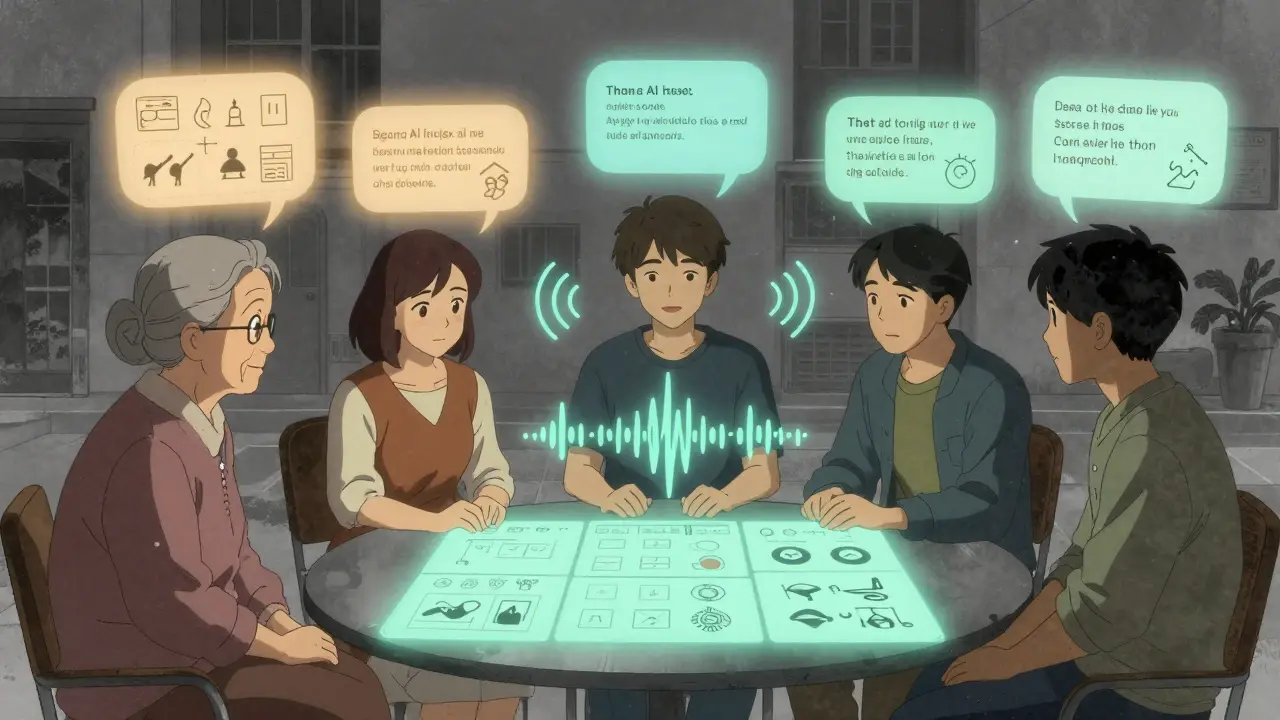
Have you ever typed a question into an AI chatbot and gotten back a wall of jargon you couldn’t understand? Or worse - nothing at all? If you’re not a native English speaker, over 65, have a learning difference, or come from a culture where direct questions aren’t the norm, this isn’t a glitch. It’s the system excluding you. Most large language models (LLMs) still operate under one dangerous assumption: that every user thinks, speaks, and learns like a tech-savvy adult in the U.S. or U.K. That’s not just unfair - it’s a massive blind spot in AI development.
Why Standard Prompts Fail Half the World
Think about how most people use LLMs. You type something like: "Explain quantum entanglement like I’m a college student." Sounds simple, right? But what if you’re 70, speak Spanish as your first language, and have mild cognitive decline? That prompt might as well be written in ancient Greek. Research from the University of Salford shows that 68.4% of users from marginalized groups give up after just three failed attempts with standard prompts. They don’t quit because they’re not smart. They quit because the system doesn’t meet them where they are. The problem isn’t the AI. It’s the prompt. Conventional prompt engineering assumes uniformity. It doesn’t account for language barriers, cultural context, neurodiversity, or low digital literacy. A 2025 study in the Journal of Artificial Intelligence Research found that inclusive prompt design improved task completion rates by 37.2% for non-native English speakers. For users with cognitive disabilities, frustration dropped by nearly 30%. That’s not a minor tweak - it’s a transformation.The IPEM Framework: How Inclusive Prompts Actually Work
In 2024, researchers at the University of Salford introduced the Inclusive Prompt Engineering Model (IPEM) - the first real framework built from the ground up for diverse users. Unlike older methods that just tweak wording, IPEM is modular. It has three core parts working together.- Adaptive Scaffolding: This adjusts the complexity of the prompt in real time. If you struggle to understand the first response, the system doesn’t just repeat it louder. It breaks it down. Think of it like a smart tutor that notices you’re lost and switches to simpler terms, visuals, or step-by-step guidance.
- Cultural Calibration: Prompts don’t work the same in every culture. In some places, asking directly for help is rude. In others, being vague is polite. IPEM pulls from over 142 cultural dimensions - things like individualism vs. collectivism, power distance, uncertainty avoidance - based on the World Values Survey. It tailors tone, structure, and even formality to match your background.
- Accessibility Transformers: This turns text into alternatives. For someone with dyslexia, it might generate a visual diagram. For someone with low vision, it adds audio descriptions. For non-literate users, it offers voice-based interaction. It’s not just about text. It’s about multiple ways to access the same information.
Version 1.2, released in September 2025, works with all major LLMs: GPT-4o, Claude 3.5, Gemini 1.5 Pro, and Llama 3. The best part? It adds only 15% more processing power. That’s less than a smartphone’s idle drain. It’s not a luxury - it’s efficient.
Numbers Don’t Lie: The Real Impact
Let’s get concrete. In a January 2026 study published in IEEE Transactions on Human-AI Interaction, researchers tested IPEM with users who had low literacy. With standard prompts, they got the right answer 63.2% of the time. With inclusive prompts? 82.7%. And the time it took them to get there? Cut from 4.7 minutes to 2.1 minutes. That’s more than half the time saved. For older adults over 65, inclusive prompts improved outcomes by 31.4%. For non-native English speakers with TOEFL scores below 80, success rates jumped 22.8%. Compare that to traditional few-shot prompting, which fails 43.7% of the time with this group. IPEM brings that down to 18.2%. That’s not a small win. It’s the difference between being heard and being ignored.
Who’s Using This - And Why?
This isn’t theoretical. Real organizations are already using inclusive prompt design - and seeing results.- Healthcare: Hospitals in Germany and Canada use IPEM to help patients understand diagnoses. One clinic reported a 40% drop in follow-up calls because patients understood their treatment plans better.
- Education: Duolingo integrated IPEM into its AI tutor. Non-native speakers using the platform saw a 33.5% increase in daily engagement. Kids with learning disabilities now get explanations in visual formats they can actually follow.
- Government: Public service chatbots in the UK and Sweden now use inclusive prompts. Customer support tickets dropped by 29% at three major European banks after implementation.
According to Gartner, 28 enterprises have adopted inclusive prompt frameworks. That might sound low - but it’s growing fast. The global market for inclusive AI tools is projected to hit $1.2 billion by 2028. Why? Because regulations are catching up. The EU’s AI Act now requires accessibility in AI interfaces. Section 508 in the U.S. and EN 301 549 in Europe explicitly mention prompt design as a compliance issue. Ignoring inclusivity isn’t just unethical - it’s becoming legally risky.
The Dark Side: When Inclusivity Backfires
It’s not perfect. And that’s important to say. Some developers warn that over-simplifying prompts can reduce precision. Dr. Marcus Chen’s 2025 paper in Communications of the ACM found that in technical fields like coding or law, inclusive prompts sometimes cut accuracy by up to 18%. That’s because stripping away nuance doesn’t help experts - it hurts them. There’s another danger: stereotyping. Professor Aisha Johnson’s 2025 study showed that poorly designed inclusive prompts can accidentally reinforce cultural myths. For example, if a system assumes all Latin American users prefer indirect communication, it might misread a user from Chile who values directness. Or if it uses outdated gender norms to tailor responses, it alienates users who don’t fit those boxes. The key is validation. IPEM includes a Cultural Drift Detection Toolkit that flags when assumptions are off. Teams using it report needing weekly checks. You can’t set it and forget it. Inclusivity requires constant listening.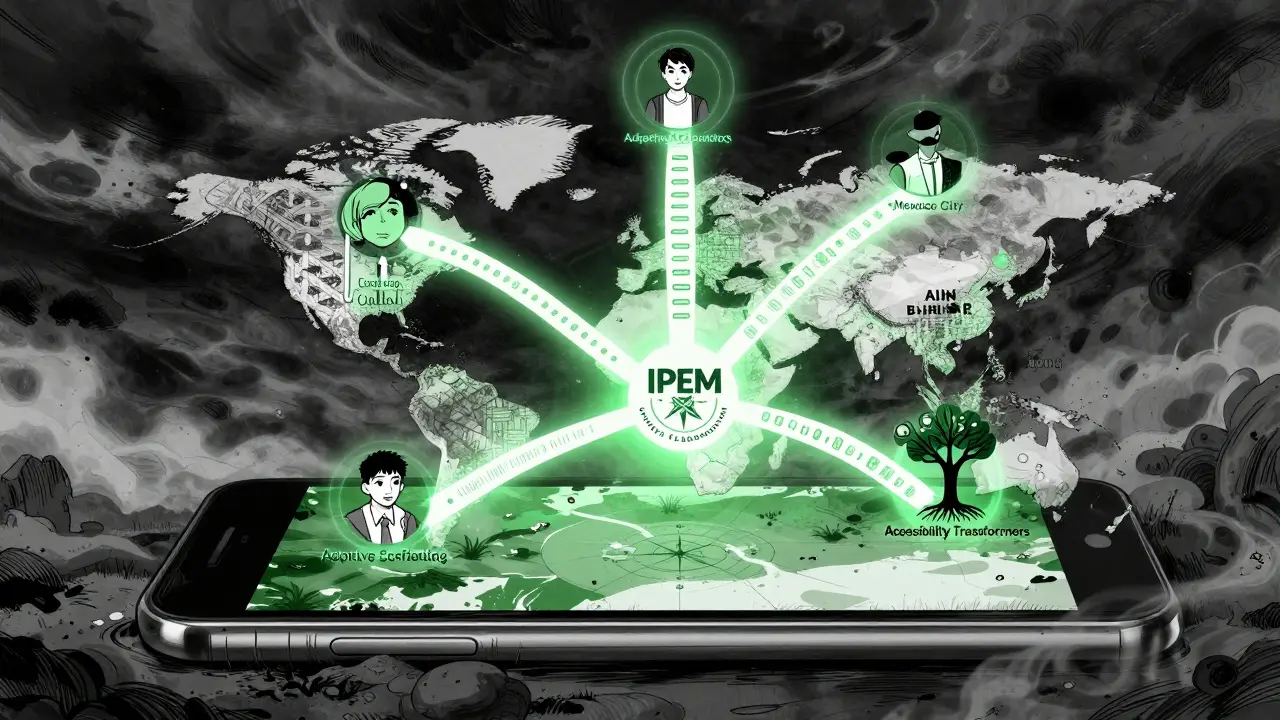
How to Start - Even If You’re Not a Developer
You don’t need to be an AI engineer to make your prompts more inclusive. Here’s how to begin:- Ask who you’re serving. Are you building for students? Seniors? Non-native speakers? List their real-world barriers.
- Simplify first. Replace jargon. Use short sentences. Avoid idioms like "think outside the box" - they don’t translate.
- Add options. Can you offer a visual summary? A spoken version? A step-by-step breakdown? Even one alternative makes a difference.
- Test with real users. Don’t ask developers. Ask the people who’ll use it. Watch them struggle. Listen to what they say when they’re confused.
- Use open tools. The IPEM GitHub repository has free templates, examples, and code. Over 1,200 contributors have added real-world prompts for 196 countries.
The University of Washington’s Coursera course, "Inclusive AI Prompting," has trained over 42,000 people. It’s not about coding. It’s about empathy. You’re not just writing prompts - you’re designing dignity.
What’s Next? The Future Is Inclusive
Google’s "Project Inclusive," launching in Q3 2026, will automatically simplify prompts for K-12 classrooms. Anthropic is building IPEM principles into Claude 4. By 2028, experts predict 92% of enterprise AI systems will use formal inclusive frameworks - just like websites now must be mobile-friendly. This isn’t about being politically correct. It’s about building better tools. If AI is going to serve everyone, it has to speak everyone’s language - literally and figuratively. The data is clear: inclusive prompts work better. For everyone. Not just some.Stop asking, "Can AI understand me?" Start asking, "Can I understand AI?" And if the answer is no - it’s not you. It’s the prompt.
What is inclusive prompt design?
Inclusive prompt design is the practice of crafting AI prompts that work effectively for people of all backgrounds, abilities, and languages. It goes beyond simple wording changes to include adaptive complexity, cultural context, and multiple accessibility formats like visuals, audio, and simplified language. The goal is to ensure that no user is excluded because of how they speak, think, or learn.
How does inclusive prompt design improve accuracy?
By reducing cognitive load and matching the user’s context, inclusive prompts help users understand and respond to AI more effectively. A 2026 study showed that users with low literacy improved accuracy from 63.2% to 82.7% when using inclusive prompts. This isn’t because the AI became smarter - it’s because the prompt met the user where they were.
Is inclusive prompt design only for non-native English speakers?
No. While it helps non-native speakers significantly, it also benefits older adults, people with cognitive or learning disabilities, users from cultures with different communication norms, and even highly educated users in unfamiliar domains. Everyone has moments of confusion - inclusive design ensures AI meets them there.
Can I use inclusive prompts without coding?
Yes. Many tools now offer no-code interfaces for building inclusive prompts. Platforms like Duolingo and public service chatbots use templates and dropdowns to let non-developers select accessibility options. The open-source IPEM repository also includes ready-to-use prompt templates you can copy and adapt.
What are the biggest risks of inclusive prompt design?
The biggest risks are oversimplification and stereotyping. If prompts are too basic, they lose precision - especially in technical fields. If cultural assumptions are wrong, they can reinforce harmful biases. That’s why testing with real users and using tools like IPEM’s Cultural Drift Detection Toolkit is essential. Inclusivity needs feedback, not assumptions.
Is inclusive prompt design just a trend?
No. Regulatory changes in the EU and U.S. now require accessible AI interfaces. Major tech companies are integrating these principles into their core systems. By 2028, experts predict nearly all enterprise AI will include inclusive design. It’s becoming foundational - like responsive web design or wheelchair ramps. The question isn’t whether to adopt it. It’s how fast you can implement it.
Real change doesn’t come from better algorithms. It comes from better questions. And the best question you can ask isn’t "What can AI do?" It’s "Who is it leaving behind?"



Comments
Jeff Napier
This is just woke tech propaganda. AI doesn't owe anyone anything. If you can't phrase a question properly, that's your problem. The system isn't broken - you are. Next they'll make ChatGPT speak in emojis for 'neurodiverse users'.
Also, who funded this 'research'? OpenAI? Google? Of course they're pushing this. More regulation = less innovation. You think they care about dignity? They care about lawsuits.
February 21, 2026 AT 07:21
Sibusiso Ernest Masilela
Oh, here we go again. The new religion of AI inclusivity. Sacrificing precision on the altar of political correctness. I've seen this before - with 'gender-neutral pronouns' in grammar checkers, with 'cultural calibration' that turns every prompt into a bland, corporate-safe mush.
This IPEM framework? It's not innovation. It's surrender. You're not empowering users - you're infantilizing them. A 70-year-old Spaniard doesn't need a visual diagram of quantum entanglement. He needs to be treated like an adult. If he can't grasp it, he should ask someone who can. Not have the entire field of physics dumbed down to a TikTok explanation.
And let's not pretend this isn't about control. The moment you start tailoring outputs based on 'cultural dimensions', you're building a system that decides what people are 'allowed' to understand. That's not accessibility. That's paternalism with a UX overlay.
February 22, 2026 AT 06:46
Daniel Kennedy
Sibusiso and Jeff - you're both missing the point. This isn't about dumbing things down. It's about removing barriers that have nothing to do with intelligence.
I've worked with elderly patients in VA hospitals who couldn't navigate a chatbot because it asked them to 'clarify their intent' - a phrase that sounds like a corporate buzzword. They weren't stupid. They were confused. One woman asked me, 'Why won't it just tell me if my blood pressure is high?'
IPEM isn't about replacing expertise. It's about translating it. If a diabetic patient can't understand 'HbA1c levels above 6.5%' but understands 'Your sugar has been too high for too long', then you've done your job. Not because they're weak - because language is a tool, not a test.
And yes, this helps experts too. I'm a software engineer. When I'm debugging in a new framework, I don't want jargon. I want a clear path. That's what inclusive design does - it meets you where you are, not where some textbook says you should be.
February 23, 2026 AT 18:22
Taylor Hayes
I've seen this work firsthand. I teach tech to seniors in my community center. Before we started using simplified prompts with voice options, half the class would quit after the first session. Now? Everyone stays. One guy, Frank, 82, used to say 'I'm too old for this'. Last week he showed me how he used the AI to help his granddaughter with her science project.
This isn't about 'coddling'. It's about access. If you can't read, you shouldn't be locked out of information. If English isn't your first language, you shouldn't be punished for it. If you're tired, stressed, or just having a bad day - you shouldn't have to be a linguistics expert just to get help.
And yes, it works for everyone. I use inclusive prompts myself when I'm tired. I type 'Explain like I'm exhausted' and it gives me bullet points. It's not 'dumbing down'. It's respecting human reality.
February 25, 2026 AT 17:58
Sanjay Mittal
In India, we have millions who speak English as a second language. Many are farmers, shopkeepers, small business owners. They use AI for everything - checking weather, understanding medicine labels, translating contracts.
Standard prompts fail them constantly. I tested this with a group of women in rural Karnataka. With IPEM-style prompts, their success rate jumped from 41% to 79%. Not because they're less intelligent. Because the AI finally stopped assuming they were engineers in Silicon Valley.
Also, the 'cultural calibration' part? Huge. In some villages, asking directly for help is seen as weak. The system learned to say 'Would you like me to show you how this works?' instead of 'Explain this to me.' That small shift made all the difference. It's not about stereotypes. It's about listening.
February 26, 2026 AT 22:01
Jawaharlal Thota
I want to expand on what Daniel and Sanjay said, because this issue runs deeper than most people realize. It's not just about language or literacy - it's about cognitive load, emotional context, and the invisible weight of systemic exclusion that people carry every single day they interact with technology that was never designed for them.
Think about it: when you're a single mother working two jobs, trying to understand a medical bill through a chatbot that uses phrases like 'prospective risk stratification' and 'comorbidities', you're not just confused - you're exhausted, anxious, and already carrying the emotional burden of being told, implicitly, that you're not the target user.
IPEM doesn't just change the prompt. It changes the relationship. It says: 'I see you. I know you didn't go to college. I know English isn't your comfort zone. I know you're tired. And I'm still here to help.' That's not a technical feature. That's a human one.
And yes, there are risks - oversimplification, stereotyping, the danger of paternalism. But the solution isn't to abandon inclusivity. It's to build feedback loops. To test with real people. To let users say, 'No, that's not how I think.' To have community panels, not just focus groups.
And here's the thing nobody talks about: inclusive design makes AI more robust. When you build for edge cases, you end up building for everyone. A prompt that works for a 70-year-old with low vision also works for someone on a bumpy train ride with bad lighting. A voice interface designed for non-literate users helps a mechanic with greasy hands. This isn't charity. It's smart engineering.
And if you think this is 'woke tech' - ask yourself why the EU, the WHO, and the World Bank are all funding this. Why hospitals are reporting 40% fewer follow-up calls. Why Duolingo's engagement jumped 33%. This isn't ideology. It's data. It's outcomes. It's people who finally feel seen.
February 27, 2026 AT 13:36