Security Vulnerabilities and Risk Management in AI-Generated Code: A 2026 Guide

- Mark Chomiczewski
- 28 July 2026
- 0 Comments
By mid-2026, nearly half of the code in many modern software projects is written by machines. If you are using GitHub Copilot, an AI-powered code completion tool developed by GitHub and OpenAI that assists developers by suggesting lines or blocks of code based on context, Cursor, or Amazon CodeWhisperer, this statistic hits close to home. The problem isn't that these tools write bad code. The problem is that we trust them too much. When a developer accepts an AI suggestion without reading it line-by-line, they are essentially outsourcing their judgment to a model that has no concept of your specific threat model.
This shift from experimental novelty to industry standard has created a new class of security risks. We aren't just fighting human error anymore; we are fighting automated complacency. As attackers begin using AI to find and exploit weaknesses faster than ever, understanding how to secure AI-generated code is no longer optional-it is survival.
The Illusion of Quality: Why AI Code Looks Safe But Isn't
You might assume that because AI models are trained on millions of lines of high-quality open-source code, their output must be secure. It’s a logical assumption, but it’s dangerously wrong. The core issue lies in how Large Language Models (LLMs) work. They predict the next likely token based on probability, not logic. They don’t "know" what a SQL injection is; they know that in similar contexts, certain patterns often appear together.
Research highlights this gap clearly. A study by NYU evaluated code generated by GitHub Copilot across 89 security-relevant scenarios and found that approximately 40% contained vulnerabilities. Similarly, a 2024 analysis by Snyk and Backslash discovered that 36% of AI-generated snippets had at least one security flaw when tested against common CWE (Common Weakness Enumeration) patterns. Interestingly, GitHub’s internal research argued that AI reflects the quality of its training data. If your repository is full of insecure practices, Copilot will mirror them. If your codebase is pristine, the suggestions tend to be better. But "better" doesn’t mean "safe."
The real danger is psychological. Developers report reviewing AI-generated code less thoroughly than human-written code. This "automation bias" means that subtle flaws slip through peer reviews and into production environments where they can be exploited.
Top Vulnerabilities in AI-Generated Code
When AI gets security wrong, it usually fails in predictable ways. Understanding these patterns allows you to build targeted defenses. Here are the most common vulnerabilities introduced by AI assistants:
- CWE-79 (Cross-Site Scripting/XSS): AI often generates code that inserts user input directly into HTML without proper encoding. While frameworks like React and Vue auto-escape content, AI frequently suggests using
innerHTMLor server-side templates that lack this protection, leaving doors open for script injection. - CWE-89 (SQL Injection): This remains a classic pitfall. AI models sometimes generate string concatenation for database queries instead of parameterized statements, especially if the prompt implies a quick-and-dirty approach.
- CWE-798 (Hardcoded Credentials): Perhaps the most embarrassing yet common error. AI loves to provide complete, runnable examples. To make an example run immediately, it often hardcodes API keys, tokens, or passwords directly into the source code. Developers copy-paste this, commit it to Git, and expose their infrastructure.
- CWE-22 (Path Traversal): AI tends to focus on the "happy path"-the expected user behavior. It rarely adds boundary checks for file paths. A simple file upload handler suggested by AI might skip validation of file types or sizes, allowing attackers to traverse directories and access sensitive system files.
- Poor Error Handling: AI often wraps code in broad exception handlers that suppress errors entirely or, worse, expose internal stack traces to the end-user. Leaking stack traces gives attackers a roadmap of your application’s architecture.
| Vulnerability Type | CWE ID | Why AI Generates It | Risk Level |
|---|---|---|---|
| Cross-Site Scripting (XSS) | CWE-79 | Lacks context about framework auto-escaping; prioritizes functionality over sanitization | High |
| SQL Injection | CWE-89 | Mimics legacy code patterns found in training data; ignores parameterized best practices | Critical |
| Hardcoded Credentials | CWE-798 | Aims for "runnable" examples; assumes local development context | Critical |
| Path Traversal | CWE-22 | Fails to anticipate malicious input; focuses on expected file names | High |
| Insecure Deserialization | CWE-502 | Uses default deserialization libraries without safety checks | Critical |
The Arms Race: AI vs. AI in Cybersecurity
We are entering a phase where defenders and attackers both use AI. Trend Micro’s 2026 predictions highlight that attackers will use AI to discover and weaponize vulnerabilities faster than traditional defenses can respond. Imagine a threat actor using a coding-capable LLM like WormGPT to write polymorphic malware-a script that changes its code signature with every execution to evade detection. Or consider prompt injection attacks, where adversaries trick AI systems into executing malicious commands by hiding payloads in Unicode homoglyphs or emoji smuggling.
These techniques render static keyword-based security measures obsolete. If your firewall looks for specific strings of malicious code, an AI-driven attacker can obfuscate those strings instantly. This creates a dynamic environment where security tools must also be AI-enhanced to keep pace. For instance, recent developments show that AI systems like AISLE have successfully discovered 15 CVEs (Common Vulnerabilities and Exposures) between late 2025 and early 2026, including critical OpenSSL zero-days. This dual capability-AI introducing bugs and AI finding bugs-defines the current landscape.
Practical Risk Management Strategies
So, how do you protect your codebase? You cannot stop developers from using AI; the productivity gains are too significant. Instead, you must manage the risk through rigorous testing, automated scanning, and cultural shifts. Here is a practical checklist for securing AI-generated code:
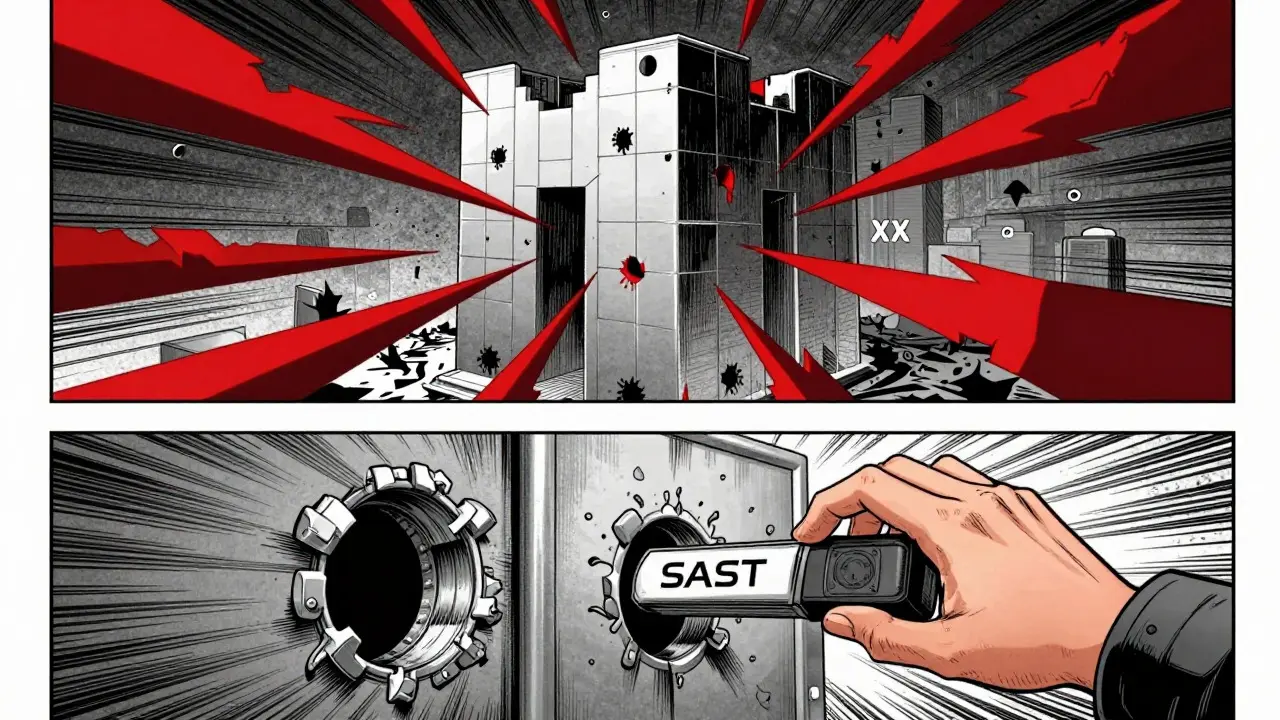
- Deploy Static Application Security Testing (SAST): Tools like Semgrep, SonarQube, and Checkmarx scan source code for vulnerabilities regardless of who wrote it. An AI-generated SQL injection looks identical to a human-written one to a SAST tool. Enable rules specifically for the CWEs listed above (CWE-79, CWE-89, CWE-798, etc.).
- Implement Secret Detection: Use dedicated secret scanners like GitGuardian or built-in features in SonarQube. Configure pre-commit hooks to block any code containing hardcoded credentials before it reaches the repository.
- Enforce Human Code Review: Mandate that all AI-generated code undergoes peer review. Train reviewers to look specifically for the "happy path" fallacy-asking, "What happens if the input is malicious?" rather than just "Does this work?"
- Validate Dependencies: AI sometimes suggests obscure or deprecated libraries to solve niche problems. Ensure your dependency management tools check for known vulnerabilities in new packages.
- Use Environment Variables: Establish a strict policy that no secrets exist in source code. All configuration should come from environment variables or secret managers like AWS Secrets Manager or HashiCorp Vault.
Regulatory Landscape: The EU AI Act and Compliance
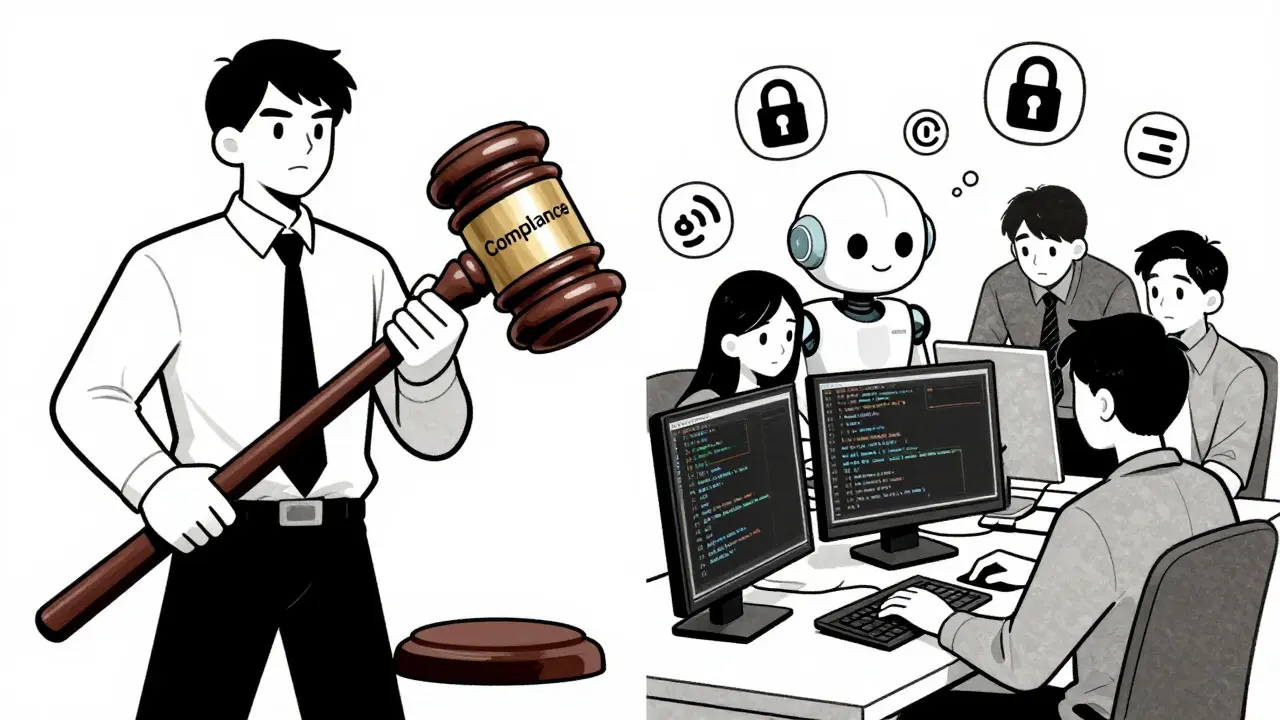
As of August 2026, the EU AI Act is fully applicable, bringing new compliance requirements for organizations using AI in software development. Providers must ensure AI-generated content is machine-readable and detectable. Failing to maintain robust watermarking or transparency mechanisms can result in fines of up to 7% of global turnover. More importantly, if harmful content or misinformation spreads due to unlabeled synthetic media, it constitutes a compliance violation.
For developers, this means documentation matters. You need to track which parts of your codebase were AI-assisted. This isn't just about liability; it's about accountability. If a vulnerability arises, knowing whether it came from a human decision or an AI suggestion helps in post-mortem analysis and future prevention.
Building a Culture of Secure AI Coding
Technology alone won't solve this. You need a cultural shift. Encourage developers to treat AI as a junior programmer-one that is incredibly fast but lacks experience and judgment. Ask questions like:
- "Did the AI validate the input?"
- "Are there any secrets in this snippet?"
- "Is this library well-maintained?"
Integrate security into the prompt engineering process. Teach developers to write prompts that explicitly request secure code. For example, instead of asking "Write a function to parse JSON," ask "Write a secure function to parse JSON, handling potential null values and preventing prototype pollution." Small changes in how we interact with AI can lead to significantly safer output.
Finally, remember that AI is a tool, not a replacement for expertise. The most secure systems will be those where human oversight and automated defense mechanisms work in tandem. By staying vigilant, leveraging the right tools, and fostering a culture of skepticism towards automated output, you can harness the power of AI without compromising your security posture.
Is AI-generated code less secure than human-written code?
Not necessarily. Studies show that the vulnerability rate in AI-generated code is comparable to human-written code in the same repositories. However, AI tends to introduce specific types of vulnerabilities more frequently, such as hardcoded credentials and missing input validation, because it mimics patterns from training data without understanding context. The greater risk comes from developers trusting AI output too much and reviewing it less thoroughly.
What are the most common vulnerabilities in AI-generated code?
The most common vulnerabilities include Cross-Site Scripting (XSS), SQL Injection, hardcoded credentials (API keys/passwords), path traversal errors, and poor error handling that exposes stack traces. These occur because AI models prioritize functional correctness and "happy path" scenarios over security edge cases.
How can I prevent hardcoded credentials in AI-generated code?
Use secret detection tools like GitGuardian or SonarQube integrated into your CI/CD pipeline. Implement pre-commit hooks that scan for patterns resembling API keys or passwords. Additionally, train developers to always replace hardcoded values with environment variables or references to secret managers immediately after accepting AI suggestions.
Does the EU AI Act affect software developers using AI coding assistants?
Yes. The EU AI Act, fully effective in August 2026, requires transparency around AI-generated content. Organizations may need to document AI usage in their codebases to ensure accountability and compliance. Failure to adhere to transparency and safety standards can result in significant fines, making it crucial for teams to track and manage AI contributions.
Can AI help fix security vulnerabilities?
Absolutely. While AI introduces vulnerabilities, it can also detect them. Advanced AI systems like AISLE have successfully identified critical CVEs, including zero-day exploits. Integrating AI-powered SAST tools and code review assistants can help catch issues faster than manual methods, provided humans remain in the loop to validate findings.
What is "vibe coding" and why is it risky?
Vibe coding refers to a style of development where programmers rely heavily on AI to generate code with minimal understanding of the underlying logic. This approach is risky because it leads to silent introduction of bugs and backdoors. Without deep comprehension, developers may miss subtle security flaws or architectural inconsistencies that only become apparent under attack.
How does prompt injection affect code generation security?
Prompt injection occurs when malicious inputs manipulate an AI model's behavior. In code generation, this could lead to the AI inserting hidden malicious functions or bypassing security constraints. Attackers might use obfuscated prompts to trick the model into generating vulnerable or exploitable code, which then enters the production environment unnoticed.