Author: Mark Chomiczewski - Page 6

- Mark Chomiczewski
- Aug, 17 2026
- 7 Comments
Prompt Chaining vs Single-Shot: Designing Multi-Step LLM Workflows
Learn when to use prompt chaining vs single-shot prompts. We compare accuracy, cost, and latency to help you design reliable multi-step LLM workflows.

- Mark Chomiczewski
- Aug, 16 2026
- 10 Comments
Pharmaceutical Generative AI: Optimizing Trial Design, Protocols, and Regulatory Writing
Discover how generative AI is revolutionizing pharmaceutical clinical trials by speeding up design, improving patient recruitment, and automating regulatory writing.

- Mark Chomiczewski
- Aug, 15 2026
- 0 Comments
Chain-of-Verification (CoVe): How to Stop LLM Hallucinations in 2026
Learn how Chain-of-Verification (CoVe) reduces LLM hallucinations through a 4-step self-checking process. Discover why this prompting framework outperforms standard Chain-of-Thought for factual accuracy.

- Mark Chomiczewski
- Aug, 14 2026
- 0 Comments
Post-Training Calibration for LLMs: Mastering Confidence and Abstention
Explore post-training calibration for LLMs to fix overconfidence. Learn how techniques like ORPO, AWQ, and SVD analysis enable models to express uncertainty and abstain when needed.

- Mark Chomiczewski
- Aug, 13 2026
- 0 Comments
Enterprise LLM Request Prioritization and SLA Compliance Guide
Master enterprise LLM request prioritization and SLA compliance. Learn how to implement priority-based scheduling, optimize AI gateways, and reduce latency using frameworks like vLLM and SageServe.

- Mark Chomiczewski
- Aug, 12 2026
- 0 Comments
Knowledge Distillation for LLMs: How to Train Smaller Models from Big Teachers
Learn how knowledge distillation trains smaller LLMs from big teachers to reduce costs and latency. Explore techniques, tools, and best practices for model compression.

- Mark Chomiczewski
- Aug, 11 2026
- 10 Comments
Architectural Standards for Vibe-Coded Systems: Reference Implementations
Explore architectural standards for vibe-coded systems. Learn how reference implementations and governance frameworks prevent technical debt and security risks in AI-generated software.

- Mark Chomiczewski
- Aug, 10 2026
- 0 Comments
Hardware Acceleration for Multimodal Generative AI: GPUs, NPUs, and Edge Devices
Explore how GPUs, NPUs, and edge devices accelerate multimodal generative AI. Learn about hardware bottlenecks, optimization techniques like Flash Attention, and the shift towards efficient edge computing.

- Mark Chomiczewski
- Aug, 9 2026
- 5 Comments
Logistics and Generative AI: Route Plans, Exception Handling, and Status Updates
Discover how Generative AI transforms logistics through dynamic route planning, intelligent exception handling, and automated status updates. Learn about real-world impacts, cost savings, and implementation strategies.
- Mark Chomiczewski
- Aug, 8 2026
- 0 Comments
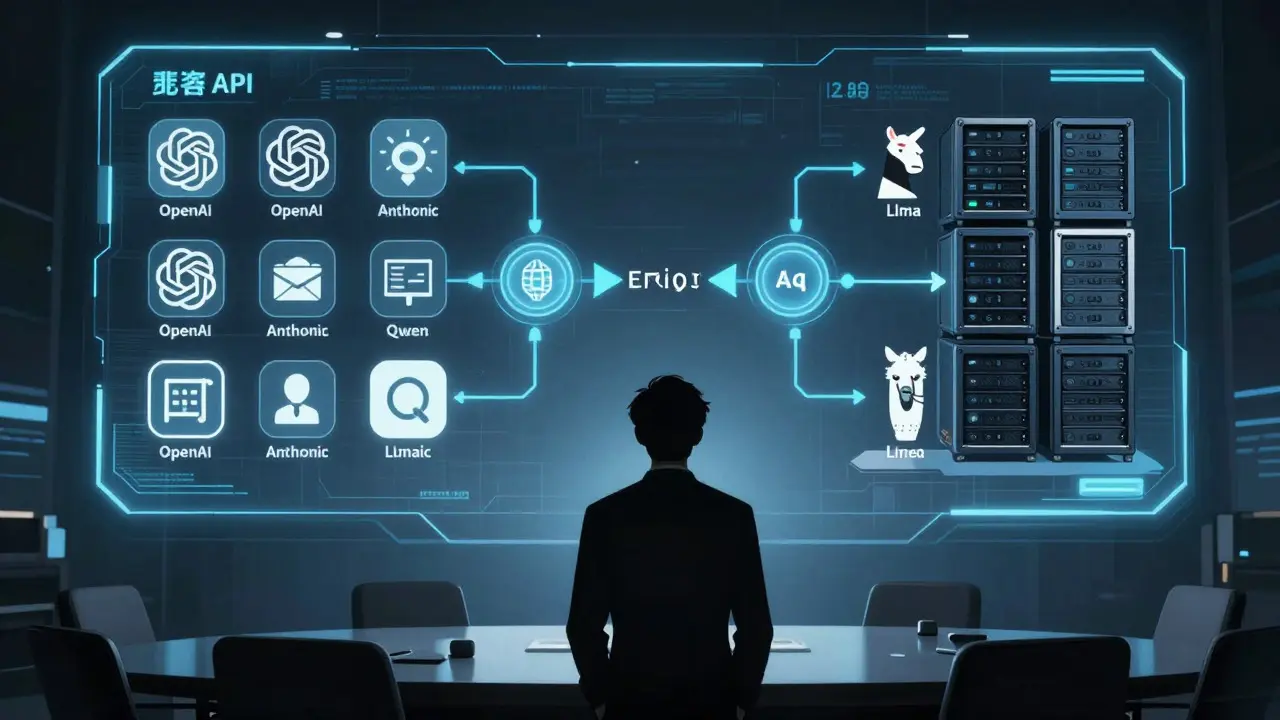
Choosing Model Families for Scalable LLM Programs: Practical Guidance
A practical guide to selecting LLM families for scalable programs in 2026. Compare proprietary options like GPT-4o and Claude with open-source leaders like Llama 4 and Qwen. Learn about costs, context windows, and infrastructure needs.

- Mark Chomiczewski
- Aug, 7 2026
- 0 Comments
How to Connect Stripe and Supabase in Vibe-Coded Apps
Learn how to securely integrate Stripe payments with Supabase in vibe-coded apps using Cursor AI. Covers webhooks, security best practices, and database setup.

- Mark Chomiczewski
- Aug, 6 2026
- 0 Comments
Context-Aware LLM Translation: How to Localize with Precision in 2026
Discover how LLMs revolutionize localization with context-aware outputs. Compare NMT vs LLM, learn implementation tips, and avoid common pitfalls in 2026.